China Deep Tech · Venture Capital

Backing the technologies China is taking global.

Singularity Dynamics is a Hong Kong–based venture capital firm investing in China deep tech. Behind every investment sits our research and intelligence engine: twelve frontier sectors covered on the ground, in Mandarin and in person, for over two decades.

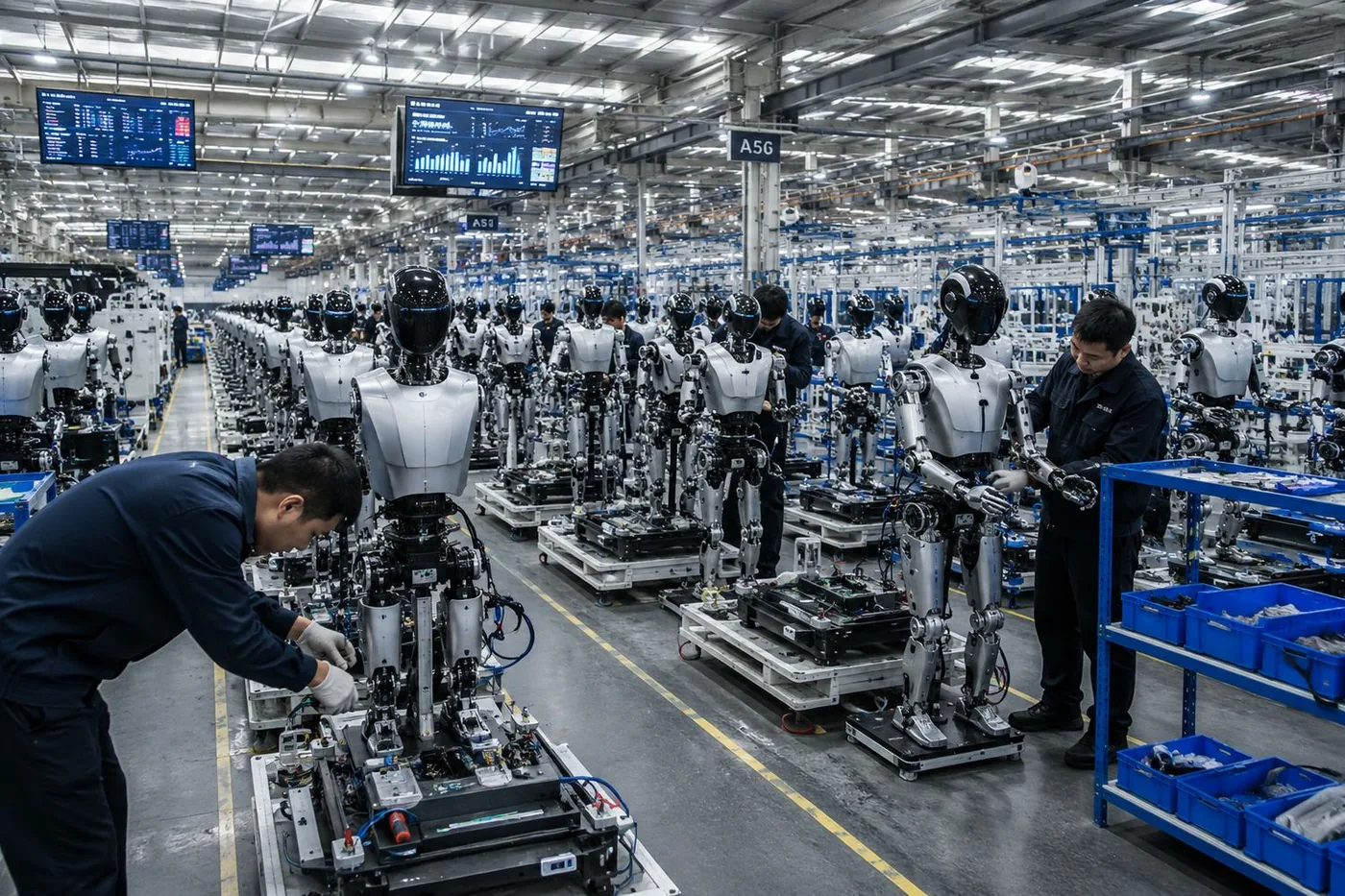
Humanoid robots on an assembly line in a Chinese factory
12
Frontier deep-tech sectors under continuous coverage
2004
Researching and investing in China together since
27
Live research topics in the library, refreshed continuously
HK
Based and regulated in Hong Kong, working in Mandarin, Cantonese and English
What We Do

A venture firm built on proprietary research.

Most China tech investing is done from the outside. We work from primary sources — company visits, filings in the original Mandarin, supply-chain checks — and two decades of relationships across the ecosystem.

Research & intelligence

Our foundation. A continuously maintained library of sector maps, company diligence and thematic briefings across twelve deep-tech verticals — built from primary sources, bilingual filings work and factory visits, not translated headlines.

Proprietary indices

The Singularity 15™, Singularity 30™ and Singularity CB indices are our rules-based lenses on China’s listed deep-tech universe — the intelligence layer that tracks the public-market side of every sector we cover.

Venture capital

Where the research leads, we invest — backing China’s deep-tech companies across all twelve sectors, from embodied AI and semiconductors to space and quantum. Details of our strategies are available to qualified investors on request.

Our Focus

The forefront of global technology
is being built in China.

#1
Science output

China ranks first in the Nature Index of high-quality research, with 8 of the world’s top 10 research institutions.

#1
Patent filings

More international patent applications are filed from China than from any other country.

100+
Countries served

China’s deep-tech champions already sell worldwide — in drones, EVs, telecoms and AI.

12
Sectors covered

We follow the full breadth of the ecosystem, from applied AI and robotics to space and quantum.

The Team

Investors who have worked China’s
tech sector together since 2004.

Bilingual, bicultural, and on the ground — with deep networks across China’s tech ecosystem, research institutions and industry.

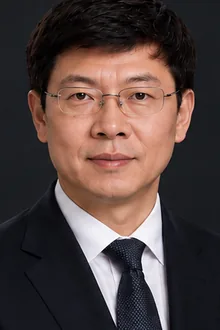
Wang Qi, General Partner
Wang Qi
General Partner

Co-founded the team in 2005. Led China research at Deutsche Morgan Grenfell and ING Barings; research fellow at the China Center for International Studies. BA, Beijing University.

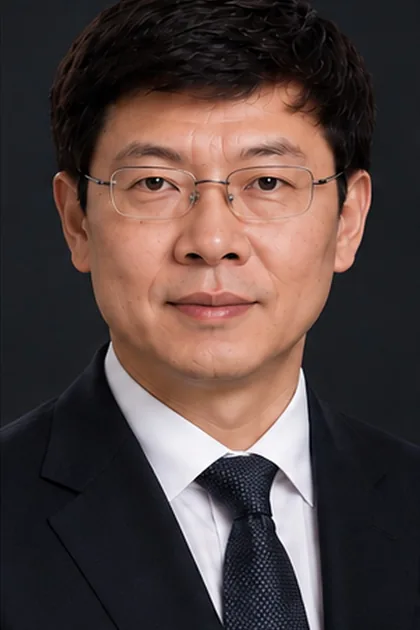
Joe Wang, General Partner
Joe Wang
General Partner

20+ years in global portfolio management and PE/VC. Led CMSC’s technology investment team. Top deal experience across China’s AI chain: Zhipu AI, Innoscience, xFusion, CXMT.

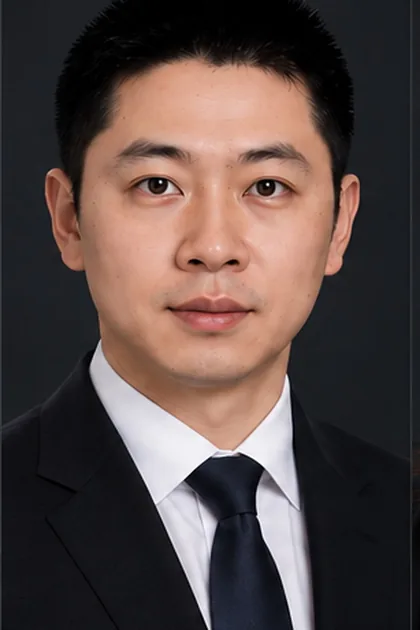
Mark Kooijman, Venture Partner
Mark Kooijman
Venture Partner

M.Sc. Finance, Erasmus. VP Global Markets at Deutsche Bank (London); Investment Officer Asia at FMO, investing across China. Co-founded Foxmont Capital and AHG Lab.

Stanley Sieh, Partner
Stanley Sieh
Partner

Deal execution, due diligence and financial modelling. Risk management at Standard Chartered; direct investment at Caltex and CITIC Pacific. BSc, CUHK; MBA.

Tina Wong, Partner
Tina Wong
Partner

Operations, compliance and fund administration. Ran group operations at SGX-listed Titan Petrochemicals across China. Economics, Fudan; MBA, University of Iowa.

Lihang Wang, Investment Analyst
Lihang Wang
Investment Analyst

Investment analysis and due diligence. BA Finance, University of Denver; MBA, Peking University. Experienced across China’s New Third Board and Beijing Stock Exchange.

From the Library

China deep-tech research topics.

A working library of the questions we research across China’s deep-tech frontier. Briefings on any topic are available on request.

Robotics & Automation
Embodied AI & the humanoid cost curve

How Chinese humanoid and industrial-robot makers are compressing bill-of-materials costs, and what the supply chain tells us about who ships at scale first.

Briefing available on request
Artificial Intelligence
The DeepSeek effect: open-weight frontier models

What free, open-weight Chinese models mean for the global AI application layer, and how state support is shaping the frontier-model landscape.

Briefing available on request
Markets & Policy
Valuing China tech against global peers

How Chinese technology leaders are valued relative to their Western counterparts — and when the differences matter for investors.

Briefing available on request
Work With Us

Intelligence first.
Investment where it leads.

Research briefings and bespoke mandates for institutions. Fund strategies and co-investment for qualified investors. Capital and networks for founders.
Our Focus

China deep tech.

The technologies that come from fundamental science and engineering — and the country building and deploying them at unmatched scale. A short explanation of where we invest, and why.

The Asset Class

What is deep tech?

01
Built on science, not business models

Deep tech companies are built on advances in fundamental science and engineering — artificial intelligence, robotics, semiconductors, quantum computing, new energy, space. Their edge is a capability others cannot easily copy, not a clever go-to-market.

02
Hard to build, hard to displace

The barriers that make deep tech slow and capital-intensive to develop — research talent, patents, manufacturing know-how, regulatory approvals — are the same barriers that protect it once it works.

03
Long compounding curves

Deep tech tends to reward patience: years of engineering, then decades of adoption. The companies that reach scale often define their categories for a generation.

04
A physical-world advantage

Unlike pure software, deep tech lives close to manufacturing. Proximity to supply chains, factories and engineering talent decides who ships — which is why geography matters so much in this asset class.

Why China

The world’s deepest deep-tech ecosystem.

China combines the four things deep tech needs: leading science, engineering talent at scale, the world’s densest manufacturing base, and long-horizon policy support. The results are visible in any independent measure of research output — and on shelves and roads worldwide.

#1
Science output

China ranks first in the Nature Index of high-quality research, with 8 of the world’s top 10 research institutions.

#1
Patent filings

Chinese residents file more international PCT patent applications than any other country.

100+
Countries served

Chinese deep-tech champions — in drones, EVs, telecoms and AI — already sell in over a hundred countries.

12
Sectors we cover

From applied AI and robotics to space and quantum — the full breadth of the ecosystem, not one theme.

The short version: the same playbook that made China the world’s factory — scale, speed and relentless cost engineering — is now being applied to the technologies of the next decade. Many of the resulting companies earn most of their revenue outside China.
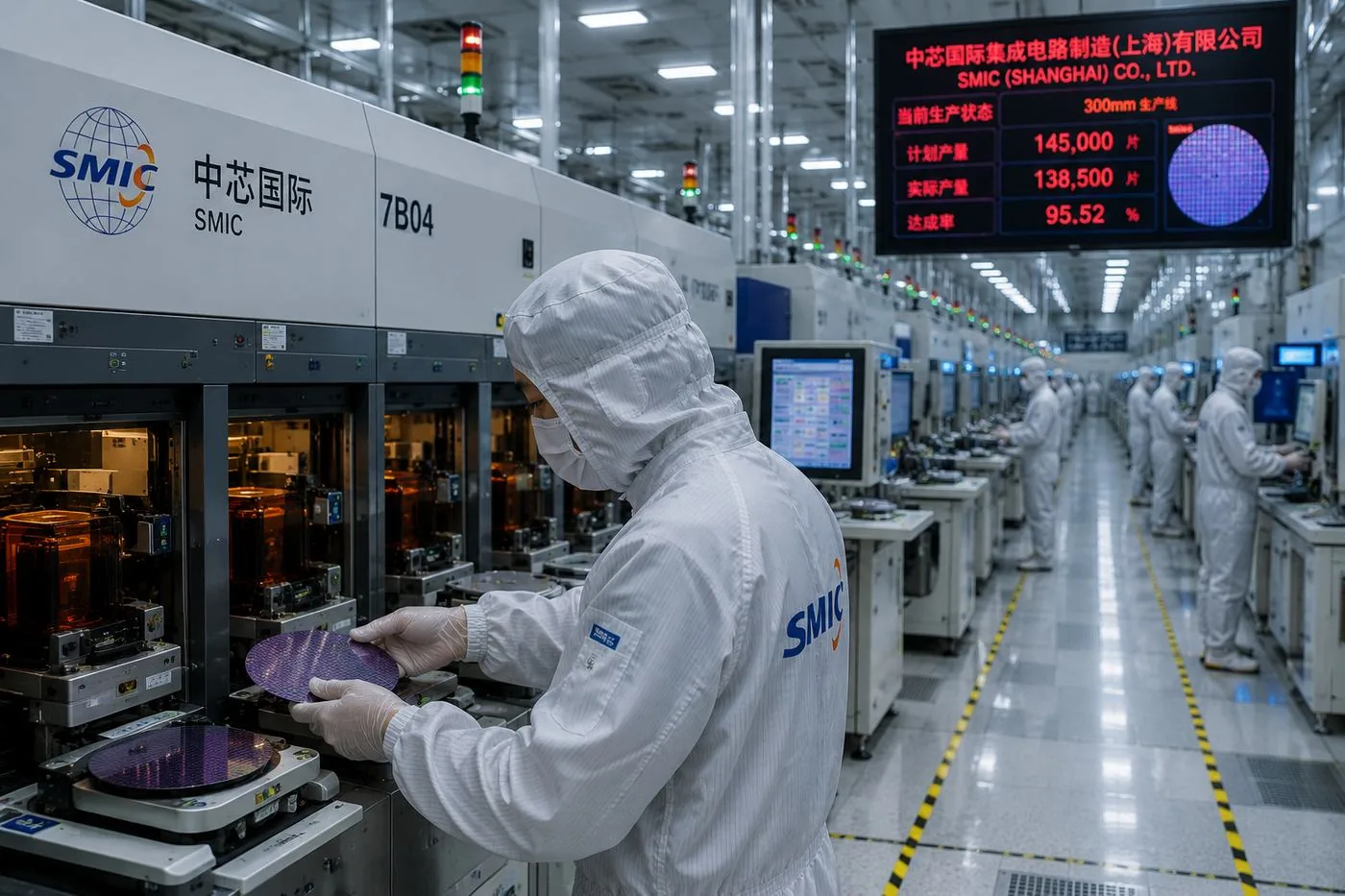
Semiconductor fabrication line in China Semiconductor fabrication
Where We Invest

Twelve deep-tech sectors.

Applied technology built to sell globally. We follow the full landscape so we can move where the opportunity is, rather than being anchored to a single theme.

01
Artificial IntelligenceApplied AI & infrastructure

Foundation models, inference silicon and the enterprise tooling above them. China’s open-weight models have collapsed the cost of frontier capability — we track where that edge becomes deployed product and durable margin.

02
Robotics & AutomationHumanoids & industrial systems

Humanoids, industrial arms and the actuators, sensors and motors beneath them. China builds robots where the components are made, and we watch which makers reach working unit economics first.

03
Quantum ComputingSensing, comms & computing

Quantum sensing, secure communications and computing hardware. China leads in quantum communication links and satellites; we follow the labs and spin-outs moving from state programmes toward commercial systems.

04
SemiconductorsChips & the tools that make them

Chips and the lithography, materials, EDA and packaging that make them. Under export controls, China is building a parallel supply chain — we map where domestic substitution is real, not aspirational.

05
Autonomous VehiclesRobotaxis & AV systems

Robotaxis, autonomous trucking and full-stack AV systems. China runs some of the world’s largest driverless fleets in live traffic; we track approvals, cost-per-kilometre and the road to profitability.

06
Smart ManufacturingIndustrial IoT & precision tools

Industrial IoT, precision machine tools and factory automation. The world’s densest manufacturing base is digitising itself; we back the firms exporting that capability, not only the goods it produces.

07
Nuclear & Clean EnergyReactors & grid storage

Advanced reactors, SMRs, fusion research and grid-scale storage. China is commissioning next-generation reactors and storage at unmatched pace; we watch the technologies reshaping the cost and shape of the grid.

08
Smart Hardware & IoTWearables & connected devices

Wearables, connected devices and the edge silicon inside them. China’s ecosystem turns a prototype into a shipped product faster than anywhere; we back teams designing globally competitive devices, not commodity clones.

09
Renewable EnergySolar, wind & electric propulsion

Solar, wind, batteries and electric propulsion. China dominates the energy transition’s supply chain end to end; we look past the incumbents to the cells, chemistries and systems redefining cost curves.

10
Healthcare & Life SciencesAI drug discovery & devices

AI-driven drug discovery, medical devices and diagnostics. Chinese biotech is moving from fast-follower to originator, licensing novel assets to global pharma; we track platforms and devices with defensible science.

11
Cloud & PlatformsHyperscale AI platforms

Hyperscale AI cloud, data infrastructure and the platforms enterprises build on. As China’s AI capex cycle and cloud migration accelerate under local data rules, we follow who captures compute demand and enterprise spend.

12
Space & Rocket TechnologyLaunch, satellites & LEO

Commercial launch, satellites and low-Earth-orbit constellations. A wave of private Chinese launch firms is driving reusable rockets and LEO networks; we watch cadence, cost-to-orbit and the constellations filling the sky.

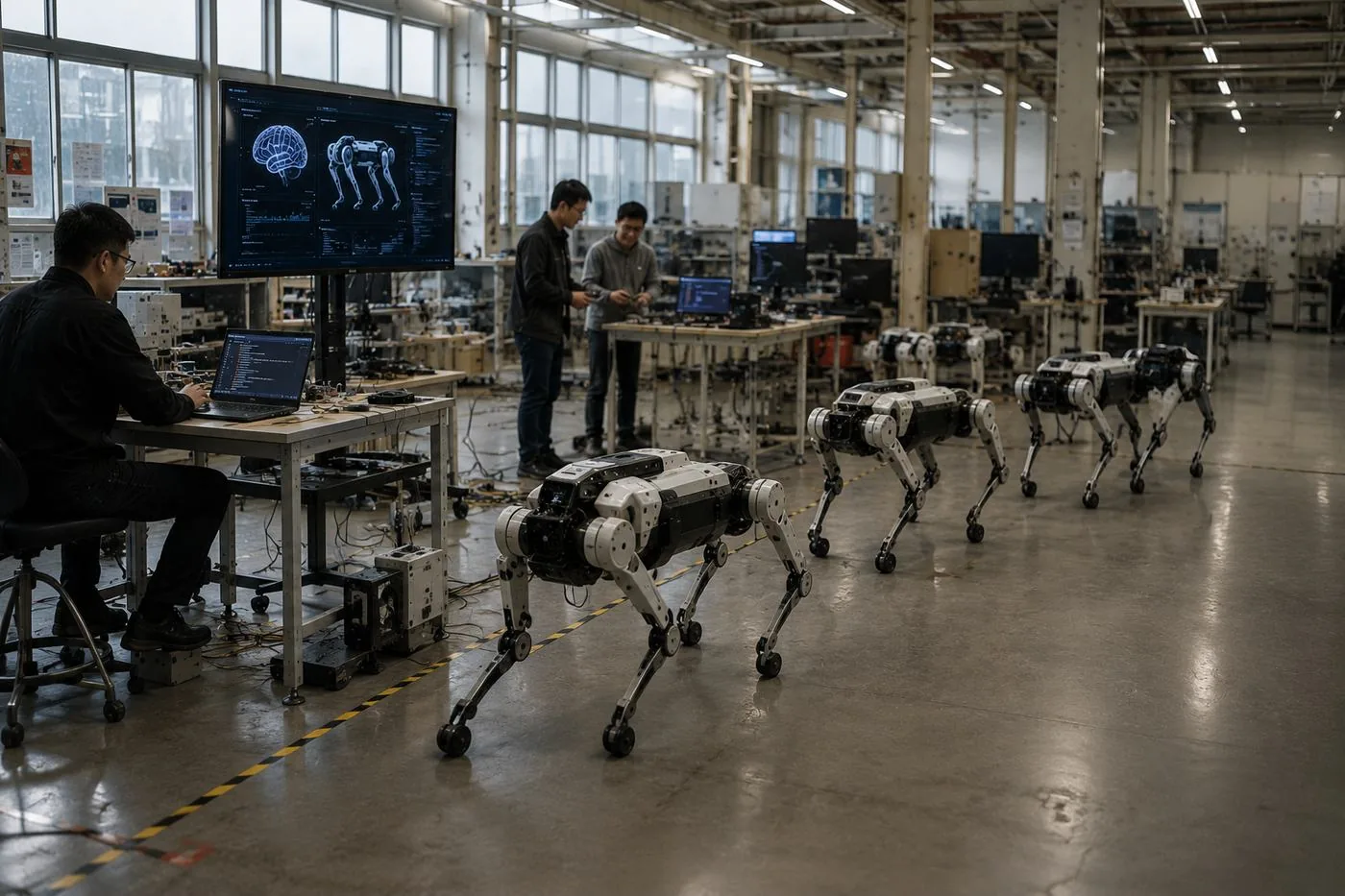
Quadruped robots on a factory floor Quadruped robotics production
Our Approach

How we invest in it.

On the ground

We work in Mandarin, visit the factories, and have built relationships across China’s tech ecosystem since 2004. Our conviction comes from primary work, not translated headlines.

Research first

Every investment starts in our research library: sector maps, company diligence and proprietary index lenses on the listed deep-tech universe, maintained continuously across all twelve sectors.

Disciplined & long-term

Deep tech rewards patience and punishes tourism. We invest with a long horizon, sized and structured for the realities of the asset class — and we put our own capital alongside our investors’.

Go Deeper

The detail lives in our research.

Browse the topics we cover, or talk to the team about our current views and strategies.

The Library

China deep-tech
research topics.

A working library of the questions we research across twelve frontier sectors. Every topic is grounded in primary sources, bilingual filings review and on-the-ground diligence. Briefings are available on request.

Rocket launch from a Chinese spaceport Space & launch

Cloud & Platforms
The Big Three

Three firms — Alibaba (33%), Huawei (18%), Tencent (10%) — hold ~61% of China’s cloud market. AI has reignited it: Alibaba Cloud grew 26% last quarter, backed by a $53bn build-out.

Cloud & Platforms
Cloud Without Nvidia

Huawei’s CloudMatrix 384 wires 384 Ascend chips into a system that beats Nvidia’s GB200 NVL72 on total compute — using 5x the chips and 4x the power. China’s answer to being cut off from Nvidia: brute force.

Cloud & Platforms
The Cloud Goes Abroad

Alibaba Cloud is opening data centres in eight new locations — its first in Brazil, France and the Netherlands — adding to 91 zones across 29 regions, and carrying its Qwen AI models abroad as the wedge.

Cloud & Platforms
Beating Oracle

OceanBase, built inside Alibaba, set the TPC-C database world record (707 million tpmC), breaking a mark Oracle held for nine years. Behind it, a national ‘xinchuang’ push is replacing foreign databases wholesale.

Cloud & Platforms
The Everything App

WeChat has 1.4 billion+ users and hosts 4.3 million mini-apps that moved ~8 trillion yuan in 2024. With Alipay it handles ~96% of Chinese mobile payments. The ‘everything app’ the West keeps trying to build.

Cloud & Platforms
The Software That Never Scaled

China leads in consumer apps and databases — but its enterprise SaaS market is tiny and unprofitable. Its whole industrial-software market (~$50bn) is smaller than SAP alone, and leaders like Yonyou run ~30% cloud vs Autodesk’s 90%.

Cloud & Platforms
Open by Strategy

Alibaba’s Qwen is the world’s most-downloaded open AI model — 2bn+ downloads, 150,000+ derivative models, more than Meta and Google combined. Giving the models away is the strategy, not charity.

Cloud & Platforms
East Data, West Compute

China’s ‘East Data, West Compute’ plan routes computing from the data-hungry east to the renewable-rich west: 8 national hubs, 10 clusters, ~¥200bn+ invested, 1.95m+ server racks. State planning, applied to compute.

Cloud & Platforms
The Hyperscaler Gap

Alibaba Cloud is ~36% of China’s market but only ~4% of the world’s — a seventh of AWS’s 30%. It runs thinner margins, is largely shut out of the West, and still trains on Nvidia’s export-throttled chips. Huge at home, small abroad.

Smart Hardware & IoT
The Face Computer

Smart-glasses shipments grew 139% in H2 2025. Meta leads at 82%, but Xiaomi is #2 globally, Chinese brands own the AR niche, and Goertek of Shenzhen builds Meta’s Ray-Bans. The category’s centre of gravity is split.

Smart Hardware & IoT
The Drone Empire

DJI holds ~70-80% of the world’s consumer drones and half of US commercial ones. It sits on the US Entity List (2020), a Pentagon ‘military company’ list (2022, upheld 2025) and the FCC Covered List (2025) — and still dominates.

Smart Hardware & IoT
On Every Wrist

China is now the world’s largest wrist-worn device market — up ~20% while the global market shrank — and Huawei took the global #1 wearables spot from Apple in 2025, with Xiaomi close behind.

Smart Hardware & IoT
The Robots Already in the House

Roborock is the world’s #1 robot-vacuum brand, and four of the global top five are Chinese — the only US name, iRobot, is shrinking. The same firms are now taking robotic lawn mowers and pool cleaners global.

Smart Hardware & IoT
The Invisible Layer

Quectel is the world’s #1 cellular IoT module maker; China holds ~54% of the global market. These radios connect billions of devices — meters, cars, trackers — which is why US lawmakers want Quectel and Fibocom blacklisted.

Smart Hardware & IoT
The Smart-Home Operating System

Tuya is the white-label cloud behind millions of no-name smart devices — 1.3 million+ registered developers, now profitable. It’s the invisible OS of the connected home, and Xiaomi’s rival platform passed a billion devices.

Smart Hardware & IoT
Beating GoPro at Its Own Game

Insta360 holds ~71% of the 360-camera market; with DJI it owns 87% of handheld cameras, leaving GoPro below 6%. Its 2025 Shanghai IPO surged 285% on day one to a ~$9.7bn valuation. Won on innovation, not price.

Smart Hardware & IoT
A Billion Connected Things

Xiaomi’s ecosystem connects 1.07 billion+ devices, its 2025 revenue hit RMB457bn (+25%), and its YU7 SUV drew 289,000 orders in an hour at a Model-Y-beating price. The budget brand went premium — and integrated.

Smart Hardware & IoT
The Chip Underneath

China leads in smart devices and integration — but foreign firms still supply ~80% of smartphone processors and the flagship image sensors, all built on UK-owned Arm. And the West keeps closing its markets to Chinese hardware.

Nuclear & Clean Energy
The Reactor Machine

China has led the world in reactors under construction for 19 straight years — ~37 building now, ~64 operating — and approves 10+ a year. It is set to pass the US as the world’s largest nuclear operator by ~2030.

Nuclear & Clean Energy
Breaking the Cost Curse

China builds reactors at ~$2,500/kW; the US Vogtle plant came in near $15,600/kW and Britain’s Hinkley Point C at ~£46bn. Serial designs, a domestic supply chain and 1.4% state loans break the cost curse.

Nuclear & Clean Energy
The Reactor and the Wall

China’s Hualong One is a ~90%-localised Gen-III reactor, proven at home and exported to Pakistan. But the UK ejected its co-developer CGN on security grounds, and the US Entity List shut the door. Strong at home, walled out abroad.

Nuclear & Clean Energy
The Reactor That Can’t Melt Down

China’s HTR-PM is the first commercial Gen-IV pebble-bed reactor. In a 2024 test, engineers cut all cooling to both modules; the reactors stabilised on their own within ~36 hours. It is, in effect, meltdown-proof.

Nuclear & Clean Energy
The Small Reactor

China’s Linglong One (ACP100), a 125 MWe small modular reactor on Hainan, is set to be the world’s first commercial land-based SMR in operation — targeting 2026, while America’s flagship SMR project was cancelled in 2023.

Nuclear & Clean Energy
The Thorium Gamble

China’s TMSR-LF1 in the Gobi Desert is the world’s only operating thorium molten-salt reactor. It runs on abundant thorium, needs no water cooling, and in 2025 became the first to breed uranium fuel from thorium — reviving a US idea shelved in the 1970s.

Nuclear & Clean Energy
The Artificial Sun

China’s EAST tokamak held a plasma for 1,066 seconds, it outspends the US on fusion, and a startup built a tokamak in 2 years. The catch: none of it generates electricity, and commercial fusion is still a ~2050 prospect.

Nuclear & Clean Energy
Closing the Circle

China is closing its nuclear fuel cycle: fast-breeder reactors (CFR-600) that make more fuel than they burn, new reprocessing plants, and a ‘thirds’ uranium strategy spanning mines from Namibia to Kazakhstan. Sovereignty — with proliferation questions attached.

Nuclear & Clean Energy
Five Percent

China leads the world in reactor construction — yet nuclear is just ~5% of its electricity, coal still over half, and wind and solar each already out-supply it. The build is real; the energy-mix impact is still modest.

Healthcare & Life Sciences
The Pipeline Flows East

Roughly a third of Big Pharma’s in-licensed innovative pipeline now originates in China. Pfizer paid 3SBio $1.25bn upfront for one bispecific in 2025; total China-out deal value hit a record.

Healthcare & Life Sciences
The AI-Designed Drug

Insilico’s rentosertib — AI-picked target, AI-designed molecule — showed a lung-function benefit in a 71-patient Phase IIa and has entered Phase III. XtalPi has signed AI-discovery deals with Lilly and Pfizer.

Healthcare & Life Sciences
The CAR-T Capital

China has ~1,006 registered CAR-T trials to the US’s 549 — the world’s most. Its cost-and-speed edge comes from a hospital-based pathway. But volume of trials is not the same as approved products.

Healthcare & Life Sciences
The Fast Follower’s Prize

China approved its own dual GLP-1 obesity drug (mazdutide) in 2025 and licensed Hengrui’s GLP-1s to a $400m US NewCo. When semaglutide’s China patent expires in March 2026, ~16 domestic copies are queued.

Healthcare & Life Sciences
Breaking the Big Three

Foreign brands’ share of China’s high-value medical devices fell from ~80% to ~70% in a decade. United Imaging now builds 5-tesla MRIs and sells in 85+ countries; volume procurement cut some device prices 80-95%.

Healthcare & Life Sciences
The World’s Lab Bench

WuXi Biologics alone held ~10% of the global biologics-outsourcing market, serving every top-20 pharma. The US BIOSECURE Act became law in Dec 2025 — but the enacted text names no companies, deferring that to a future list.

Healthcare & Life Sciences
The $100 Genome

MGI (a BGI offshoot) won $333m from Illumina in a US patent case, entered the American market, and sells genome sequencing for under $100. Its sequencer installs jumped ~49% in 2024 — even as BGI affiliates hit the US Entity List.

Healthcare & Life Sciences
The Chip in the Skull

China approved NEO — billed as the first invasive brain-computer interface cleared beyond trials — in 2026. Its patients have regained hand movement; a rival device decoded 60+ Chinese words. Neuralink had 21 patients.

Healthcare & Life Sciences
First-in-Class, or Fast Follower?

China’s first-in-class pipeline grew from 9 candidates (2015) to ~120 (2024), ~24% of the world’s. But critics note many ‘novel’ drugs are new formats on known targets — and a 2016 audit saw ~73% of trials withdrawn.

Space & Rocket Technology
Rocket Street

China went from ~a dozen space firms in 2015 to ~300 by 2022. Eight have reached orbit. In 2023 LandSpace beat SpaceX, ULA and Blue Origin to fly the world’s first methane-fuelled rocket to orbit.

Space & Rocket Technology
The Landing

In Aug 2026 LandSpace’s Zhuque-3 landed a booster on land — a Chinese first. But SpaceX first did this in 2015 and has 600+ landings since. Recovery is not yet reuse, and China has flown neither.

Space & Rocket Technology
Two Answers to Starlink

China’s two Starlink rivals — state-owned Guowang (~13,000 sats) and Shanghai’s Qianfan (>15,000) — plan ~28,000 satellites between them. By 2026 only a few hundred were in orbit. The bottleneck: rockets.

Space & Rocket Technology
Satellites by the Day

China’s satellite ‘super factories’ are rated to build 240 (CASIC Wuhan) and 500 (Geely) spacecraft a year, cutting build time from months to weeks. The catch: nameplate capacity runs far ahead of what actually ships.

Space & Rocket Technology
The Reality Check

In 2024 China launched 68 times; SpaceX 138 — and Falcon 9 alone lifted 84% of all satellite mass to orbit. China flew zero operationally reusable rockets. The ambition is real; so is the gap.

Space & Rocket Technology
The Other GPS

BeiDou — China’s answer to GPS — went global in 2020 with ~30 core satellites. It’s in ~94% of smartphones sold in China, used across 200+ countries, and anchors a ~400bn-yuan navigation economy.

Space & Rocket Technology
Racing Back to the Moon

China completed its 3-module Tiangong station in 2022 and aims to land astronauts on the Moon before 2030, with a new rocket, crew capsule and lander. NASA’s Artemis landing has slipped toward 2028 — it’s a real race.

Space & Rocket Technology
The Far Side

Chang’e-6 returned the first-ever samples from the Moon’s far side in June 2024. With an asteroid mission under way and a Mars sample-return planned for ~2028, China may beat NASA and ESA to Martian soil.

Space & Rocket Technology
A Supercomputer in Orbit

In May 2025 China launched the first 12 satellites of a planned 2,800-strong ‘Three-Body Computing Constellation’ — an orbital AI supercomputer targeting 1,000 peta-operations/sec, built to process data in space, not beam it down.

Renewable Energy
The 95% Problem

China holds >80% of every stage of the solar supply chain and ~95% of the world’s wafers. One province, Xinjiang, makes ~40% of global polysilicon. It is the most concentrated supply chain in modern industry.

Renewable Energy
The Battery Empire

CATL (37.9%) and BYD (17.2%) alone made 55% of the world’s EV batteries in 2024; all Chinese firms together ~65%. Chinese packs cost $84/kWh — against $121 in North America and $131 in Europe.

Renewable Energy
The Export Wave

China passed Japan as the world’s top car exporter in 2023 (4.91M vs 4.42M) and shipped 5.86M in 2024. Now come EU tariffs up to ~35%, a US 100% duty — and Chinese plants in Hungary, Thailand and Brazil.

Renewable Energy
Level Four of Nine

CATL’s chairman puts solid-state battery maturity at ‘level four of nine’ and mass production ‘not before 2030.’ Beijing has put >6 billion yuan behind it — but today’s ‘semi-solid’ cells are not the real thing.

Renewable Energy
The Sodium Bet

CATL’s Naxtra sodium-ion cell hits 175 Wh/kg, keeps 90% of its power at −40°C and lasts >10,000 cycles. The catch: lithium is ~70% below its 2022 peak, so sodium doesn’t yet undercut LFP on cost.

Renewable Energy
The Grid Drinks Batteries

China deployed 65 GWh of grid batteries in December 2025 alone — more than the US installed all year. Then ‘Document 136’ scrapped the mandate forcing the build, because much of it was sitting idle.

Renewable Energy
Sweeping the Podium

China added 68% of the world’s new wind capacity in 2024, and for the first time the top four turbine makers — Goldwind, Envision, Mingyang, Windey — are all Chinese. Vestas, the Danish pioneer, fell to fifth.

Renewable Energy
The Factories Waiting for Demand

China makes ~60% of the world’s electrolyzers — ~85% of the alkaline kind — at roughly a quarter of the German price. The catch: the world’s electrolyzer factories run at about 10% utilization. The demand isn’t there yet.

Renewable Energy
The Price of Winning

China’s solar giants lost billions in 2024 — Longi −8.6bn yuan, Tongwei −7bn — selling modules below cost. Beijing now fights its own price war (‘anti-involution’); the US slapped tariffs up to 3,521% on the exports.

Smart Manufacturing
The Machine-Tool Wall

China makes ~23% of the world’s machine tools but only ~6% of its high-end ones are home-grown; its exports average $300 a unit, its imports $76,700. The metal is easy; the precision is the moat.

Smart Manufacturing
The Brain in the Machine

Four foreign firms hold ~95% of China’s mid-to-high-end CNC controllers — the ‘brain’ of a machine tool. The wall isn’t the metal; it’s the motion-control software.

Smart Manufacturing
Inside the Dark Factory

Xiaomi’s smart factory makes 10 million flagship phones a year with ‘100% of key processes automated.’ The viral ‘one phone per second, zero humans’ version is not what Xiaomi actually claims.

Smart Manufacturing
The Software China Can’t Quit

China is ~28% of global manufacturing but only ~6% of industrial-software output. Three firms control ~80% of the software that designs its chips — a dependence the US toggled on and off within weeks in 2025.

Smart Manufacturing
Printing the Future

A Chinese team 3D-printed a ~4-metre titanium structure for the C919 jet and cut one part from 1,607 kg to 136 kg. In large-format metal printing, China plausibly leads the world.

Smart Manufacturing
The 5G Factory

China had 17,000+ ‘5G + industrial internet’ projects across all 41 industrial categories by end-2024, and targets 10,000 ‘5G factories’ by 2027 — the widest factory-floor 5G deployment on earth.

Smart Manufacturing
The Factory of One

Haier’s COSMOPlat claims to link ~35,000 factories and 320 million consumers for ‘mass customization.’ The catch: the platform runs on an industrial-software and controls stack that is ~90% foreign.

Smart Manufacturing
The Little Giants

China has designated 17,600+ ‘little giant’ SMEs — 3.5% of industrial SMEs generating 13.7% of the sector’s profits — specifically to backfill the components foreign suppliers could cut off.

Smart Manufacturing
The Means of Production

China makes ~30% of the world’s goods but imports ~90% of high-end machine tools, ~95% of high-end controllers and ~94% of industrial software. It owns the factory; it rents what runs it.

Autonomous Vehicles
Robotaxis at Scale

Baidu’s Apollo Go passed 17 million rides at 250,000 fully-driverless trips a week — the volume Waymo hit in spring 2025. Three Chinese operators are now past 1,000 vehicles each.

Autonomous Vehicles
The Robotaxi Economics

Baidu’s RT6 robotaxi costs ~$28,000 to build, less than an ordinary EV. Operators now claim per-vehicle break-even — yet Pony.ai and WeRide still lost $77M and 1.7bn yuan in 2025.

Autonomous Vehicles
The LiDAR Empire

Three Chinese firms hold ~76% of the automotive-LiDAR market, and a sensor that cost $50,000 a decade ago now sells for ~$200 — even as the Pentagon lists the market leader.

Autonomous Vehicles
Everyone Gets a Co-Pilot

BYD put ‘God’s Eye’ assisted driving free across its lineup, down to a sub-$10,000 car. After a fatal crash, Beijing banned the terms ‘autonomous’ and ‘smart driving’ from marketing.

Autonomous Vehicles
Robotrucks Before Robotaxis

Inceptio-powered trucks passed 200 million commercial km, Pony.ai’s freight arm crossed 1 billion ton-km — with 20–50% labour savings. But almost all of it is still driver-supervised.

Autonomous Vehicles
Going Global

Pony.ai and WeRide raised ~$870M on Nasdaq in 2024, launched the Middle East’s first driverless service with Uber, then secured Hong Kong listings as insurance against US delisting risk.

Autonomous Vehicles
The Smart-Road Bet

China is wiring intelligence into its roads via a national ‘vehicle-road-cloud’ program across 20 cities — an approach that could lower per-car autonomy cost, if the infrastructure bill and the tech actually work.

Autonomous Vehicles
The Regulation Accelerator

China granted its first L3 permits in Dec 2025 and runs robotaxi pilots in ~20 cities under one national framework — then froze new permits nationwide after a mass robotaxi stall. Speed with a kill switch.

Autonomous Vehicles
A Two-Horse Race

Waymo leads on documented safety across 220M+ driverless miles; China leads on scale, cost and supportive regulation. Both are real — and the metrics simply aren’t comparable.

Semiconductors
The 7nm Surprise

SMIC built a 7nm smartphone chip with no EUV, using DUV multi-patterning. A genuine milestone — but one capped by yield and cost as it reaches toward 5nm.

Semiconductors
The Mature-Node Flood

China is on track for a third-plus of global mature-node capacity by 2027, building 30+ fabs for the chips in cars and appliances — and triggering a US Section 301 probe.

Semiconductors
The Lithography Wall

No EUV machine has ever entered China, and its best homegrown scanner sits near 90nm — a node ASML passed 15 years ago. Homegrown-EUV claims remain unproven.

Semiconductors
The Toolmakers

China bought a record ~$49B of chip tools in 2024 and now makes ~35% itself — over 40% in etch and deposition, but near 18% in lithography. The average hides the shape.

Semiconductors
Memory Breaks Through

YMTC shipped the world’s first 232-layer QLC NAND after being blacklisted, and is now a global top-three maker; CXMT’s DDR5 has taken it from <2% to ~5% of DRAM.

Semiconductors
The EDA Chokepoint

Three firms control 85%+ of the software every advanced chip is designed with. The US restricted EDA exports to China in May 2025 — then rescinded it six weeks later.

Semiconductors
Stacking, Not Shrinking

Denied advanced nodes, Huawei stacks 7nm chiplets to compete — its 384-chip AI cluster out-throughputs Nvidia’s flagship by brute force, at ~4x the power. Packaging narrows the gap; it doesn’t close it.

Semiconductors
The Open Hedge

China holds 12 of the 24 top seats at RISC-V International and is drafting national policy to promote it. The catch: its best RISC-V chip is still made by TSMC.

Semiconductors
The Self-Sufficiency Scoreboard

‘Made in China 2025’ targeted 70% chip self-sufficiency; reality is ~15–27% depending on what you count. China imports more silicon than oil — and the leading-edge gap isn’t closing.

Quantum Computing
Quantum Advantage, Twice Over

China claimed a task would take a supercomputer 2.5 billion years — but a 2024 classical algorithm can now simulate such experiments better than the hardware. The milestone is real; the scoreboard is provisional.

Quantum Computing
The Superconducting Race

Zuchongzhi 3.0 claims a million-fold edge over Willow — on random-circuit sampling. Willow’s real breakthrough, error correction, is a race China’s chip didn’t enter.

Quantum Computing
The Unhackable Network

Micius secured the first intercontinental quantum-encrypted call and a ~4,600 km network. But QKD secures only key exchange — and the ground backbone relies on ‘trusted nodes.’

Quantum Computing
Harvest Now, Decrypt Later

Data stolen today can be decrypted by a future quantum computer. The West standardised post-quantum cryptography; China emphasises QKD — and the agencies genuinely disagree on which to trust.

Quantum Computing
The State’s Quantum Bet

China’s ‘$15 billion’ quantum war chest is the field’s most-cited stat — and one of its least verifiable, resting on a consulting estimate a top Chinese physicist thinks overstates reality 4x.

Quantum Computing
The Patent Race

China files ~60% of the world’s quantum patents to America’s ~19% — but only ~7% of China’s travel internationally, versus ~49% of the US’s. The lead shrinks the moment you look closer.

Quantum Computing
Quantum on the Cloud

Origin Wukong drew 20M+ remote visits from 139 countries — with the US on top, despite export controls. The real story is the ~80% domestic supply chain underneath it.

Quantum Computing
The Quiet Quantum Win: Sensing

Sensing is the nearest-term quantum payoff — magnetometers, gravimeters, clocks — and China is fielding it from the sea floor to orbit. The exception to believe least: ‘quantum radar.’

Quantum Computing
The Commercialisation Gap

The demos measure septillions of years; the revenue is a rounding error. Why quantum computing is still pre-revenue, how to size the timelines, and where the near-term value really sits.

Robotics & Automation
The Humanoid Price War

Unitree cut its average humanoid price ~72% in two years and IPO'd up 542%. UBTech is shipping to BYD and Foxconn. Price is the strategy.

Robotics & Automation
The Choke Point in Every Robot

20–30 precision gearboxes sit inside each humanoid, and Japan long made nearly all of them. China's challengers are closing in — but the choke point just moved down a layer.

Robotics & Automation
Breaking the Big Four

For the first time, China’s factories bought more domestic robots than foreign ones (57% share). One of the Big Four, KUKA, is already Chinese-owned.

Robotics & Automation
Robots in the Warehouse

Geek+ has led the world in warehouse-fulfilment AMRs by revenue for years running — No.1 in EMEA, and the first pure-play AMR company to ring the bell in Hong Kong.

Robotics & Automation
The Service-Robot Invasion

The five biggest commercial service-robot makers in the world are all Chinese. Pudu’s revenue in the Americas grew 285% in a year.

Robotics & Automation
China Comes for da Vinci

A Chinese robot, not da Vinci, performed the world’s first FDA-authorised intercontinental surgery — 17,000 km from console to patient. The surgical-robot monopoly has a challenger.

Robotics & Automation
The Low-Altitude Economy

China wrote the sub-1,000-metre sky into national policy, targeting 3.5 trillion yuan by 2035 — with a certified passenger air taxi and 900,000+ drone deliveries already flown.

Robotics & Automation
Farming by Drone

Chinese drones have sprayed 500M+ hectares of the world’s farmland, with DJI alone holding 40%+ of the global market and 400,000 aircraft in the air.

Robotics & Automation
The Data Bottleneck

Robots have no internet to learn from. China’s answer: 40+ state-backed ‘data factories,’ one targeting 3 million manipulation samples a year, and the largest open humanoid dataset.

Artificial Intelligence
The DeepSeek Moment

How one open-weight release reset the market’s assumptions about what frontier AI costs — and why the ‘trained for the price of a car’ story is wrong.

Artificial Intelligence
China’s Open-Weight Bet

Qwen is now the most-downloaded open model on earth. Why China gives its best models away — and what it wins by owning the default substrate.

Artificial Intelligence
Inference Beyond Nvidia

Cambricon just posted its first-ever profit, Huawei is open-sourcing its CUDA rival, and models are being tuned for homegrown silicon. The domestic-chip flywheel is spinning.

Artificial Intelligence
The Export-Control Squeeze

A four-year timeline of curbs, workarounds and reversals — and why the second-order effect was to accelerate exactly what the controls meant to prevent.

Artificial Intelligence
The World’s Smartest Factories

China holds 101 of the world’s ‘lighthouse’ factories — more than any other country, by a wide margin — and the state has set explicit AI-penetration targets for 2027 and 2030.

Artificial Intelligence
China’s AI Research Engine

China leads on AI papers, patents and researcher origin. The US still ships more frontier models — and employs most of the elite talent. The gap is closing fast.

Artificial Intelligence
Foundation Models Meet the Physical World

A state-set 2025 mass-production deadline, 54% of the world’s industrial-robot installs, and humanoid prices down ~70% in two years. Embodied AI is China’s home game.

Artificial Intelligence
The Compute Build-Out

A national coast-to-desert compute grid, plus a $53 billion Alibaba capex plan that exceeds its entire prior decade of AI spend. And power is the binding constraint.

Artificial Intelligence
AI Rules, Chinese Characteristics

The 2023 Interim Measures made China first to bind generative AI — enforced as a pre-launch licence. 346 services filed before facing the public.

Artificial Intelligence
Born-Global AI Apps

By a16z’s count, ~22 of the top 50 mobile Gen-AI apps are Chinese-built — but only 3 are mainly used in China. The app layer is an export business.

Markets & Policy
Valuing China tech against global peers

How Chinese technology leaders are valued relative to their Western counterparts, what drives the persistent differences, and when they matter for investors.

Briefing available on request
Markets & Policy
State guidance funds & the policy capital stack

How national and provincial guidance funds actually deploy capital into deep tech — the mechanics, the priorities, and who receives it.

Briefing available on request
Markets & Policy
Foreign capital flows in China venture

How the reshaping of Western investor participation has changed China’s venture landscape — and what it means for valuations, deal flow and coverage.

Briefing available on request
Markets & Policy
The A-share convertible bond market

A deep, retail-heavy market with structural pricing quirks: how deep-tech convertibles behave, and why credit and price-tier discipline matter.

Briefing available on request
Markets & Policy
Access mechanics: Stock Connect, QFII & custody

The operational reality of owning A-shares from offshore: quotas, FX, settlement and custody — explained for allocators who need it to just work.

Briefing available on request
Markets & Policy
Advanced materials: graphene to vanadium-titanium

The unglamorous inputs — nanomaterials, specialty metallurgy, magnets — where Chinese producers quietly set global cost floors.

Briefing available on request
Don’t see your question? The library reflects our standing coverage, not its limits. We take bespoke research mandates across all twelve sectors — from single-company diligence to full sector maps.
Contact Us

Talk to us about
China deep tech.

Investor enquiries, research briefings and partnerships. Singularity Dynamics Investment Management Limited — Hong Kong.

Office

Unit 804, 8/F, Far East Consortium Building,
121 Des Voeux Road Central,
Hong Kong

Research content is provided for informational purposes only and does not constitute investment advice. Information on investment solutions is available to professional, qualified or accredited investors on request. Past performance is not indicative of future returns. Investment involves risks.

← Back to the Library
01 Artificial Intelligence

The DeepSeek Moment

A Chinese lab trained a frontier-grade model for a rounding error of a US training run — then erased $600 billion of Nvidia in a single day. What actually happened, and what didn’t.

On 20 January 2025, a Hangzhou lab most Western investors had never heard of released an AI model under a permissive MIT licence — and within a week had rewritten the market’s assumptions about what frontier AI costs.[1] DeepSeek-R1, a reasoning model that matched OpenAI’s o1 on several hard benchmarks, followed DeepSeek-V3: a 671-billion-parameter mixture-of-experts system whose technical report disclosed a final training run of 2.788 million H800 GPU-hours — roughly $5.6 million in rented compute.[2]

The number detonated. On 27 January, Nvidia fell 16.9% and shed close to $600 billion of market value in a single session — the largest one-day loss for any company in US history.[3] The narrative wrote itself: if a Chinese team could reach the frontier for the price of a mid-size house, the case for hundred-billion-dollar compute build-outs looked shakier.

What the headline number leaves out

The $5.6 million figure is real, but narrow. DeepSeek’s own paper is explicit that it covers only the final official training run and “excludes the costs associated with prior research and ablation experiments on architectures, algorithms, or data.”[2] Independent analysis by SemiAnalysis put DeepSeek’s cumulative hardware and capital spend well above $500 million.[4] The efficiency was genuine; the “trained for the price of a car” framing was not.

The story was never the training bill. It was that a frontier capability had suddenly become free to download.

What made DeepSeek matter is less the training bill than the distribution model. R1 shipped open-weight, with distilled versions from 1.5B to 70B parameters and an API priced roughly 90–95% below o1.[1] A capability that had been a paid, gated service became something any developer could download, inspect and self-host for free. That is not a cost story; it is a commoditisation story — and commoditisation of the model layer pushes value up the stack, toward applications and inference infrastructure.

The scale of the reaction told its own story. A $600 billion single-day move is not the market repricing one model; it is the market discovering how little it had understood about China’s trajectory. The correction was overdone in the other direction too — cheaper, more efficient models expand total AI usage rather than shrinking demand for compute, a dynamic economists call Jevons’ paradox. What endured from the episode was not a number but a template: a Chinese lab competing by giving capability away, distilling it into small models a laptop can run, and pricing the API to the floor. That template, not the training bill, is what recurs.

Why it matters for investors

DeepSeek is a preview of a structural feature of China’s AI sector, not a one-off. Its labs have strong incentives to compete on openness and price rather than defend closed-model margins they cannot easily hold. For anyone allocating to the AI stack, the lesson is to underwrite the layers that benefit when models get cheap and abundant — deployment, tooling, inference silicon and vertical applications — rather than assuming the model itself is the moat. The frontier is now a fast-moving, partly commoditised input. Priced correctly, that is an opportunity, not a threat.

The one-line versionEveryone remembers DeepSeek as "a frontier model for $6M." The paper itself says that figure excludes all prior research; SemiAnalysis puts real spend >$500M. The story was never cost. It was commoditisation of the model layer — value moves up the stack.

References

  1. TechCrunch, “DeepSeek claims its ‘reasoning’ model beats OpenAI’s o1 on certain benchmarks,” Jan 2025. Read source ↗
  2. DeepSeek-AI, “DeepSeek-V3 Technical Report (arXiv:2412.19437),” Dec 2024. Read source ↗
  3. TechCrunch, “Nvidia drops $600BN off its market cap amid the rise of DeepSeek,” Jan 2025. Read source ↗
  4. NBC New York (citing SemiAnalysis), “DeepSeek’s hardware spend could be as high as $500 million, new report estimates,” Jan 2025. Read source ↗

Every source above is public and linked. This is a research brief from Singularity Dynamics; full briefings on this topic are available on request.

Request a full briefing →
← Back to the Library
02 Artificial Intelligence

China’s Open-Weight Bet

Beijing’s labs are losing the closed-model race on purpose. By giving their best models away, they are quietly becoming the substrate the world’s developers build on.

Ask which country leads in AI and the debate fixes on frontier models. It is the wrong scoreboard. The more consequential contest is over the open-weight layer — and there China is not competing, it is winning.

Alibaba’s Qwen is now the most-downloaded open model family in the world, having overtaken Meta’s Llama. Hugging Face’s own tally counted roughly 2.0 billion Qwen downloads and more than 151,000 Qwen-derived models on its hub.[1] By mid-2025, Chinese models held the top open-source ranks on the LMArena leaderboard: Moonshot’s Kimi K2 first among open models, DeepSeek second, with MiniMax and Qwen close behind.[2] Chinese developers accounted for more than 45% of top open-model downloads in 2025.[3]

The base model is not the product — it is the standard

Qwen has become the default foundation of the open ecosystem: by August 2025, more than 40% of new language-model derivatives on Hugging Face were built on it, against roughly 15% on Llama.[4] The adoption is bleeding into Western production stacks. As Andreessen Horowitz’s Martin Casado put it, among Valley startups running an open stack, “there’s about an 80% chance they’re running on Chinese open models.”[4]

Give the model away and it stops being a product. It becomes infrastructure — and infrastructure is where standards are set.

Why give away the crown jewels? Because a permissive licence turns a model into embedded infrastructure. Developers worldwide can download, fine-tune and self-host for free, with no API gatekeeper — and the base they choose becomes a de facto standard, reinforced by aggressive pricing and by research published alongside the weights. (One caveat for the record: Alibaba’s own download claims run higher than Hugging Face’s independent count, because they fold in Chinese platforms such as ModelScope; we cite the independent figure.[1])

The mechanism is worth being precise about. When a developer chooses a base model to fine-tune, they inherit its tokenizer, its quirks, its prompt conventions and its upgrade path — switching later is costly. So the model that wins the default position accrues a compounding advantage that looks less like a product win and more like a platform one. That is why the churn among Chinese labs at the top of the open leaderboards — Kimi, DeepSeek, MiniMax, Qwen trading places — matters less than the fact that the base layer they collectively occupy is Chinese. The competition is fierce; the aggregate outcome is a standard.

Where the value goes

The open-weight strategy means China’s influence over global AI will be felt less through flagship consumer apps than through an invisible layer of models embedded in everyone else’s software. For investors, the leaderboard is a distraction. The value accrues around the substrate — inference, fine-tuning, agent frameworks and vertical applications built on top of freely available weights. That is the layer we underwrite.

The one-line versionQwen is now the most-downloaded open model in the world. >40% of new Hugging Face derivatives build on it. a16z: ~80% of Valley startups on an open stack run Chinese models. China is winning open-source AI by giving the models away — and owning the standard.

References

  1. The Next Web, “Qwen is the world’s most-downloaded open model, by a smaller margin than Alibaba says,” Aug 2026. Read source ↗
  2. South China Morning Post, “Chinese open-source AI models occupy top spots among global developers: ranking,” Jul 2025. Read source ↗
  3. AI World, “Chinese developers account for over 45% of top open-model public downloads,” Dec 2025. Read source ↗
  4. MIT Technology Review, “What’s next for Chinese open-source AI,” Feb 2026. Read source ↗

Every source above is public and linked. This is a research brief from Singularity Dynamics; full briefings on this topic are available on request.

Request a full briefing →
← Back to the Library
03 Artificial Intelligence

Inference Beyond Nvidia

Export controls were meant to starve China of compute. Instead they minted a profitable domestic chip industry — and Huawei is coming for CUDA.

The clearest evidence that US export controls backfired is a balance sheet. Cambricon — the Chinese AI-chip designer once nicknamed “China’s little Nvidia” — swung to profit in 2025, with revenue up more than 450% and its first annual profit since listing, then followed with a first quarter of roughly $423 million, up about 160% year on year.[1] The demand it is soaking up is demand Nvidia is no longer allowed to serve.

Huawei is the bigger threat. Its Ascend 910C reached mass shipment to Chinese customers in 2025; DeepSeek’s engineers estimated the part delivers up to roughly 60% of an Nvidia H100’s inference performance — a credible substitute for serving models, if not yet for training them.[2] (Treat the 60% as a reported estimate, not an independent benchmark.)

The real moat is software

Nvidia’s defensibility was never only silicon; it was CUDA, the software layer developers have built on for fifteen years. Huawei is attacking it directly: at its September 2025 Connect conference it pledged to open-source CANN, its CUDA alternative, with core Ascend components opened by year-end.[3] The gap is still wide — engineers describe CANN as difficult and unstable — so Huawei has embedded its own staff inside Baidu, iFlytek and Tencent to help port code off CUDA.[2]

The contest was never just about the chip. It is about the fifteen years of software written for the other one.

The market is pricing the shift. Biren, a GPU challenger on the US Entity List since 2023, raised about $717 million in a January 2026 Hong Kong IPO and jumped 76% on debut — a valuation the export ban helped create by handing it a captive domestic market.[4] And software is now being co-designed for Chinese silicon: DeepSeek said its V3.1 used a numeric format built for China’s “next-generation” domestic chips.[5]

The training-versus-inference split is the key to sizing this. Training a frontier model is a one-time, latency-tolerant, accuracy-critical job where Nvidia’s ecosystem still dominates. Inference — actually running the model for users — is a recurring, cost-sensitive, high-volume workload, and it is by far the larger share of compute spend over a model’s life. That is the beachhead a “good enough” domestic accelerator needs, and why Huawei’s embedding of engineers inside Baidu and Tencent is strategically shrewd: porting the inference workload off CUDA, one customer at a time, is how the software moat is drained.

What we watch

The training frontier still runs on Nvidia. But inference — the larger, recurring workload — is where domestic parts are becoming good enough, and where the economics of “good enough and available” beat “best and banned.” We track adoption inside the big Chinese clouds, the maturity of CANN and its tooling, and the model-makers optimising for homegrown hardware. That is where the substitution becomes real.

The one-line versionExport controls were meant to starve China of compute. Instead: Cambricon posts its first-ever profit (rev +450%), Huawei open-sources a CUDA rival, Biren IPOs +76%. The real moat was never the chip — it's the software. China is now going after that too.

References

  1. Tom’s Hardware, “Cambricon’s Q1 revenue hits $423 million as China’s domestic AI chip market accelerates,” 2026. Read source ↗
  2. ChinaTalk, “Can Huawei Take On Nvidia’s CUDA?,” 2025. Read source ↗
  3. Huawei, “Ascend: Open for All to Build a Vibrant Ecosystem,” Sep 2025. Read source ↗
  4. Asia Financial, “China’s AI Chipmaker Biren Jumps 76% in Latest Hong Kong IPO,” Jan 2026. Read source ↗
  5. CNBC, “DeepSeek hints latest model will be compatible with China’s ‘next generation’ homegrown AI chips,” Aug 2025. Read source ↗

Every source above is public and linked. This is a research brief from Singularity Dynamics; full briefings on this topic are available on request.

Request a full briefing →
← Back to the Library
04 Artificial Intelligence

The Export-Control Squeeze

Three years of tightening curbs became a game of whack-a-mole: Nvidia builds a China chip, Washington bans it, repeat — until the US started taking a 15% cut and $1 billion of chips slipped across the border anyway.

The United States has spent four years trying to deny China the compute needed to train frontier AI. The effort has been serious, and its second-order effects have been the opposite of what was intended. A short timeline explains why.

October 2022. The Commerce Department’s first sweeping controls restricted exports of top training chips — the A100 and H100 class — to China, aiming to choke off advanced compute.[1] Nvidia responded within weeks, launching the throttled, China-specific A800 and then the H800 to stay just under the thresholds.[2]

October 2023. Washington tightened the test to performance density — and banned the A800 and H800 workarounds. Nvidia built down again, to the H20 and its siblings.[2]

2025. In April, a new licensing requirement effectively halted H20 sales, forcing Nvidia to take a $5.5 billion inventory charge; by July, the policy reversed and sales resumed.[2] Then came the unprecedented part: Nvidia and AMD agreed to remit 15% of their China AI-chip revenue to the US government in exchange for export licences.[3]

The policy oscillated between a ban and a tax. Neither stopped the chips.

The controls leak — and accelerate

Enforcement is porous. The Financial Times found at least $1 billion of Nvidia chips were smuggled into China in the three months after the April 2025 curbs.[4] And Beijing has begun pushing the other way: Chinese regulators raised security concerns about the H20 and discouraged local firms from buying it, steering demand toward Huawei and domestic silicon.[5]

The deeper dynamic is reflexive. Each tightening does two things at once: it raises the near-term cost of frontier compute for Chinese labs, and it raises the long-term certainty that a domestic alternative will find a market. Stockpiling ahead of each rule — the reason China’s 2024 chip imports hit records — buys time; the guaranteed demand does the rest. A control designed to deny a capability instead subsidises the will to replace it. That is not an argument that the controls are ineffective; it is an argument that their second-order effect is precisely the domestic build-out they were meant to forestall.

Why it matters for investors

Export policy has become the single biggest exogenous variable in China’s AI market — and its net effect has been to guarantee a domestic customer base for domestic chips. Each tightening cycle transfers demand from Nvidia to Huawei, Cambricon and their peers, and hardens Beijing’s resolve to build a parallel stack. We underwrite that reflexivity directly: the more durable the controls, the more durable the domestic-substitution thesis they were meant to prevent.

The one-line versionUS chip controls on China, the short version: ban H100 → A800 → ban → H800 → ban → H20 → halt → resume w/ a 15% US cut. FT: $1B smuggled in anyway. Net effect of the squeeze — a guaranteed home market for Huawei & Cambricon.

References

  1. CSIS, “Understanding the Biden Administration’s Updated Export Controls,” Dec 2024. Read source ↗
  2. GamersNexus, “Timeline: GPU Export Controls, Nvidia GPU Bans & the AI GPU Black Market,” 2025. Read source ↗
  3. PBS NewsHour, “Under new, unusual agreement, U.S. will get a 15% cut of Nvidia and AMD chip sales to China,” Aug 2025. Read source ↗
  4. Reuters (via Financial Times), “Nvidia AI chips worth $1 billion entered China despite US curbs, FT reports,” Jul 2025. Read source ↗
  5. Al Jazeera, “China raises concerns over Nvidia’s H20 chips with local firms: Report,” Aug 2025. Read source ↗

Every source above is public and linked. This is a research brief from Singularity Dynamics; full briefings on this topic are available on request.

Request a full briefing →
← Back to the Library
05 Artificial Intelligence

The World’s Smartest Factories

China runs more of the world’s ‘lighthouse’ factories than any other country, by a wide margin — and Beijing has just made ‘AI everywhere’ official policy.

The most under-appreciated front in China’s AI story is not a chatbot. It is the factory floor — where AI is already running production at a scale no other country matches.

The World Economic Forum’s Global Lighthouse Network recognises factories that have moved beyond pilots to deploy advanced technology at scale. By January 2026 the network had passed 220 sites — and China held 101 of them, more than any other country and, on its own, the single largest national bloc.[1] In the most recent cohorts, roughly three-quarters of new designations were Chinese plants.[2]

AI is now central to these sites, not peripheral. Across the network, 77% of the top implemented use cases were enabled by analytical AI and a further 9% by generative AI; the productivity effects are large — recent cohorts averaged a 40% rise in labour productivity and a 48% cut in lead times.[3]

The headline AI race is about models. The quieter one is about who can run them inside a working supply chain.

‘AI Plus’ as industrial policy

On 27 August 2025, China’s State Council issued its “AI Plus” initiative, setting explicit penetration targets: intelligent terminals and AI agents to exceed 70% adoption by 2027 and 90% by 2030, across industry, science, consumption and governance.[4] Few governments have committed to numbers this specific — and China has a track record of organising capital and procurement behind such targets.

What a “lighthouse” designation actually certifies is the hard part: not a pilot in a lab but technology deployed at scale across a working plant, with measured results. That is exactly where most AI initiatives stall — the move from demo to production line — and it is where the integration work is capital-intensive, tacit and slow to copy. China’s concentration of these sites is therefore evidence of an operational muscle, not just a research one: the ability to wire models into messy physical processes and keep them running. That muscle, honed at home, is what a Chinese industrial-software exporter carries into foreign factories.

Why it matters for investors

The defensible edge here is not the algorithm; it is the integration — the messy, capital-intensive work of embedding AI into real production lines, and doing it beside the world’s densest manufacturing base. That advantage is hard to copy and travels well: the firms that industrialise AI at home are positioned to export the capability, not just the goods it produces. We back the companies selling that integration layer — industrial software, vision systems, robotics and the tooling around them — over the ones chasing consumer attention.

The one-line versionChina now holds 101 of the world's 220+ WEF 'lighthouse' factories — more than any other country, by a wide margin. And 'AI Plus' just set a national target: >70% AI-agent penetration by 2027. The quiet AI race is about running models inside a real supply chain.

References

  1. Yicai Global, “China Has World’s Most Lighthouse Factories,” Jan 2026. Read source ↗
  2. World Economic Forum, “Global Lighthouse Network Recognizes 23 New Sites, Launches AI Platform for Industrial Transformation,” Jan 2026. Read source ↗
  3. McKinsey & Company, “The continuing evolution of the Global Lighthouse Network,” 2025. Read source ↗
  4. State Council of the PRC, “China issues guideline to accelerate ‘AI Plus’ integration across key sectors,” Aug 2025. Read source ↗

Every source above is public and linked. This is a research brief from Singularity Dynamics; full briefings on this topic are available on request.

Request a full briefing →
← Back to the Library
06 Artificial Intelligence

China’s AI Research Engine

China out-publishes and out-patents the US in AI and trains the largest share of the world’s elite researchers. America still builds the frontier — and keeps the talent.

The question “who leads in AI?” has no single answer, because the two countries lead on different things. The data, from Stanford’s AI Index and the Nature Index, is unusually clear about which is which.

China leads on volume. In 2023 it produced 23.2% of the world’s AI publications — the largest single-country share — against 9.2% for the United States, and held the top rank in the Nature Index for research output.[1][2] On patents the gap is even wider, though the figure warrants a caveat: patent standards differ by jurisdiction, so raw counts overstate any true innovation lead.[1]

The US still builds the frontier. American institutions released 40 notable AI models in 2024, against 15 from China — the closed, capital-intensive frontier remains a US stronghold.[1] But the quality gap on major benchmarks narrowed from double digits in 2023 to near-parity by the end of 2024.[1]

China supplies the talent; America employs it. That single sentence explains most of the AI map.

The talent paradox

China’s deepest advantage is people. By undergraduate origin, it supplied roughly 47% of the world’s top-tier AI researchers — up from 29% five years earlier and the largest source of any country.[3] Yet most of those researchers are employed abroad: a majority of the world’s top AI talent works at US institutions.[3] The pipeline is Chinese; the payroll is often American.

Two dynamics compound over time. First, benchmark parity means the marginal Chinese model is now close enough to the frontier that, for most commercial uses, the gap is immaterial — and open weights make that near-frontier capability free. Second, the talent pipeline is the leading indicator: a country that trains the largest share of top researchers will, as more of them stay or return, convert that flow into output with a lag. Neither dynamic guarantees a Chinese lead; both make a permanent US lead a fragile assumption. Research and talent data, read together, tell you where credible teams will surface before a funding round does.

Why it matters for investors

Two implications follow. First, the narrative of a permanent US model lead is fragile — the benchmark gap is already small, and the research base underneath China’s models is the largest in the world. Second, the talent flow is the variable to watch: as more of that Chinese-origin talent stays home or returns, the output should compound. We read research and talent data as a leading indicator of where credible teams will emerge — often a year or two before they show up in a funding round.

The one-line versionChina: 23.2% of AI papers (US 9.2%), #1 Nature Index, ~47% of top AI researchers by origin. US: 40 notable models in 2024 vs 15, and it employs most of that talent. China supplies the talent; America employs it. The model gap is now near-parity.

References

  1. Stanford HAI, “Artificial Intelligence Index Report 2025, Chapter 1: Research and Development,” Apr 2025. Read source ↗
  2. Nature Index, “Nature Index 2025 Research Leaders: United States losing ground as China’s lead expands rapidly,” Jun 2025. Read source ↗
  3. MacroPolo (Paulson Institute), “The Global AI Talent Tracker,” 2023. Read source ↗

Every source above is public and linked. This is a research brief from Singularity Dynamics; full briefings on this topic are available on request.

Request a full briefing →
← Back to the Library
07 Artificial Intelligence

Foundation Models Meet the Physical World

China wrote the humanoid playbook top-down — the state set a 2025 mass-production deadline, and its champions are now shipping robots onto car lines at a quarter of the 2023 price.

The next phase of AI is embodied — models that act in the physical world — and it plays to China’s deepest structural strength: it builds the hardware, at scale, where the components are made.

The ambition is state-directed. In November 2023, China’s industry ministry issued guidance naming humanoid robots “a new engine of economic growth,” with an explicit goal of mass production by 2025 and world-leading capability by 2027.[1] The industrial base beneath that goal is already dominant: China installed 295,000 industrial robots in 2024 — about 54% of all global installations — and its operational stock passed two million units, with domestic makers taking a 57% share of their home market.[2]

China installs more industrial robots than the rest of the world combined. Embodied AI is a home game.

The price collapse

The disruption is cost. Unitree became the world’s leading humanoid seller in 2025 with roughly a third of global sales; its average selling price fell from about $85,000 in 2023 to around $25,000 in 2025, with an entry model marketed near $16,000.[3] These are not lab demonstrators. UBTech began mass production of its full-size Walker S2 in November 2025, with cumulative orders past $110 million and units deploying on production lines at BYD, Geely and Foxconn.[4]

The economic logic follows the bottleneck. Once a foundation model makes the “brain” broadly available, the scarce, defensible input becomes the “body” — the actuators, harmonic reducers, sensors and motors, and the manufacturing to make them cheaply at volume. That is a supply-chain contest, not a software one, and it is the contest China’s manufacturing base is built to win. The investable question shifts accordingly: away from which lab has the cleverest control policy, toward which maker reaches durable unit economics first and which component suppliers become the indispensable layer beneath every humanoid, whoever builds it.

Why it matters for investors

Foundation models made the “brain” of a robot suddenly tractable. The bottleneck moves to the body — actuators, sensors, motors and the manufacturing to make them cheaply — which is precisely where China’s supply chain is deepest. The investable question is less which lab has the best control policy than which maker reaches durable unit economics first, and which component suppliers become the component suppliers that arm the humanoid build-out. That is the layer we map.

The one-line versionChina installs ~54% of the world's industrial robots and set a state deadline for humanoid mass production by 2025. Unitree cut its avg humanoid price from ~$85K to ~$25K in two years. Foundation models solved the brain; the bottleneck is the body — China's home game.

References

  1. South China Morning Post, “China says humanoid robots are new engine of growth, pushes for mass production by 2025,” Nov 2023. Read source ↗
  2. International Federation of Robotics, “World Robotics 2025: Global robot demand in factories doubles over 10 years,” Sep 2025. Read source ↗
  3. Rest of World, “China robot maker Unitree files for $610 million Shanghai IPO,” 2026. Read source ↗
  4. PR Newswire (UBTech), “UBTECH Humanoid Robot Walker S2 Begins Mass Production and Delivery, Orders Exceeding 800 Million Yuan,” Nov 2025. Read source ↗

Every source above is public and linked. This is a research brief from Singularity Dynamics; full briefings on this topic are available on request.

Request a full briefing →
← Back to the Library
08 Artificial Intelligence

The Compute Build-Out

China is pouring capital into a coast-to-desert compute grid and hyperscaler capex at once — Alibaba alone plans to spend more on AI in three years than in its entire previous decade.

Model efficiency grabbed the headlines; the capital build-out underneath is the bigger story. China is financing AI infrastructure on two tracks at once — a national grid and private hyperscaler capex — and the numbers have stepped up sharply.

The state track is “Eastern Data, Western Computing” (dong shu xi suan), launched in 2022 to route data-processing demand from the coast to eight computing hubs in energy-rich western regions.[1] By mid-2024, construction-driven investment in the hubs had surpassed 200 billion yuan, with rack capacity in the millions.[2]

The private track is even more striking. In February 2025, Alibaba committed 380 billion yuan — about $53 billion — to AI and cloud infrastructure over three years, and noted that the sum exceeds its total AI-and-cloud spending of the previous decade.[3] By 2026 it was halfway through the plan and signalling the investment could turn profitable within a few years.[4]

One company’s three-year AI budget now exceeds its entire prior decade of spend. That is the shape of a supercycle.

Power is the real constraint

Compute is ultimately an energy business. The IEA projects global data-centre electricity demand roughly doubling to about 945 TWh by 2030, with China and the US driving some 80% of the growth; China’s own data-centre demand is set to rise about 170% by 2030.[5] That is the logic behind siting compute next to cheap, often renewable, western power.

The two tracks reinforce each other. The state grid lowers the fixed cost of siting compute near cheap western power; the hyperscaler capex fills those sites with demand. But both run into the same hard limit — electricity — which is why the location of compute is becoming an energy-policy decision as much as a technology one. This is also why a capex cycle of this size creates a long tail of second-order beneficiaries: the power generation, grid equipment, cooling, optical networking and domestic silicon that a build-out consumes are, in aggregate, a larger and more durable market than the model layer that sits on top.

Why it matters for investors

A capex supercycle of this size creates a long value chain of second-order beneficiaries — power generation and grid equipment, cooling, data-centre construction, optical and networking components, and the domestic silicon that fills the racks. When a build-out is this large and this policy-backed, the durable returns often sit in the infrastructure feeding it rather than in the model layer on top. That is where we spend our time.

The one-line versionAlibaba's 3-year AI/cloud capex — ~$53B — exceeds its entire prior DECADE of AI spend. Plus a national 'Eastern Data, Western Computing' grid. The binding constraint is power (IEA: China DC demand +170% by 2030). In a supercycle this big, follow the infrastructure.

References

  1. Huawei, “Eastern Data and Western Computing: Building New Computing-first Networks,” Feb 2022. Read source ↗
  2. State Council of the PRC, “China invests over 6.1 billion USD in major computing hubs: official,” Aug 2024. Read source ↗
  3. Alibaba Group, “Alibaba to Invest RMB380 billion in AI and Cloud Infrastructure Over Next Three Years,” Feb 2025. Read source ↗
  4. South China Morning Post, “Alibaba signals faster AI payoff, margin gains halfway through capex plan,” Aug 2026. Read source ↗
  5. International Energy Agency, “Energy and AI: Energy demand from AI,” Apr 2025. Read source ↗

Every source above is public and linked. This is a research brief from Singularity Dynamics; full briefings on this topic are available on request.

Request a full briefing →
← Back to the Library
09 Artificial Intelligence

AI Rules, Chinese Characteristics

China wrote the world’s first binding rulebook for generative AI — and it runs on a licensing turnstile: no filing, no launch.

While much of the world debated whether to regulate generative AI, China simply did it — first, and with teeth. Understanding the rulebook is essential to understanding what can actually be deployed in the market.

China’s Interim Measures for the Management of Generative AI Services were issued in July 2023 and took effect on 15 August 2023, the world’s first binding national rules aimed specifically at generative AI.[1] Jointly issued by seven agencies led by the Cyberspace Administration of China, they apply to services offering generative content to the public in mainland China; purely internal enterprise and R&D use was deliberately carved out from the harsher April 2023 draft.[1]

A licence, not just a guideline

The operative mechanism is a gate. Providers of services with “public opinion attributes or social mobilisation capacity” must complete a security self-assessment and file their algorithm with the regulator before public launch — and outputs must uphold “core socialist values.”[1] This is not advisory. By 31 March 2025, 346 generative-AI services had completed CAC filing, including DeepSeek and Baidu’s Ernie Bot.[2]

In China, an AI product doesn’t ship when it’s ready. It ships when it’s filed.

The regime keeps extending. China’s Measures for Labeling of AI-Generated Synthetic Content, promulgated in March 2025 and effective 1 September 2025, require both explicit labels visible to users and implicit labels embedded in file metadata — a traceability standard now built into the compliance stack.[3][4]

The filing regime reshapes the competitive field in a specific way. A pre-launch security assessment is a fixed cost that a well-capitalised incumbent absorbs easily and a move-fast challenger cannot, so the rule quietly favours scale and compliance capacity over speed. It also generates a public artefact — the register of approved services — that doubles as market intelligence: a near-real-time list of who has actually cleared the gate to operate. For an outside investor, a regulatory regime that most read as friction is, read correctly, both a moat around the incumbents and a map of the field.

Why it matters for investors

Regulation is usually framed as a brake. In China it is closer to a moat and a map. The filing regime raises the barrier to launch, favouring well-capitalised, compliance-capable incumbents and disciplined start-ups over move-fast challengers — and the public filing list is, conveniently, a near-real-time registry of who is actually in market. We read it as due-diligence infrastructure: a way to see which models have cleared the gate before we underwrite the companies behind them.

The one-line versionChina regulated generative AI first (2023) — and enforces it as a pre-launch licence: file your algorithm + pass a security review before you can face the public. 346 services filed by Mar 2025. In China, AI ships when it's filed, not when it's ready.

References

  1. Future of Privacy Forum, “China’s Interim Measures for the Management of Generative AI Services: Final vs Draft,” 2023. Read source ↗
  2. CGTN, “346 generative AI services registered with China’s cyber authority,” Apr 2025. Read source ↗
  3. China Law Translate, “Measures for Labeling of AI-Generated Synthetic Content,” Mar 2025. Read source ↗
  4. Loeb & Loeb LLP, “China’s AI-Labeling Measures and Mandatory National Standards Take Effect September 1,” Mar 2025. Read source ↗

Every source above is public and linked. This is a research brief from Singularity Dynamics; full briefings on this topic are available on request.

Request a full briefing →
← Back to the Library
10 Artificial Intelligence

Born-Global AI Apps

The global consumer-AI leaderboard is quietly a Chinese export chart — nearly half the world’s top mobile AI apps are built in China, for users who will never set foot there.

China’s AI exports are usually framed as models and chips. The quieter export is the app itself — and the data suggests it may be the most successful of the three.

In Andreessen Horowitz’s August 2025 ranking of the top 100 consumer Gen-AI apps, an estimated 22 of the top 50 mobile apps were developed in China — yet only three are primarily used inside China.[1] The list is credible: mobile apps are ranked by monthly active users via Sensor Tower, web products by visits via Similarweb.[1] ByteDance’s Doubao ranked fourth on mobile; the Chinese cohort clusters in photo and video, where the country’s models lead.[1]

Nearly half the world’s top mobile AI apps are Chinese-built — and most of their users have never been to China.

Proof points

The pattern shows up in individual breakouts. In late January 2025, DeepSeek’s app hit number one free on both the US Apple App Store and Google Play, displacing ChatGPT.[2] MiniMax’s companion app Talkie logged around 17 million downloads in the first eight months of 2024, most of them Western users.[3] And ByteDance’s CapCut — the editing engine behind much of the world’s short-form video — has reported more than 200 million monthly users, pressuring Adobe and Canva.[4]

The edge is not mysterious. Chinese consumer-internet teams are forged in the most competitive app market on earth, where retention, monetisation and viral loops are matters of survival, and they carry that discipline into global markets that domestic Western incumbents treat as secondary. The clustering in photo and video is telling: it is where China’s models are strongest and where a design-and-distribution edge compounds fastest. The result is a cohort of products built for a global user from the first line of code — not localised after the fact — which is a structurally different, and more durable, kind of export than a model or a chip.

Why it matters for investors

The received wisdom is that China builds infrastructure and the West builds the beloved consumer products. The app data says otherwise: Chinese teams are shipping globally competitive AI products, often with a distribution and design edge honed in the world’s most competitive consumer internet. The interesting companies are the ones built for a global user from day one — born global, not localised later. Those are the app-layer names we track most closely.

The one-line versionReceived wisdom: China builds AI infra, the West builds the apps. a16z's data: ~22 of the top 50 mobile Gen-AI apps are Chinese-built — only 3 mainly used in China. DeepSeek hit #1 on both US app stores. The app layer is an export business too.

References

  1. Andreessen Horowitz, “The Top 100 Gen AI Consumer Apps — 5th Edition,” Aug 2025. Read source ↗
  2. TechCrunch, “DeepSeek reaches No. 1 on US Play Store,” Jan 2025. Read source ↗
  3. South China Morning Post, “Chinese AI unicorn MiniMax scores big in US with Talkie chatbot entertainment app,” 2024. Read source ↗
  4. Rest of World, “Stat of the day: CapCut (200M+ monthly users),” 2023. Read source ↗

Every source above is public and linked. This is a research brief from Singularity Dynamics; full briefings on this topic are available on request.

Request a full briefing →
← Back to the Library
01 Robotics & Automation

The Humanoid Price War

In two years, the price of a Chinese humanoid fell further than most thought possible — a robot that now costs less than a small car, sold by a company still earning a 60% gross margin.

In two years, the price of a Chinese humanoid robot fell further than most people thought possible. Unitree’s average selling price dropped roughly 72%, from about 593,400 yuan (~$85,000) in 2023 to 167,600 yuan (~$25,000) in 2025.[1] Its budget G1, launched in 2024, starts at $16,000 — less than a small sedan — a price reached by stripping out wires, chips and screws rather than performance.[2]

Price is a strategy here, not an accident. Unitree’s revenue rose from 392 million yuan in 2024 to 1.71 billion in 2025, it shipped around 5,500 humanoids, and it still held a gross margin near 60% — the payoff from making its own actuators and motors in-house.[1] In August 2026 it raised roughly $900 million in a Shanghai STAR Market listing, the first onshore humanoid IPO, with the retail tranche oversubscribed more than 8,000 times and the stock up 542% on debut.[3][4]

A humanoid that costs less than a small car, from a company with a 60% gross margin. The price is the product.

From demo to deployment

The robots are leaving the stage. UBTech began mass production of its full-size Walker S2 in November 2025, with cumulative orders past 800 million yuan and units deploying on the lines of BYD, Geely, FAW-Volkswagen, Foxconn and SF Express; it targets 500 units in 2025, 5,000 in 2026 and 10,000 by 2027.[5]

Vertical integration is the quiet reason the price war is survivable. Because Unitree makes its own actuators and motors, each price cut compresses a margin it controls rather than one it pays a supplier for — which is how it can hold a gross margin near 60% while undercutting rivals. UBTech is running the opposite play: rather than win on the cheapest unit, it is racing to lock in enterprise deployments on real production lines, where switching costs and integration work build a moat that a lower sticker price cannot easily dislodge. Two strategies, one curve — and the market will reward whichever compounds faster.

Why it matters for investors

A price war this steep changes the question. The issue is no longer whether a capable humanoid can be built cheaply — Chinese makers have answered that — but who can manufacture at volume with defensible margins, and which component suppliers become the picks-and-shovels of the ramp. Vertical integration (Unitree) and enterprise deployment (UBTech) are two bets on the same curve. We track unit economics and order books, not stage demos: the companies that survive a price war are the ones that own their cost structure.

The one-line versionUnitree cut its avg humanoid price ~72% in two years ($85K→$25K), sells a $16K model, keeps a ~60% gross margin, and IPO'd up 542%. UBTech is shipping humanoids to BYD & Foxconn. The 'can it be cheap' question is settled — now it's who scales with margin.

References

  1. Rest of World, “China robot maker Unitree files for $610 million Shanghai IPO,” Mar 2026. Read source ↗
  2. The Robot Report, “Unitree Robotics unveils G1 humanoid for $16K,” May 2024. Read source ↗
  3. Quartz, “Unitree Robotics’ $900 million humanoid-robot IPO was oversubscribed more than 8,000 times,” Aug 2026. Read source ↗
  4. CNBC, “China’s backflipping robot maker Unitree pops 542% in Shanghai debut,” Aug 2026. Read source ↗
  5. PR Newswire (UBTech), “UBTECH Humanoid Robot Walker S2 Begins Mass Production and Delivery, Orders Exceeding 800 Million Yuan,” Nov 2025. Read source ↗

Every source above is public and linked. This is a research brief from Singularity Dynamics; full briefings on this topic are available on request.

Request a full briefing →
← Back to the Library
02 Robotics & Automation

The Choke Point in Every Robot

Every viral clip of a Chinese humanoid hides a quiet dependency: the precision gearboxes in its joints — and the machine tools that make them — still trace back to Japan.

Every viral clip of a Chinese humanoid doing backflips obscures a quieter dependency. Inside each robot sit twenty to thirty precision reducers — the harmonic and RV gearboxes that act as its joints — and for decades those were made almost entirely in Japan.[1]

The concentration is extreme. Japan’s Harmonic Drive Systems held roughly 85% of the global harmonic-reducer market in 2023; Nabtesco supplies around 60% of the larger RV reducers used in heavier robots.[1] A single humanoid can require on the order of thirty actuators, and the reducer is the costly, hard-to-make heart of each one.[2]

China can build a $16,000 robot. It still can’t easily build the gearboxes in its joints — or the machine tools that cut them.

The challenger, and the layer beneath

China is closing the gap. Leaderdrive took an estimated 15% of the global harmonic-reducer market and 26% of China’s by 2023; on humanoid demand its 2025 revenue rose 47% to 570.7 million yuan and net profit more than doubled, with AgiBot and UBTech among its clients.[1][3] Zhejiang Shuanghuan now supplies reducers to Tesla’s Optimus and Unitree’s G1.[1] But the dependency has merely moved down a layer: even where China makes most of its own reducers, it still imports roughly 90% of the precision machine tools needed to produce them — mostly, again, from Japan.[1]

The reason the reducer is such a durable chokepoint is metallurgical, not merely industrial. A harmonic gearbox demands sub-micron machining tolerances, specialty alloys and decades of accumulated process know-how, which is why two Japanese firms held the category for a generation. China closing the gap at the component level while remaining dependent on imported machine tools is therefore the whole story in miniature: localisation at one layer routinely exposes a deeper dependency at the layer below. It is a caution against reading any single “we now make our own X” headline as evidence that the chain beneath X is domestic too.

Why it matters for investors

Supply chains reveal where the durable value and the real risk sit. In the humanoid build-out, the reducer and actuator are both the largest cost line and the tightest bottleneck — which makes the component makers, not the robot brands, some of the highest-quality exposure and the most defensible margins. It also flags a second-order dependency — machine tools — that a headline “localisation” number can hide. We map the whole stack, from joint to gearbox to the tools that cut the gears.

The one-line versionA Chinese humanoid costs $16K — but Japan still made ~85% of the harmonic reducers in its joints (2023). China's challengers are closing in… yet still import ~90% of the machine tools to make the gearboxes. The choke point moved down a layer; it didn't vanish.

References

  1. The Jamestown Foundation (China Brief), “New Gains in PRC Robotics Software & Hardware,” Oct 2025. Read source ↗
  2. Bank of America Institute, “Humanoid robots 101,” Apr 2025. Read source ↗
  3. Humanoid.guide (citing J.P. Morgan), “Leaderdrive harmonic reducers surge as humanoid demand lifts shares,” Apr 2026. Read source ↗

Every source above is public and linked. This is a research brief from Singularity Dynamics; full briefings on this topic are available on request.

Request a full briefing →
← Back to the Library
03 Robotics & Automation

Breaking the Big Four

For a generation the industrial-robot market belonged to ABB, Fanuc, Yaskawa and KUKA. In the world’s largest robot market, that era has quietly ended.

For a generation, the industrial-robot market belonged to the “Big Four” — Switzerland’s ABB, Japan’s Fanuc and Yaskawa, and Germany’s KUKA. In China, the world’s largest robot market, that era has quietly ended.

China installed 295,000 industrial robots in 2024, a record and about 54% of all installations worldwide.[1] More telling than the volume is the crossover: for the first time, Chinese manufacturers sold more industrial robots than foreign suppliers in their home market, taking a 57% domestic share, up from roughly 28% a decade earlier.[1] And the shift is starting to export itself — China’s share of global industrial-robot exports rose to 16.7% in 2024 from 5.9% in 2020.[2]

For the first time, China’s factories bought more home-grown robots than foreign ones. The Big Four no longer own the biggest market.

Uneven — and one of the Four is already Chinese

The takeover is uneven by sector: domestic suppliers now provide close to 100% of robots in textiles and around 80% in food and beverage, but only 31% in the precision-heavy automotive tier, where ABB, Fanuc and Yaskawa still hold ground.[2] And one of the Big Four is no longer Western at all: appliance giant Midea bought control of KUKA in 2016 and completed a full squeeze-out in November 2022, taking the German champion private.[3][4] Domestic leaders such as Estun, Siasun, Inovance and Efort are pressing the advantage.[2]

The unevenness is the signal worth reading. Domestic robots winning textiles and appliances first, then stalling at 31% in automotive, traces the true difficulty gradient: the harder the reliability and precision demands, the longer the incumbents hold. That means the automotive and semiconductor tiers are both the last redoubt of the Big Four and the most valuable ground still contested. And the KUKA precedent looms over all of it — a foreign champion can be acquired outright, not merely out-competed, which adds a second path by which the remaining share changes hands.

Why it matters for investors

The interesting frontier is the tier China has not yet taken. Commodity robotics is largely won at home; the value now migrates to the high-precision automotive and semiconductor segments where the incumbents still lead — and to exports, where Chinese makers are only beginning. We watch the sectors where domestic share is climbing from a low base, and the makers building the precision and service networks that the last, hardest 30% of the market demands.

The one-line versionFor the first time (2024), China's factories bought more home-grown industrial robots than foreign ones — 57% domestic share, up from ~28% a decade ago. And one of the 'Big Four,' KUKA, is already Chinese-owned. The last holdout: the precision automotive tier (31%).

References

  1. International Federation of Robotics, “World Robotics 2025: Global robot demand in factories doubles over 10 years,” Sep 2025. Read source ↗
  2. ChinaPower / CSIS, “Is China Leading the Robotics Revolution?,” 2025. Read source ↗
  3. Engineering.com, “It’s Happened: KUKA Is Now Chinese Owned,” 2016. Read source ↗
  4. KUKA AG, “Squeeze-out completed,” Nov 2022. Read source ↗

Every source above is public and linked. This is a research brief from Singularity Dynamics; full briefings on this topic are available on request.

Request a full briefing →
← Back to the Library
04 Robotics & Automation

Robots in the Warehouse

E-commerce made the warehouse the front line of automation. The company that automated the most of them is a Beijing firm most shoppers have never heard of.

E-commerce made warehouses the front line of automation, and the company that has automated the most of them is neither American nor German. Geek+ (Geekplus), founded in Beijing, has been the world’s largest warehouse-fulfilment autonomous-mobile-robot (AMR) provider by revenue for years running.[1][2]

The share is dominant where it counts: Geek+ holds roughly 23% of the global order-fulfilment robot market — close to the combined total of the second and third players — and about 48.5% of shelf-to-person systems.[2] Its footprint is genuinely global rather than China-only: No.1 in EMEA, No.2 in the Americas, spanning more than 40 countries and 800-plus enterprise clients, with a 2024 repurchase rate near 75%.[1][2]

The world’s most-installed warehouse-robot brand is a Beijing company most shoppers have never heard of.

First mover to the bell

On 9 July 2025, Geekplus listed on the Hong Kong exchange, raising about HK$2.71 billion — the first publicly listed pure-play AMR company, in a listing its Hong Kong tranche oversubscribed more than 130 times.[1][3] Revenue reached RMB 2.4 billion in 2024, growing at a 45% CAGR since 2021 — though, as with many scaling hardware firms, the path to profitability is the watch item, not a given.[1]

The durable moat here is not the robot but the fleet. Once a warehouse standardises on one vendor’s orchestration software, its racking, workflows and integrations are tuned to that system, and switching means re-engineering the building — which is why a near-75% repurchase rate matters more than any single hardware spec. That installed base is what turns a hardware sale into recurring, defensible revenue, and it is the reason a Chinese firm can win in Europe and the Americas on capability and support rather than price alone. Profitability, not share, is the open question — and the one to watch.

Why it matters for investors

Warehouse robotics is one of the clearest cases of a Chinese deep-tech category that already competes and wins abroad on capability, not price alone. The moat is less the robot than the fleet software, the integration and an installed base that compounds into recurring revenue and switching costs. We track share in the fulfilment and case-handling segments, the route to profitability, and the peers — Hai Robotics, Quicktron — building the same flywheel.

The one-line versionThe world's most-installed warehouse-robot brand is Geek+ — a Beijing company. #1 globally in fulfilment AMRs by revenue for years, No.1 in EMEA, and the first pure-play AMR firm to IPO (HK$2.71B, July 2025). A Chinese category that wins abroad on capability, not price.

References

  1. Davis Polk, “Geekplus HK$2.71 billion IPO and HKEX listing,” 2025. Read source ↗
  2. Automated Warehouse (citing Interact Analysis), “Geek+ maintains global AMR market share lead for seventh year in a row,” Dec 2025. Read source ↗
  3. Modern Materials Handling, “Geekplus lists on Hong Kong exchange, in a pioneering step for an AMR vendor,” Jul 2025. Read source ↗

Every source above is public and linked. This is a research brief from Singularity Dynamics; full briefings on this topic are available on request.

Request a full briefing →
← Back to the Library
05 Robotics & Automation

The Service-Robot Invasion

The robot bussing plates in your local restaurant or vacuuming the airport was probably built in China. The five largest makers on earth are all Chinese — and their fastest-growing market is America.

Walk into a hotel, hospital or restaurant almost anywhere and the robot delivering towels or bussing plates was probably built in China. The country did not merely enter global service robotics; it took the podium.

By Frost & Sullivan’s 2025 count, the five largest commercial service-robot makers in the world are all Chinese.[1] Pudu Robotics leads, with more than 130,000 robots shipped to over 85 countries and roughly a quarter of global commercial-service-robot revenue.[1] Keenon Robotics has shipped over 100,000 units and holds a 44.8% share of catering delivery-robot exports; Gausium ranks first worldwide in dedicated commercial cleaning robots.[2][3]

The five biggest service-robot makers on earth are all Chinese — and their fastest-growing market is the Americas.

Built at home, sold abroad

The striking feature is how export-led this is. Pudu’s revenue in the Americas grew 285% year on year, and around 60% of its flagship cleaning robots ship to Europe and North America.[1] Keenon operates across 600-plus cities in more than 60 countries.[2] These are Chinese firms whose centre of gravity is already outside China — a template for category dominance built on labour-cost math that works in every ageing, high-wage economy.

The category rides a demographic tailwind that does not reverse. Every ageing, high-wage economy faces the same arithmetic — fewer workers for repetitive service jobs, rising labour cost — and a robot that buses tables or scrubs floors pays for itself faster each year the math worsens. China’s makers reached global scale first because they proved the unit economics at home, then exported into markets with the same problem and higher wages. The contest from here is less about the hardware than about service networks, reliability at fleet scale, and the shift from one-off sales to recurring software revenue — the same transition that decides warehouse robotics.

Why it matters for investors

Service robots sit at the intersection of a hardware edge and a global labour shortage, and the Chinese leaders have a real distribution head start. Winners will be decided by reliability at scale, service networks in foreign markets, and the shift from one-off hardware sales to recurring software and fleet revenue. The category is forecast to compound above 30% a year to 2030; we back the names turning shipments into installed-base economics.

The one-line versionThe five biggest commercial service-robot makers in the world are all Chinese (Frost & Sullivan). Category leader Pudu grew Americas revenue 285% in a year, ~60% of its cleaning robots go to Europe/N. America. Built at home — sold into every high-wage, ageing economy.

References

  1. PR Newswire (Pudu Robotics, citing Frost & Sullivan), “Pudu Robotics Ranked No.1 Globally in Four Commercial Service Robotics Dimensions,” Jul 2026. Read source ↗
  2. PR Newswire (Keenon Robotics, citing IDC), “KEENON Robotics Ranked Number One in Catering Delivery Robot Exports, Over 100,000 Robots Shipped Globally,” Nov 2024. Read source ↗
  3. EIN Presswire (citing Pristine Market Insights), “Gausium Becomes the Global No. 1 in Commercial Cleaning Robots,” 2026. Read source ↗

Every source above is public and linked. This is a research brief from Singularity Dynamics; full briefings on this topic are available on request.

Request a full briefing →
← Back to the Library
06 Robotics & Automation

China Comes for da Vinci

For two decades one machine owned surgical robotics. Now a Shanghai challenger undercuts it at home — and beat the incumbent to the world’s first FDA-authorised intercontinental surgery.

For two decades, one machine defined robotic surgery: Intuitive Surgical’s da Vinci. When China’s Toumai launched in 2022, its own maker acknowledged there was still “only one widely commercialised laparoscopic surgical robot available for use worldwide.”[1]

Intuitive’s dominance is real and profitable. Its installed base reached 10,189 da Vinci systems by March 2025, a single da Vinci 5 costs between $1.8 million and $2.5 million, and disposable instruments make up roughly 85% of the company’s revenue — a razor-and-blades model with a two-decade head start.[2][3]

A Chinese robot, not da Vinci, performed the world’s first FDA-authorised intercontinental surgery — 17,000 km from console to patient.

The challenger from Shanghai

MicroPort MedBot’s Toumai won Chinese approval in January 2022 as the first home-developed four-arm laparoscopic surgical robot, explicitly positioned to cut the cost of robotic surgery.[1] It has since passed 130 global orders and 10,000 procedures and secured clearance in more than 30 countries.[4] Its differentiator is remote surgery: in April 2025 it enabled Europe’s first robot-assisted telesurgery, and on 14 June 2025 a surgeon in Orlando performed a prostatectomy on a patient in Angola — the world’s first FDA-IDE-approved intercontinental telesurgery, across a 17,000-kilometre link.[4][5]

The strategic wedge is not to beat da Vinci on its own turf but to redraw the map. Price opens emerging markets that a $2-million system was never going to reach, seeding an installed base and a stream of disposable-instrument revenue on the same razor-and-blades logic that made the incumbent so profitable. Telesurgery adds a second axis entirely: if a specialist in one city can operate on a patient a continent away, the scarce asset becomes network access, not proximity — a proposition with obvious appeal to under-served health systems. Neither displaces the incumbent in the West; together they establish a credible second pole.

Why it matters for investors

Surgical robotics is a textbook high-moat market — regulatory, clinical and installed-base barriers protect the incumbent — which is exactly why a credible challenger matters. China’s angle is twofold: price, which opens emerging markets da Vinci never priced for, and telesurgery, which turns a scarce specialist into a networked one. The thesis is not that Toumai displaces da Vinci in the West, but that it establishes a second pole in a market that had one. We track approvals, procedure volumes and the emerging-market installed base.

The one-line versionFor 20 years da Vinci owned surgical robotics (10,189 installed, ~$2M each). Now China's Toumai is a second pole — 130+ orders, 30+ countries — and it beat da Vinci to the world's first FDA-authorised intercontinental surgery: Orlando → Angola, 17,000 km.

References

  1. MicroPort, “MicroPort Toumai Surgical Robot Receives NMPA Approval — First Four-Arm Laparoscopic Surgical Robot Developed in China,” Jan 2022. Read source ↗
  2. U.S. SEC / Intuitive Surgical, “Q1 2025 Earnings Release,” Apr 2025. Read source ↗
  3. American College of Surgeons Bulletin, “Cost of Robotic Surgery Remains a Complex Equation,” Feb 2026. Read source ↗
  4. MicroPort, “MicroPort MedBot Surpasses 130 Global Orders and Achieves Milestone in Telesurgery,” Jun 2025. Read source ↗
  5. MicroPort, “Toumai Completes World’s First FDA-IDE-Approved USA–Africa Robotic Telesurgery,” Jul 2025. Read source ↗

Every source above is public and linked. This is a research brief from Singularity Dynamics; full briefings on this topic are available on request.

Request a full briefing →
← Back to the Library
07 Robotics & Automation

The Low-Altitude Economy

Most countries treat the airspace above the rooftops as empty. China has decided to industrialise it — and already holds the world’s first type certificate for a pilotless passenger air taxi.

Most countries treat the airspace just above the rooftops as empty. China has decided to industrialise it. In 2024, the “low-altitude economy” — broadly, everything flying below about 1,000 metres — was written into the national Government Work Report as a new growth engine.[1]

The targets are characteristically large. China’s aviation regulator projects the sector at 1.5 trillion yuan (~$210 billion) by 2025 and 3.5 trillion by 2035, and roughly 89,000 firms already operate in it, with new registrations up more than 200% year on year.[1]

China is legislating the sky into an industry — and already holds the world’s first type certificate for a pilotless passenger air taxi.

Certificates and deliveries

Two milestones show it is more than a plan. In October 2023, EHang’s EH216-S became the world’s first passenger-carrying eVTOL to receive a type certificate from a civil-aviation regulator — the airworthiness approval that separates a concept from a certifiable aircraft.[2] And in April 2025, Meituan received China’s first nationwide low-altitude logistics licence; by then it had already flown more than 450,000 drone-delivery orders across 53 routes, a figure that passed 900,000 by mid-2026.[3][4]

A policy-created market has a distinctive risk profile. Demand is organised from the top — airspace rules, infrastructure and procurement arrive on a plan rather than in response to proven willingness to pay — which front-loads activity and can outrun real economics. That is precisely why the certified and the licensed matter so much more than the conceptual here: a type certificate or an operating licence is the evidence that a company has cleared the gate the plan actually gates on. The ~900,000 drone deliveries already flown are a better signal than any headline market-size projection, because they are demand that showed up.

Why it matters for investors

The low-altitude economy is a policy-created market, which is both its strength and its risk: demand is being organised top-down, with airspace rules, infrastructure and procurement following. That favours companies aligned with the certification and infrastructure build-out — eVTOL makers with real type certificates, drone-logistics operators with licences, and the air-traffic, charging and vertiport layers beneath them. We separate the certified from the conceptual, and read order and flight data over press releases.

The one-line versionChina is legislating the sky into an industry: the 'low-altitude economy' (<1,000m) is national policy, targeting 3.5T yuan by 2035. It already holds the world's first certified passenger air taxi (EHang EH216-S) and has flown 900,000+ Meituan drone deliveries.

References

  1. Xinhua / Belt and Road Portal, “Low-altitude economy soars as China’s new growth engine,” 2025. Read source ↗
  2. EHang, “EHang Obtains Type Certificate for EH216-S Passenger-Carrying UAV System Issued by the CAAC,” Oct 2023. Read source ↗
  3. China Daily, “Meituan secures first nationwide low-altitude logistics operating license,” Apr 2025. Read source ↗
  4. BigGo Finance, “Meituan’s Drone Orders Top 900,000,” May 2026. Read source ↗

Every source above is public and linked. This is a research brief from Singularity Dynamics; full briefings on this topic are available on request.

Request a full briefing →
← Back to the Library
08 Robotics & Automation

Farming by Drone

The most widely deployed agricultural robot in the world is a Chinese drone — and it is busiest in the fields feeding the developing world.

The most widely deployed agricultural robot in the world is a Chinese drone — and it is busiest in the fields of the developing world. By mid-2024, DJI Agriculture’s drones had cumulatively treated more than 500 million hectares of farmland, an area larger than the entire European Union.[1]

The fleet is enormous and growing. By the end of 2024 roughly 400,000 DJI agricultural drones were in operation — up about 90% from 2020 — across 100 countries and 300 crop types, and DJI held more than 40% of the global agricultural-drone market in 2025.[2][3] Cumulative sales passed 700,000 units by mid-2026, a more-than-fivefold rise in five years, with about 30% exported.[3]

Chinese drones have already sprayed 500 million hectares of the planet’s farmland — and DJI, barred from parts of US airspace, quietly leads the fields feeding emerging markets.

A quiet category win

Agricultural drones are a template for how Chinese hardware takes a global category: a clear labour-and-input-cost advantage, a dense domestic proving ground, then export into markets with the same economics. DJI’s main rival, XAG, already sells in more than 60 countries.[4] The next wave, analysts and the companies agree, is emerging Asia and Latin America, where spraying by drone undercuts both manual labour and crewed aircraft.[3]

Agricultural drones are a clean template for how a Chinese hardware category goes global: a decisive labour-and-input-cost advantage, a vast domestic market to drive down the learning curve, then export into economies with the same underlying economics. The developing-world tilt is the important part — spraying by drone undercuts both manual labour and crewed aircraft precisely where labour is cheap and mechanisation is thin, which is why the next wave runs through emerging Asia and Latin America. The durable value gathers not in the aircraft but in the recurring layer around it: agronomy software, spraying-as-a-service and the distribution that puts a drone in a smallholder’s hands.

Why it matters for investors

This is precision agriculture arriving as a service, not a science project, and China owns the hardware layer. The durable value gathers around the recurring pieces — agronomy software, spraying-as-a-service, data, and the distribution networks that put drones in the hands of smallholders. We look past the aircraft to the operating models monetising the 500-million-hectare installed base, and to the sensor and autonomy suppliers riding the same curve.

The one-line versionThe most-deployed farm robot on earth is a Chinese drone. DJI Agriculture's drones have sprayed 500M+ hectares (≈half of Africa), ~400,000 aircraft flying in 100 countries, 40%+ global share. Barred from US skies — quietly leading the fields feeding emerging markets.

References

  1. DJI / PR Newswire, “DJI Agriculture Annual Report Finds the Global Agricultural Drone Industry is Booming,” Jul 2024. Read source ↗
  2. DJI, “DJI Agriculture Annual Report 2025,” Apr 2025. Read source ↗
  3. South China Morning Post, “China’s drone-farming boom eyes emerging markets as agriculture automation spreads,” 2026. Read source ↗
  4. XAG, “About XAG,” 2025. Read source ↗

Every source above is public and linked. This is a research brief from Singularity Dynamics; full briefings on this topic are available on request.

Request a full briefing →
← Back to the Library
09 Robotics & Automation

The Data Bottleneck

Ask why humanoid robots still fumble simple chores and the answer isn’t the model or the motors. It’s data — and China is building an assembly line to produce it.

Ask why humanoid robots still fumble simple chores and the answer is not the model or the motors. It is data. A large language model trains on tens of trillions of words scraped from the internet; the largest open datasets of real robot manipulation hold only a few million recorded demonstrations.[1] Robots have no internet to learn from — every example must be physically performed.

China’s response is to industrialise the demonstration. Shanghai startup AgiBot open-sourced AgiBot World Colosseo, a dataset of more than one million real teleoperated trajectories across 217 tasks, gathered on a fleet of humanoids — the raw material for its GO-1 “vision-language-action” foundation model, which reported a roughly 30% performance gain over prior methods.[1]

A language model reads tens of trillions of words. The biggest open robot dataset holds a few million clumsy demonstrations. Whoever closes that gap owns embodied AI.

Data factories

The state is scaling collection like manufacturing. By late 2025, China had announced more than 40 robot data-collection centres, around two dozen already operating, staffed by human “robot trainers” who teleoperate humanoids through repetitive tasks.[2] One centre in Sichuan, opened in early 2026, is designed to produce up to three million manipulation samples a year — trainers in VR headsets driving robots through chores, all day — and a single collection session can cost over 1,000 yuan.[3]

The reason data is the binding constraint, and not compute or model design, is that robot data cannot be scraped. Every manipulation example must be physically performed, which makes it slow and expensive to accumulate — the opposite of the near-free text and images that trained the language models. China’s response is to industrialise the one input that resists industrialisation, treating teleoperated demonstrations like a manufacturing output with daily quotas. Whether that brute-force approach or a simulation-led one wins is genuinely unsettled; what is not in doubt is that a country deploying the most robots will capture the most operational data, and that data compounds.

Why it matters for investors

This reframes the embodied-AI race. Models are converging and hardware is commoditising; the scarce, compounding asset is real-world interaction data — and China is building an industrial pipeline to accumulate it, pulled by state mandates to deploy 10,000 humanoids by the end of 2026.[4] With Chinese makers already around 90% of humanoid shipments, more robots deployed means more data captured, which trains better robots — a flywheel.[5] We watch the data layer most closely: the datasets, the collection infrastructure, and the foundation-model teams positioned to compound on top of it.

The one-line versionWhy humanoids still fumble chores: not the model or motors — data. An LLM reads tens of trillions of words; the biggest open robot dataset holds a few million demos. China's answer: 40+ 'data factories,' one targeting 3M samples/yr. Whoever closes that gap owns embodied AI.

References

  1. AgiBot / OpenDriveLab et al., “AgiBot World Colosseo: A Large-scale Manipulation Platform for Scalable and Intelligent Embodied Systems (arXiv:2503.06669),” Mar 2025. Read source ↗
  2. Rest of World, “In Chinese data factories, workers teach humanoid robots boring tasks,” Jan 2026. Read source ↗
  3. Xinhua, “Inside China’s robot boot camp: the race to feed hungry AI,” Mar 2026. Read source ↗
  4. South China Morning Post, “China fast-tracks humanoid robots and embodied AI into industry under nationwide programme,” Jun 2026. Read source ↗
  5. The Christian Science Monitor, “If you give a bot a body: China’s ‘embodied’ push for AI dominance,” Aug 2026. Read source ↗

Every source above is public and linked. This is a research brief from Singularity Dynamics; full briefings on this topic are available on request.

Request a full briefing →
← Back to the Library
01 Quantum Computing

Quantum Advantage, Twice Over

In a single year China claimed ‘quantum advantage’ on both hardware routes — then watched classical algorithms quietly chip away at the victory. What the milestone means, and what it doesn’t.

In a single year, China planted its flag on both roads to quantum computing. In December 2020, a University of Science and Technology of China (USTC) team unveiled Jiuzhang, a photonic machine that performed a task called Gaussian boson sampling in about 200 seconds — a calculation they estimated a top supercomputer would need roughly 2.5 billion years to match.[1] A year later the same group demonstrated Zuchongzhi, a 66-qubit superconducting processor, on a related sampling task orders of magnitude beyond Google’s 2019 result.[2] Beijing had claimed “quantum computational advantage” on the two mainstream hardware routes at once.[3]

It was a genuine scientific milestone. It was also widely misunderstood.

What advantage does — and doesn’t — mean

Quantum advantage means a machine performs one narrow, carefully chosen task faster than any classical computer. It is a proof of principle, not useful computation: both Chinese demonstrations run sampling problems with no known practical application.[1] And the headline speedups are estimates against the classical methods available at the time — a moving target. In 2024, a paper in Nature Physics showed that a classical algorithm exploiting the experiments’ photon loss could simulate boson sampling of this kind better than the hardware itself, directly challenging Jiuzhang’s advantage claim.[4]

The “2.5-billion-year” speedup is real only against the classical algorithm of the day — and those algorithms keep catching up.

The pattern — bold quantum claim, quiet classical rebuttal — is not a Chinese phenomenon; it is how the whole field advances, and it is the single most useful thing to internalise about it. Every “X years versus seconds” figure is a claim about the best classical algorithm known on the day it was measured, and classical algorithms keep improving, sometimes retroactively erasing a quantum “advantage” entirely. This does not diminish the engineering, which is real and hard. It means the honest way to read any sampling headline is as provisional evidence, weighted heavily toward the metrics — error correction, useful algorithms — that a cleverer classical trick cannot simply undo.

Why it matters for investors

The pattern — a striking quantum claim, then a quieter classical rebuttal — is the single most important thing to understand about this field. It does not mean the milestones are fake; it means the scoreboard is provisional, and any “X years versus seconds” figure should be read as “against method Y, for now.” For a disciplined allocator, the lesson is to discount sampling-benchmark headlines heavily and watch instead for progress on error correction and useful algorithms — the metrics classical algorithms cannot simply erase. China leads the demonstrations. Whether that converts into durable advantage is a different, unsettled question.

The one-line versionChina claimed a task Jiuzhang did in 200s would take a supercomputer 2.5 billion years. Real milestone — but it's a useless sampling task, and in 2024 a classical algorithm was shown to simulate such experiments *better than the hardware*. In quantum, the scoreboard is provisional.

References

  1. Science (AAAS), “Quantum computational advantage using photons (Jiuzhang),” Dec 2020. Read source ↗
  2. Physical Review Letters, “Strong quantum computational advantage using a superconducting quantum processor (Zuchongzhi),” Oct 2021. Read source ↗
  3. Chinese Academy of Sciences, “China Achieves Quantum Computational Advantage in Two Mainstream Technical Routes,” Oct 2021. Read source ↗
  4. Nature Physics, “Classical algorithm for simulating experimental Gaussian boson sampling,” Jun 2024. Read source ↗

Every source above is public and linked. This is a research brief from Singularity Dynamics; full briefings on this topic are available on request.

Request a full briefing →
← Back to the Library
02 Quantum Computing

The Superconducting Race

Both chips carry 105 qubits, and the headlines said China had overtaken Google. In fact Zuchongzhi 3.0 and Willow were racing toward two different finish lines — and only one of them matters.

In early 2025, USTC unveiled Zuchongzhi 3.0, a 105-qubit superconducting processor, and claimed a random-circuit-sampling task that would take the Frontier supercomputer some 6.4 billion years — roughly a million times harder to simulate than Google’s earlier results.[1] Weeks earlier, Google had unveiled Willow, also a 105-qubit chip.[2] The headlines framed it as China pulling ahead. The reality is that the two chips were racing toward different finish lines.

Two scoreboards

Zuchongzhi 3.0’s achievement is a sampling benchmark: raw evidence that its output is hard for a classical computer to reproduce.[1] Willow’s headline result is something Zuchongzhi 3.0 did not attempt at all — quantum error correction “below threshold.” Google showed that as it encoded information across larger and larger grids of qubits, the error rate fell by roughly half at each step — the property a useful quantum computer requires, and a goal pursued since 1995.[2][3]

Both chips carry 105 qubits. One won a sprint that may not matter; the other took a step toward the race that does.

So the “China beats Google” framing conflates two things. On sampling, Zuchongzhi 3.0 claims a larger classical-hardness gap — a gap of the same kind that classical algorithms have repeatedly shrunk. On error correction, the metric that actually gates fault-tolerant computing, Google set the benchmark and China’s chip is not yet in the comparison. Even Willow’s own sampling number — five minutes against an almost unfathomable supercomputer estimate — has no known real-world use.[4]

Why does error correction matter more than a bigger sampling number? Because every physical qubit is noisy, and without correction the errors accumulate faster than a longer computation can outrun — so raw qubit counts buy nothing useful on their own. “Below threshold” is the proof that adding qubits can make a logical qubit more reliable rather than less, the precondition for any machine that runs a real algorithm. That is why a chip that wins a sampling sprint and a chip that takes a step on error correction are not on the same road: one is a demonstration of hardness, the other a down-payment on usefulness.

Why it matters for investors

Qubit counts and sampling speedups make headlines; error rates make computers. The single most useful filter for quantum news is to ask which scoreboard a claim is on. China is genuinely at the hardware frontier on qubit count and gate fidelity. But leadership on the metric that matters — scalable error correction — is still contested, and that is where we focus our attention and our skepticism.

The one-line version'Zuchongzhi 3.0 beats Google' conflates two races. Both are 105 qubits, but China's million-fold edge is on useless sampling; Google's Willow cracked error correction 'below threshold' — the metric that actually gates a useful quantum computer. Ask which scoreboard the claim is on.

References

  1. Physical Review Letters (arXiv:2412.11924), “Establishing a New Benchmark in Quantum Computational Advantage with 105-qubit Zuchongzhi 3.0,” Mar 2025. Read source ↗
  2. Google, “Meet Willow, our state-of-the-art quantum chip,” Dec 2024. Read source ↗
  3. Nature, “Quantum error correction below the surface code threshold (Google Quantum AI),” Dec 2024. Read source ↗
  4. Network World, “Google claims breakthrough with Willow quantum chip but no real-world use yet,” Dec 2024. Read source ↗

Every source above is public and linked. This is a research brief from Singularity Dynamics; full briefings on this topic are available on request.

Request a full briefing →
← Back to the Library
03 Quantum Computing

The Unhackable Network

China runs the largest quantum-communication network on Earth, and it began with a satellite. The physics is real. The word ‘unhackable’ is a headline, not a specification.

China operates the largest quantum-communication network on Earth, and it began with a satellite. In 2016 it launched Micius, the world’s first quantum-science satellite; the next year, a USTC team used it to distribute entangled photons to ground stations about 1,200 km apart and to secure the first intercontinental quantum-encrypted video call, between Beijing and Vienna.[1][2] On the ground, a roughly 2,000-km fibre backbone links Beijing, Jinan, Hefei and Shanghai; combined with the satellite, the integrated network spans some 4,600 km and has served banks, power grids and government users.[2]

Read the word ‘unhackable’ carefully

The physics is real, but the marketing oversells it. Quantum key distribution (QKD) secures only the exchange of encryption keys, not the message, and provides no authentication on its own.[3] Fibre QKD is range-limited, so the backbone depends on “trusted nodes” — relay points where keys briefly exist in plaintext, and where an insider or a compromised node is a genuine weakness.[3] A 2020 demonstration of entanglement-based QKD over 1,120 km removed the need to trust the satellite; the trusted-node problem on the ground remains.[4]

The network is real and world-leading. “Unhackable” is a headline, not a specification.

The most useful reframing is to stop asking whether the network is “unhackable” and start asking what it is actually good for. As a wholesale replacement for encryption it is oversold, constrained by range, trusted nodes and the lack of authentication. As a demonstration of engineering and a driver of a component ecosystem — single-photon detectors, lasers, integrated photonics, built at scale and low cost because a national network created the demand — it is a genuine and deployed strength. The value migrates from the security claim, which Western agencies contest, to the supply chain, which is real regardless of who is right about QKD.

Why it matters for investors

China’s quantum-communication lead is its most tangible, most deployed quantum asset — and the one most often overstated. The durable value is less in QKD as a wholesale replacement for encryption (Western agencies are skeptical, as our companion brief explains) than in the component supply chain it created: single-photon detectors, lasers and integrated photonics, often at a fraction of Western cost. We look through the “unhackable” branding to the hardware and standards positions underneath it.

The one-line versionChina runs the world's largest quantum network — Micius satellite, ~4,600 km reach. Real, world-leading. But 'unhackable' is a headline: QKD secures only key exchange, has no authentication, and its ground backbone leans on 'trusted nodes' where keys sit in plaintext.

References

  1. Science (AAAS), “China’s quantum satellite achieves ‘spooky action’ at record distance,” Jun 2017. Read source ↗
  2. Physics World, “Quantum cryptography network spans 4600 km in China,” Jan 2021. Read source ↗
  3. UK National Cyber Security Centre, “Quantum security technologies (guidance on QKD limitations),” 2024. Read source ↗
  4. The Conversation, “China’s quantum satellite enables first totally secure long-range messages,” Jun 2020. Read source ↗

Every source above is public and linked. This is a research brief from Singularity Dynamics; full briefings on this topic are available on request.

Request a full briefing →
← Back to the Library
04 Quantum Computing

Harvest Now, Decrypt Later

The most important quantum security threat doesn’t require a quantum computer to exist yet. It requires only patience — and the US and China have chosen different tools to answer it.

The most important quantum-security threat does not require a quantum computer to exist yet. It is called “harvest now, decrypt later”: adversaries record encrypted traffic today and archive it, betting that a future quantum computer will break it.[1] Data with long secrecy value — state secrets, health and financial records — is therefore at risk now, which is why the response has already begun.

The West and China have chosen different tools. In August 2024, the US National Institute of Standards and Technology released its first three post-quantum cryptography (PQC) standards — new, quantum-resistant maths that runs as software on existing hardware — and urged organisations to migrate “as soon as possible.”[2] China has instead emphasised QKD, the hardware-based approach behind its quantum network.[3]

You don’t need a quantum computer to be a victim. Data stolen today can be decrypted tomorrow.

Why the agencies disagree

This is a genuine, unsettled debate, and a serious brief has to represent it. The US NSA and UK NCSC both decline to endorse QKD for national-security use, citing its need for special hardware, its lack of authentication, its reliance on trusted relays, and its vulnerability to simple denial-of-service — and they judge PQC more practical and cost-effective.[3] QKD’s defenders counter that its security rests on physical law rather than unproven mathematical assumptions, and that eavesdropping is detectable; a formal rebuttal to the NSA’s objections has been published.[4] Both points are legitimate.

The reason the threat is urgent despite the absence of a working quantum computer is arithmetic about time. Data encrypted today may still need to stay secret in ten or twenty years; if a code-breaking machine arrives inside that window, anything harvested now is exposed retroactively. That is why NIST’s “migrate as soon as possible” is not alarmism but risk management, and why the migration is already generating real spending while quantum computing itself generates almost none. The geopolitical split — software-based PQC in the West, QKD hardware plus PQC in China — means the near-term market bifurcates, and the money is in the transition, not the physics.

Why it matters for investors

The migration to quantum-safe security is one of the few quantum markets generating real spending today, and it is bifurcating along geopolitical lines: PQC software in the West, QKD hardware plus PQC in China. The near-term revenue is in the transition itself — audit, migration and the crypto-agility layer — not in a bet on which physics “wins.” We treat QKD-versus-PQC as a policy and standards question to monitor, not a settled technical verdict to trade on.

The one-line versionThe top quantum-security threat needs no quantum computer yet: 'harvest now, decrypt later.' Data stolen today gets decrypted tomorrow. The West standardised post-quantum crypto (NIST 2024); China bets on QKD hardware. NSA/NCSC won't endorse QKD. Genuine, unsettled debate.

References

  1. Palo Alto Networks, “Harvest Now, Decrypt Later: Quantum Security Risk,” 2025. Read source ↗
  2. NIST, “NIST Releases First 3 Finalized Post-Quantum Encryption Standards,” Aug 2024. Read source ↗
  3. UK National Cyber Security Centre, “Quantum security technologies (PQC over QKD),” 2024. Read source ↗
  4. arXiv (Renner & Wolf), “The debate over QKD: A rebuttal to the NSA’s objections,” 2023. Read source ↗

Every source above is public and linked. This is a research brief from Singularity Dynamics; full briefings on this topic are available on request.

Request a full briefing →
← Back to the Library
05 Quantum Computing

The State’s Quantum Bet

The single most-quoted number in quantum computing is that China has spent about $15 billion — several times US federal spending. It is repeated everywhere, and almost no one can source it.

The single most-quoted number in quantum computing is that China has spent about $15 billion on the technology — several times US federal spending. It is repeated everywhere, and almost no one can source it.[1]

The figure traces to a consulting estimate built largely from press searches and interviews, in a domain the analysts themselves flagged for “limited data availability.”[1] Estimates from the same orbit range from a few billion dollars — a figure attributed to a senior USTC physicist, who reportedly put real spending at about a quarter of the headline number — to well above $15 billion; the true figure is genuinely unknown, because Chinese government spending is opaque.[1] Even the famous national laboratory in Hefei is often tagged with a “$10 billion” price that confirmed construction figures do not support.[2]

China’s quantum war chest is the field’s most-cited statistic — and one of its least verifiable.

What is not in doubt

The direction is clear even if the decimal points are not. China has made quantum a national priority, stood up a flagship lab in Hefei, and named quantum a focus of a new trillion-yuan (~$138 billion) state venture fund — which spans AI, semiconductors and clean energy, not quantum alone.[3] By contrast, the US National Quantum Initiative authorised about $1.3 billion over five years, with a reauthorisation proposing $1.8 billion.[4] Whatever the exact multiple, China’s public commitment is large and sustained.

The discipline the missing number teaches generalises well beyond quantum. A figure that everyone cites and no one can source is a warning that the underlying reality is opaque, and opacity is itself information: it says the honest inputs are elsewhere. Confirmed national labs, procurement records, listed-company disclosures and deployed infrastructure are slower and less quotable than “$15 billion, four times the US,” but they are checkable, and they tell you more about momentum than a headline built on a consulting estimate ever will. State intent here is not in doubt; the precision attached to it is theatre.

Why it matters for investors

Two disciplines follow. First, treat the “$15 billion, four times the US” line as an estimate, not a fact — and be wary of any thesis built on it. Second, focus on inputs you can actually verify: national labs, procurement, listed-company disclosures and deployed infrastructure, which say more about momentum than an unsourced headline ever will. The state intent is real; the figure attached to it is not.

The one-line versionThe most-cited quantum stat — 'China spent ~$15B, 4x the US' — is one nobody can source. It's a consulting estimate from press searches; a top Chinese physicist reportedly says real spend is ~4x lower. State intent is real. The number attached to it isn't.

References

  1. ITIF, “How Innovative Is China in Quantum?,” Sep 2024. Read source ↗
  2. CSIS, “Understanding China’s Quest for Quantum Advancement,” 2025. Read source ↗
  3. The Quantum Insider, “China Launches $138 Billion Government-Backed Venture Fund, Includes Quantum Startups,” Mar 2025. Read source ↗
  4. The Quantum Insider, “Congressional Budget Office Reviews $1.8 Billion, 5-Year National Quantum Initiative Reauthorization Act,” Nov 2024. Read source ↗

Every source above is public and linked. This is a research brief from Singularity Dynamics; full briefings on this topic are available on request.

Request a full briefing →
← Back to the Library
06 Quantum Computing

The Patent Race

By one common measure China has already won quantum — roughly 60% of the world’s patent filings to America’s 19%. As with AI, the count flatters the position.

By one common measure, China has already won quantum: in 2024 it accounted for roughly 60% of global quantum-technology patent filings, against about 19% for the United States.[1] As with AI, though, the patent count flatters the position.

The tell is where those patents travel. Only about 7% of China’s quantum patent families are filed internationally, versus roughly 49% for the United States — and a domestic-only filing protects little in global markets or says much about who can set standards and license components.[2] The lead is also lopsided by subfield: China dominates patents in quantum communications and sensing, while the US leads in quantum computing, the hardest and most valuable layer.[2]

China files most of the world’s quantum patents — and most of them never leave home.

Real, and easy to overstate

None of this means the activity is hollow. Quantum patent filings have grown roughly five-fold over a decade, and China publishes the largest share of quantum-communications research by a wide margin.[1] But volume and impact diverge: the US retains a lead in citations and in the internationally-protected, computing-focused patents that shape a future market.[2] Patent-family counts also vary by counting method, so cross-source comparisons should be handled with care.[1]

Patents in an early field are a measure of activity, not of position, and the gap between the two is where the misreading happens. A domestic-only filing signals effort and may deter a local copier, but it protects nothing in export markets and confers no say over the standards that will decide interoperability and licensing. The subfield split sharpens the point: leadership in communications and sensing patents is real, but the internationally-protected, computing-focused patents — the ones that shape a future market — still skew American. Read China’s patent lead as a serious, sustained commitment; do not read it as a claim on the value.

Why it matters for investors

Patent-share headlines are a poor proxy for commercial position in quantum, just as they are in AI. The more informative signals are international patent families, standards participation, and control of the component supply chain — where the picture is far more balanced than “60% versus 19%” suggests. We read China’s patent lead as evidence of serious, sustained effort, not as a scoreboard of who will capture the value.

The one-line version'China has won quantum — 60% of patents vs 19% for the US.' But only ~7% of China's quantum patents are filed internationally (vs ~49% for the US), and the US leads in the hardest layer, computing. Patent share flatters the position — in quantum as in AI.

References

  1. MIT Quantum Index Report, “Patents,” 2025. Read source ↗
  2. ITIF, “How Innovative Is China in Quantum?,” Sep 2024. Read source ↗

Every source above is public and linked. This is a research brief from Singularity Dynamics; full briefings on this topic are available on request.

Request a full briefing →
← Back to the Library
07 Quantum Computing

Quantum on the Cloud

In January 2024 China put a homegrown quantum computer on the internet — and its single biggest foreign user base turned out to be American.

In January 2024, China put a homegrown quantum computer on the internet — and its biggest foreign user turned out to be the United States. Origin Quantum, a USTC spinout in Hefei often called China’s first quantum-computing company, opened cloud access to Origin Wukong, a third-generation superconducting machine built on an indigenous 72-qubit chip.[1] Within days, remote accesses passed 350,000 from dozens of countries, with American users topping the list — a striking result given US export controls aimed at limiting China’s access to quantum technology.[1] By early 2025 the government reported more than 20 million remote visits from 139 countries.[2]

Homegrown, mostly

Wukong’s significance is less its qubit count than its supply chain. Under export pressure, Origin has built domestic versions of the hard peripheral technology — dilution refrigerators and qubit-control systems — and claims roughly 80% localisation of the stack.[3] The honest caveat is the other 20%: independent analysis notes the missing pieces include pulse-tube cryocoolers, helium-3 and parametric amplifiers that China still cannot fully source, and cautions that Chinese quantum claims often lack independent verification.[3]

A Chinese quantum computer’s largest foreign user base is American — the export controls’ clearest own-goal.

The localisation drive is the durable story precisely because it is a response to pressure rather than a marketing claim. Denied foreign tools, Origin had to build domestic dilution refrigerators and control systems, and each one it makes is a piece of a parallel supply chain that outlasts any single processor. The honest limit is the un-localised remainder — the cryocoolers, helium-3 and amplifiers still imported — which is mission-critical and where a bottleneck bites hardest. As with the chip stack, the interesting question is not the qubit count on the brochure but which layers of the supporting hardware China can actually make on its own.

Why it matters for investors

Cloud access is how quantum computing will be sold long before it is broadly useful, and Origin — alongside listed peers like QuantumCTek and educational-hardware maker SpinQ — is building the domestic ecosystem to do it.[4] Usage figures are company- and state-sourced, so weight them accordingly. The more durable signal is the localisation drive: export controls have pushed China to build a parallel quantum supply chain, and that supply chain, not the qubit count, is where we look for defensible positions.

The one-line versionChina put a homegrown quantum computer (Origin Wukong) on the cloud in Jan 2024 — and its biggest foreign user base is American, despite export controls. 20M+ visits from 139 countries. The real story isn't the qubit count; it's the ~80% domestic supply chain underneath.

References

  1. The Quantum Insider, “US Tops User List for China’s Quantum Computer, Origin Wukong,” Jan 2024. Read source ↗
  2. The State Council of the PRC, “Chinese superconducting quantum computer receives over 20 million global visits,” Feb 2025. Read source ↗
  3. U.S.-China Economic and Security Review Commission, “Vying for Quantum Supremacy: U.S.-China Competition in Quantum Technologies,” Nov 2025. Read source ↗
  4. The Quantum Insider, “Companies Leading the Quantum Technologies Race in China,” May 2026. Read source ↗

Every source above is public and linked. This is a research brief from Singularity Dynamics; full briefings on this topic are available on request.

Request a full briefing →
← Back to the Library
08 Quantum Computing

The Quiet Quantum Win: Sensing

Quantum computing gets the headlines; quantum sensing is the part already leaving the lab — and the one claim to discount hardest is the flashiest.

Quantum computing gets the headlines; quantum sensing is the part already leaving the lab. McKinsey assesses sensing as more mature than quantum computing or communication, with several use cases in field tests today — because a quantum sensor exploits single-particle effects and does not need the large, error-corrected qubit arrays a computer does.[1] The market is modest — on the order of $1 billion by 2030 — but real.[1]

China is fielding it. Its programs span diamond and atomic magnetometers, transportable atom gravimeters, ultra-precise optical clocks for timing, and cold-atom devices aimed at GPS-free navigation; several have been tested in demanding environments, from the sea floor to orbit.[2] These are dual-use technologies — the same magnetometer that inspects a microchip can, in principle, detect a submarine — which is why sensing sits at the centre of the US-China quantum-security conversation.[2]

The nearest-term quantum payoff isn’t a computer. It’s a sensor — and China is already putting them in the field.

One claim to discount: quantum radar

The sector’s flashiest Chinese claim — a “quantum radar” able to detect stealth aircraft — is the one to treat with the most skepticism. Western analysts overwhelmingly judge the demonstrated systems to be advanced photon-counting radar or lidar, not true quantum illumination, and have publicly assessed stealth-detecting quantum radar as impractical.[2] Genuine sensing progress and quantum-radar hype travel together; separating them is part of the diligence.

The reason sensing is nearer to money is that it sidesteps the hardest problem in the field. A quantum sensor exploits the fragility of a single quantum state as a feature — extreme sensitivity to a magnetic field, a tiny change in gravity, the passage of time — and needs nothing like the large, error-corrected qubit arrays a computer demands. That is why field tests exist today while useful quantum computers do not. The dual-use character is the complication: the same device that inspects a chip can, in principle, detect a submarine, which pulls a commercial market into a security debate and makes export and investment more fraught than the modest revenue alone would suggest.

Why it matters for investors

Sensing is where quantum is likeliest to generate near-term revenue, and where China’s strength in precision manufacturing and photonics is most directly relevant. The opportunities are specific and unglamorous — magnetometry for medical imaging and materials, gravimetry for resource surveying, timing for secure networks — and the diligence is to sort field-tested capability from counter-stealth theatre. We prefer the boring, deployable sensor to the headline-grabbing radar.

The one-line versionQuantum computing gets headlines; sensing is what's actually leaving the lab (McKinsey rates it more mature). China is fielding magnetometers, gravimeters & clocks from the sea floor to orbit. The claim to discount hardest: 'quantum radar' for stealth — analysts say it's just advanced lidar.

References

  1. McKinsey & Company, “Quantum sensing: Poised to realize immense potential in many sectors,” Jun 2024. Read source ↗
  2. U.S.-China Economic and Security Review Commission, “Vying for Quantum Supremacy: U.S.-China Competition in Quantum Technologies,” Nov 2025. Read source ↗
  3. CSIS, “Understanding China’s Quest for Quantum Advancement,” 2025. Read source ↗

Every source above is public and linked. This is a research brief from Singularity Dynamics; full briefings on this topic are available on request.

Request a full briefing →
← Back to the Library
09 Quantum Computing

The Commercialisation Gap

After decades of research and record funding, no quantum computer has yet solved a real problem of any economic value. That single fact should anchor every quantum investment decision.

Here is the fact that should anchor every quantum investment decision: after decades of research and record funding, no quantum computer has yet solved a real problem of any economic value.[1] Reviewing the field in late 2025, the physicists who defined this era — including the coiner of the term “NISQ” — concluded that today’s machines, while able to perform operations beyond a supercomputer’s reach, have not produced an outcome that carries practical or economic value.[1]

The engineering gap explains why. A quantum computer able to run genuinely useful simulations might need on the order of a million physical qubits at today’s error rates; the largest chips today hold a few hundred.[1] That is the distance between a demonstration and a product.

Mind the fork in the forecasts

The industry’s own forecasts quietly admit it. McKinsey projects $1–2.7 trillion of economic value by 2035 and calls this a “tipping point”; the more sober BCG sees $450–850 billion by 2040 but a hardware-and-software market of only $1–2 billion by 2030, conceding quantum “has yet to experience its ChatGPT moment.”[2][3] The vast 2035–40 headlines and the tiny near-term revenue lines are the same story told two ways — and the space between them is the commercialisation gap. Even the sceptics move markets: when Nvidia’s CEO mused in early 2025 that useful quantum machines might be 15–30 years away, quantum pure-plays fell about 40% in a day; he softened the tone weeks later, but not the timeline.[4]

The demos measure septillions of years. The revenue measures a rounding error. That gap is the whole investment question.

The distance between a demonstration and a product is not a matter of a few more qubits; it is orders of magnitude, and the industry’s own bifurcated forecasts quietly concede it. A million physical qubits against a few hundred today is not a roadmap detail, it is the whole engineering problem, and it is why the enormous 2035–2040 value estimates and the tiny near-term revenue lines describe the same reality from opposite ends. For a disciplined allocator the lesson is not to avoid the field but to price it honestly: a long-duration, high-variance research bet, best expressed through the layers — components, sensing, communications — where something actually ships in the meantime.

Why it matters — and where China fits

For a disciplined investor, the near-term value in quantum is not in computing but in its neighbours: communications and sensing, where things actually ship. That happens to favour China, whose most deployed quantum assets are its network and its component supply chain, not a revenue-generating computer.[5] We treat quantum computing as a long-horizon, high-variance research bet to underwrite selectively — through the enabling hardware and the nearer-term sensing and communications layers — and we discount trillion-dollar 2035 forecasts to what they are: scenarios, not base cases.

The one-line versionThe fact that should anchor every quantum bet: after decades and record funding, no quantum computer has solved a single problem of economic value. Useful machines may need ~1M qubits; today's best hold a few hundred. Demos measure septillions of years; revenue is a rounding error.

References

  1. The Quantum Insider, “NISQ to FASQ — Quantum Computing Still Faces a Climb From Promise to Practicality,” Nov 2025. Read source ↗
  2. McKinsey & Company, “Quantum Technology Monitor 2026: A commercial tipping point,” 2026. Read source ↗
  3. Boston Consulting Group, “Quantum Computing On Track to Create Up to $850 Billion of Economic Value by 2040,” Jul 2024. Read source ↗
  4. CNBC, “Nvidia CEO Huang says he was wrong about timeline for quantum computing,” Mar 2025. Read source ↗
  5. CSIS, “Understanding China’s Quest for Quantum Advancement,” 2025. Read source ↗

Every source above is public and linked. This is a research brief from Singularity Dynamics; full briefings on this topic are available on request.

Request a full briefing →
← Back to the Library
01 Semiconductors

The 7nm Surprise

A phone went on sale in China and quietly upended the debate about US sanctions: a 7nm chip, built by SMIC, without a single EUV machine. Impressive — and capped.

In September 2023, a phone went on sale in China and quietly upended a debate about the limits of US sanctions. Teardown specialists at TechInsights pulled apart Huawei’s Mate 60 Pro and found, inside it, a processor — the Kirin 9000S — built by China’s top foundry SMIC on a 7nm-class process, without a single EUV lithography machine.[1]

That last part is the story. Extreme-ultraviolet (EUV) lithography, made only by the Netherlands’ ASML, is the tool the industry uses for advanced chips, and it has been barred from China throughout. SMIC reached 7nm anyway, using older deep-ultraviolet (DUV) scanners and a painstaking technique called multi-patterning — exposing each layer several times to draw finer features than the light should allow.[1] As TechInsights put it, the chip “demonstrates the technical progress China’s semiconductor industry has been able to make without EUV.”[1]

Impressive — and capped

It was a genuine milestone with real limits. TechInsights judged DUV “perfectly capable of 7nm,” but warned that pushing multi-patterning toward 5nm and 3nm carries steep “yield and cost penalties.”[2] Reports that SMIC is working toward 5nm on DUV come with unverified estimates of yields a fraction of TSMC’s and cost premiums around 50% — figures SMIC does not disclose, and which should be read as estimates, not facts.[3] SMIC is nonetheless China’s largest foundry and among the world’s top three by revenue, with a record roughly $8 billion in 2024.[4]

China built a 7nm smartphone chip with 1980s-era light. Sanctions delayed the climb; they did not cap it — yet.

The right way to hold the 7nm milestone is as evidence of both capability and constraint at once. Multi-patterning proves that a determined, well-funded foundry can reach a node the tools were not meant to reach — but it does so by exposing each layer several times, which multiplies process steps, defect opportunities and cost per wafer. That penalty is manageable at 7nm and grows punishing toward 5nm and 3nm, which is exactly why the bottleneck has migrated from the chip to the lithography that makes it. A node reached at ruinous yield is a demonstration; a node reached at a workable cost is a business, and only the second changes the competitive map.

Why it matters for investors

The 7nm surprise reframed the debate from “can China reach the leading edge?” to “at what cost, and how far?” Multi-patterning buys nodes at the price of yield and economics, which is precisely why the constraint has migrated from the chip to the tools that make it (see our companion briefs on lithography and equipment). We treat SMIC’s node claims as directional and unverified until a teardown confirms them, and we watch the metric that actually decides competitiveness: not whether a node can be reached, but whether it can be produced at a yield and cost that make sense.

The one-line versionA 2023 teardown found a 7nm chip in Huawei's flagship — built by SMIC with NO EUV, using DUV multi-patterning. Sanctions delayed China's climb; they didn't stop it. The catch: pushing toward 5nm carries steep yield/cost penalties. The constraint moved from the chip to the tools.

References

  1. TechInsights, “TechInsights Finds SMIC 7nm (N+2) in Huawei Mate 60 Pro,” Sep 2023. Read source ↗
  2. TechInsights, “China’s SMIC Plays 7 nm Card,” Oct 2023. Read source ↗
  3. TrendForce, “SMIC Reported to Complete 5nm Chips by 2025, but Costs May Be 50% Higher Than TSMC’s,” Mar 2025. Read source ↗
  4. TechNode, “SMIC’s revenue topped $8 billion in 2024, up 27% y-o-y,” Feb 2025. Read source ↗

Every source above is public and linked. This is a research brief from Singularity Dynamics; full briefings on this topic are available on request.

Request a full briefing →
← Back to the Library
02 Semiconductors

The Mature-Node Flood

Locked out of the newest chips, China is aiming to own the oldest ones — the unglamorous 28nm-and-larger silicon inside your car, your fridge and the factory floor.

Barred from the leading edge, China changed the subject. Rather than fight for the newest nodes it cannot fully make, it is flooding the world with the older ones it can — the unglamorous 28-nanometre-and-larger chips inside cars, appliances, industrial gear and power systems.

The scale is deliberate. China’s share of global mature-node capacity is projected to reach roughly 28% by the end of 2025 and near 39% by 2027 on one tracker’s numbers; on a narrower 28nm-only measure another puts it above 31% by 2027.[1][2] (The figures diverge by definition — all-mature versus 28nm-only, capacity versus output — so any single number should be read with its source.) The European Commission counted at least 32 large Chinese fabs planned or under construction, mostly at these nodes.[3]

The logic, and the backlash

The strategy is rational. Mature nodes are not restricted by export controls, they are profitable in autos and industrial markets, and China can build them with the DUV tools it already has — funded partly by the roughly $95 billion “Big Fund.”[1] The result is a looming glut, and the West has noticed. In December 2024 the US Trade Representative opened a Section 301 investigation into China’s “foundational” semiconductors, citing non-market practices and supply-chain risk; the EU launched its own dependency review months earlier.[4][3]

Locked out of the newest chips, China is aiming to own the oldest ones — the silicon in your car and your fridge.

The strategic elegance of the mature-node play is that it turns the sanctions regime’s own logic against it. By restricting only the leading edge, the controls implicitly declared everything below it fair game — and that is the ground China can build on today with the DUV tools it already owns. The result is capacity aimed at the least glamorous, most ubiquitous silicon in the economy, the chips no headline tracks but every car, appliance and power system needs. That is real leverage: a commodity glut pressures incumbents’ margins, and dependence on those humble components is harder for a rival economy to unwind than dependence on a single flagship processor.

Why it matters for investors

The mature-node flood is the more consequential half of China’s chip strategy precisely because it is achievable today. It pressures the margins of Western and Taiwanese legacy-chip makers, and it hands Beijing leverage over the humble components a modern economy cannot function without. For investors the signal is a coming price war in commodity silicon — a risk to incumbents’ legacy revenue, and a trade-policy flashpoint to watch. The leading edge gets the headlines; the trailing edge is where China’s capacity actually lands.

The one-line versionChina is locked out of advanced chips — so it's flooding the world with mature ones (28nm+): the silicon in your car and fridge. On track for a third-plus of global mature-node capacity by 2027, 30+ new fabs. Already triggered a US Section 301 probe. A commodity-chip price war is coming.

References

  1. Tom’s Hardware, “China’s mature chips to make up 28% of world production, creating oversupply,” Feb 2025. Read source ↗
  2. DIGITIMES, “China’s 28nm foundry capacity to hit 31% by 2027 as SMIC, HLMC, Nexchip ramp up,” May 2025. Read source ↗
  3. The Register, “EU starts to look into China’s legacy chip churn-out,” Jul 2024. Read source ↗
  4. USTR, “USTR Initiates Section 301 Investigation on China’s Targeting of the Semiconductor Industry for Dominance,” Dec 2024. Read source ↗

Every source above is public and linked. This is a research brief from Singularity Dynamics; full briefings on this topic are available on request.

Request a full briefing →
← Back to the Library
03 Semiconductors

The Lithography Wall

China can now make most of a chip. The one thing it cannot make — or buy, or even fully service — is the machine that makes the best chips. Lithography is the highest wall in the industry.

China can now make most of a chip. The one thing it cannot make — or buy, or even fully service — is the machine that makes the best chips. Lithography is the wall, and it is the highest in the industry.

Extreme-ultraviolet (EUV) lithography, essential for the most advanced logic, is built by a single company on Earth — the Netherlands’ ASML — and not one EUV machine has ever legally entered China.[1] China’s own leading lithography maker, SMEE, has a confirmed production tool at roughly the 90nm class, a node ASML surpassed around 2011. Its domestic immersion-DUV output runs at only about five machines a year against ASML’s roughly 130, and a homegrown EUV light source built in Shenzhen has generated photons but has not yet exposed a wafer.[2]

The screws keep tightening

The restrictions have moved from sales to servicing. Since late 2024 the Dutch require licences not just to sell ASML’s immersion-DUV workhorses to China but to service them, supply spare parts and push software updates to tools already installed — and Washington is pressing to cut sales further still.[3] China’s most-discussed answer — a homegrown EUV effort using a laser-induced-plasma source reportedly linked to Huawei — is exactly the kind of claim to treat with caution: it rests on trade-press rumour, has no confirmation from Huawei or SMIC, and its near-term timelines are, by Western analysts’ consensus, premature.[4]

China has closed nearly every gap in chipmaking except the widest one — the single machine that defines the leading edge.

Lithography is the load-bearing constraint because everything else in the sector is a response to it. The pivot to mature nodes, the reliance on multi-patterning, the bet on advanced packaging to wring more from older silicon — each is a way of routing around the one machine China cannot make. That is why the honest test of any “China is about to match the leading edge” claim is a single question: has a Chinese-built tool exposed a sub-28nm wafer in volume? Until it has, homegrown-EUV reports belong in the column marked aspiration, and the timeline for genuine leading-edge self-sufficiency is measured by this tool and no other.

Why it matters for investors

Lithography is the true bottleneck, and it explains the shape of everything else: the pivot to mature nodes, the reliance on multi-patterning, the bet on advanced packaging to squeeze more from older silicon. Any thesis that China is “about to” match the leading edge should be tested against a single fact — no EUV, no confirmed sub-28nm homegrown scanner — and any homegrown-EUV headline treated as unproven until a wafer is exposed. We watch lithography as the clock on the entire self-sufficiency timeline.

The one-line versionChina has closed nearly every chipmaking gap except the biggest: lithography. No EUV machine has ever entered China; its best homegrown scanner is stuck near 90nm (a node ASML passed ~15 yrs ago). Homegrown-EUV claims are unproven until a wafer is actually exposed.

References

  1. Techzine, “How close is China’s EUV project to eliminating ASML’s monopoly?,” 2025. Read source ↗
  2. Tom’s Hardware (citing Reuters), “Chinese chipmaking tool roadmaps examined — DUV production at five machines a year, and an EUV prototype with no chips,” Aug 2026. Read source ↗
  3. South China Morning Post, “China hit hard by new Dutch export controls on ASML chip-making equipment,” Sep 2024. Read source ↗
  4. Global SMT & Packaging (citing DIGITIMES), “China’s EUV breakthrough: Huawei, SMIC reportedly advancing LDP lithography,” Mar 2025. Read source ↗

Every source above is public and linked. This is a research brief from Singularity Dynamics; full briefings on this topic are available on request.

Request a full briefing →
← Back to the Library
04 Semiconductors

The Toolmakers

China is the biggest customer the chip-equipment industry has ever had — and it is quietly turning into its own supplier, for everything except the hardest tools.

China is the biggest customer the chip-equipment industry has ever had — and it is quietly turning into its own supplier. In 2024 China bought a record roughly $49 billion of wafer-fab equipment, about 40% of the world’s total, more than Taiwan or Korea.[1] Then it started making the tools itself.

Its domestic champions are growing fast. NAURA, the largest, reported multi-billion-dollar 2024 revenue up sharply; AMEC (Advanced Micro-Fabrication) grew around 45%.[2] Both are strongest in etch and deposition — the steps where no like-for-like export ban applies — and are now credible enough to enter leading-edge lines: NAURA reportedly supplies more than 60% of the equipment on SMIC’s 28nm production, by one industry tally.[3] Overall domestic tool content reached about 35% in 2025, beating Beijing’s 30% target.[3]

Strong in the middle, empty at the edges

The average hides the shape. Localisation tops 40% in etch and deposition but sits near 18% in lithography and around 25% in metrology and inspection — and is close to zero in the hardest materials, such as advanced photoresists.[3] These figures come from Chinese industry-association data relayed by trade press, so treat them as directional rather than audited.[3] The pattern is consistent: China can increasingly build the tools for the steps that are merely difficult, and none of the ones that are truly hard.

China buys more chipmaking equipment than anyone on Earth — and can now make a third of it, except the parts that matter most.

The uneven localisation map is not a temporary artefact; it reflects a difficulty gradient. Etch and deposition are chemically and mechanically demanding but tractable, which is why domestic content there has climbed above 40%; lithography, high-end metrology and advanced photoresists sit at the far, hard end, where decades of accumulated process knowledge resist a fast catch-up. A single blended “35% localised” number therefore flatters the position by averaging the easy wins against the near-total gaps. The investable read is to weight the categories where China is genuinely closing ground against the ones where a high headline masks a dependency that a rival can still exploit.

Why it matters for investors

The equipment layer is where import-substitution is progressing fastest and most measurably, which makes the domestic toolmakers among the clearest ways to invest in the self-sufficiency drive — and export controls, by walling off foreign tools, have accelerated their revenue rather than slowed it. The discipline is to separate the categories where China is genuinely closing the gap (etch, deposition) from the ones where a headline localisation number papers over near-total dependence (lithography, metrology, photoresist). We map tool by tool, not average by average.

The one-line versionChina buys more chipmaking equipment than any country (~$49B in 2024) and now makes ~35% itself. But the average lies: >40% in etch/deposition, ~18% in lithography, ~0% in advanced photoresist. It can build the difficult tools — not the truly hard ones.

References

  1. SEMI, “Global Total Semiconductor Equipment Sales Forecast to Reach a Record of $139 Billion in 2026,” Dec 2024. Read source ↗
  2. Tom’s Hardware, “Chinese semiconductor production equipment makers set sales records,” Jan 2025. Read source ↗
  3. TrendForce, “China’s Domestic Chip Equipment Adoption Beats 2025 Target at 35%, Led by NAURA, AMEC,” Jan 2026. Read source ↗

Every source above is public and linked. This is a research brief from Singularity Dynamics; full briefings on this topic are available on request.

Request a full briefing →
← Back to the Library
05 Semiconductors

Memory Breaks Through

For thirty years, memory chips have been one of tech’s most exclusive clubs. China has now forced its way through the door on both DRAM and NAND — one of its entrants while under US sanction.

For thirty years the memory-chip business has been one of the most exclusive clubs in technology: three firms make almost all the world’s DRAM, a handful make the NAND flash. China has now forced its way through the door on both.

In NAND, the breakthrough is the more striking because it came under sanction. Yangtze Memory (YMTC) was the first company anywhere to ship 232-layer QLC 3D NAND, using a home-grown wafer-bonding architecture called Xtacking — and did so after the US placed it on the Entity List in December 2022.[1][2] By early 2026, research firms reported YMTC breaking into the global NAND top three at around 14% share, overtaking Japan’s Kioxia.[3] In DRAM, ChangXin Memory (CXMT) has gone from under 2% of the market to roughly 5%, now sampling DDR5 at up to 8,000 MT/s to Chinese server makers; Chinese DRAM share is projected to roughly double toward 10% in 2025.[4]

Real progress, honestly sized

Two caveats keep this grounded. CXMT’s nameplate wafer capacity — equivalent to perhaps 10% of global output — overstates its true market share, because yield and quality still lag; one analyst put it plainly, that CXMT “meets mainstream benchmarks but lags global peers in manufacturing process.”[4] And bullish forecasts of 15% DRAM share by late 2025 are projections, not the roughly 5% actually measured.[5] The direction is unmistakable; the distance is real.

A US-blacklisted company shipped the world’s most advanced NAND after it was sanctioned — then climbed into the global top three.

Memory is the layer where a Chinese entrant most directly reshapes a global commodity market, because DRAM and NAND are cyclical businesses whose pricing turns on the marginal, subsidised supplier. A new player does not need to lead on technology to matter; it needs only to add capacity at the low end, which pressures legacy pricing and forces the incumbents upmarket toward high-bandwidth memory and advanced NAND. That is already the observable pattern. The watch items are therefore not brochure specs but yield trajectories and share gains at the commodity tiers, weighed against the incumbents’ retreat to the premium end — the real-time reshaping of a market, not a single product launch.

Why it matters for investors

Memory is a commodity cycle, and a new, subsidised, state-backed entrant on both DRAM and NAND changes its shape: pressure lands first on legacy DDR4 and mainstream NAND pricing, pushing the incumbents — Micron, Samsung, SK Hynix — upmarket toward high-bandwidth memory. For investors the watch items are CXMT’s yield trajectory and YMTC’s share gains, weighed against the incumbents’ retreat to the high end. This is the clearest case of Chinese entrants reshaping a global semiconductor market in real time.

The one-line versionFor 30 years, 3 firms made nearly all the world's DRAM. China just broke in: YMTC shipped the world's first 232-layer NAND *after* being US-blacklisted, now a global top-3 maker; CXMT's DDR5 took it from <2% to ~5% of DRAM. A subsidised entrant is reshaping the memory cycle.

References

  1. Blocks & Files, “YMTC first to ship 232-layer QLC NAND despite sanctions,” Nov 2023. Read source ↗
  2. US Bureau of Industry and Security, “Commerce Adds 36 to Entity List for Supporting China’s Military Modernization,” Dec 2022. Read source ↗
  3. Tom’s Hardware, “YMTC breaks into the top three NAND makers for the first time,” 2026. Read source ↗
  4. Caixin Global, “China’s CXMT Takes Aim at Global Leaders With High-End DDR5 Memory Chips,” Nov 2025. Read source ↗
  5. Notebookcheck, “Chinese DRAM maker CXMT could capture 15 percent global market share by late 2025,” 2025. Read source ↗

Every source above is public and linked. This is a research brief from Singularity Dynamics; full briefings on this topic are available on request.

Request a full briefing →
← Back to the Library
06 Semiconductors

The EDA Chokepoint

The most powerful chokepoint in semiconductors isn’t a machine or a material. It’s software — and in 2025 Washington switched it on and off within six weeks.

The most powerful chokepoint in semiconductors is not a machine or a material. It is software. No advanced chip is designed without electronic design automation (EDA) tools, and three companies — Synopsys, Cadence and Germany’s Siemens EDA — control more than 85% of that market worldwide, and over 70% inside China.[1] At the leading edge the grip is tighter still: a modern chip carries tens of thousands of design rules no human can manage, verification consumes most of the design cycle, and foundries mandate specific tools for tape-out.[1]

In 2025, Washington demonstrated the leverage — and its limits. In late May, US export authorities required licences for EDA sales to China, hitting all three vendors.[2] Roughly six weeks later, on 2 July, the restriction was rescinded as part of a trade truce tied to rare-earth access.[3] The chokepoint was real enough to rattle markets — China is a low-double-digit share of Synopsys and Cadence revenue — and, this time, one Washington chose not to hold.[2][3]

The domestic answer is partial

China’s EDA champions cover only parts of the design flow. Empyrean (Huada) leads domestically, strongest in analog and full-custom design, and in 2025 unveiled a full-process platform for memory chips; Primarius specialises in device modelling, Semitronix in yield tools.[1] But no Chinese vendor offers a complete, verified digital-design flow at 7nm and below — domestic tools win mainly at mature nodes, and claims of advanced-node support rest largely on company statements rather than independent confirmation.[1]

Three firms gate the design of nearly every advanced chip on Earth. Washington flipped that switch on and off in six weeks.

EDA is the highest-leverage chokepoint in the entire stack for a reason that has nothing to do with capital: the tools are sequential and lock-in is near-total, so a single mandated signoff tool gates an entire tape-out, and swapping one forces re-running everything downstream. That is why three firms can hold a market a fraction the size of the equipment industry yet exert more control than any single machine maker. The 2025 on-off also revealed the limit of the leverage: a chokepoint this disruptive is now a bargaining chip in a broader negotiation, which means its use is governed as much by trade politics as by security — a variable, not a wall.

Why it matters for investors

EDA is the highest-leverage, lowest-capital chokepoint in the entire stack, which is what makes both the US restriction and China’s scramble to replace it so consequential. The near-term reality is dependence: the domestic tools are progressing at mature nodes but are years from a full leading-edge flow. We treat EDA localisation as a long project to track vendor by vendor and node by node — and the on-off of 2025 as a reminder that these controls are now bargaining chips, not just barriers.

The one-line versionThe most powerful chokepoint in chips is software: 3 firms control 85%+ of the EDA tools every advanced chip is designed with. In 2025 the US restricted EDA exports to China — then rescinded it 6 weeks later. China's domestic EDA covers only part of the flow, none at leading-edge nodes.

References

  1. SemiAnalysis, “EDA Market Primer,” 2025. Read source ↗
  2. South China Morning Post, “Tech war: China’s top three EDA firms under spotlight after US ban on chip design tools,” Jun 2025. Read source ↗
  3. CNN Business, “US lifts chip design software curbs against China following London trade talks,” Jul 2025. Read source ↗

Every source above is public and linked. This is a research brief from Singularity Dynamics; full briefings on this topic are available on request.

Request a full briefing →
← Back to the Library
07 Semiconductors

Stacking, Not Shrinking

If you can’t make the transistors smaller, put more chips together. That, in one line, is China’s most effective workaround for the lithography wall — and Huawei has turned it into a strategy.

If you cannot make the transistors smaller, put more chips together. That, in one line, is China’s most effective workaround for the lithography wall — and Huawei has turned it into a strategy.

Denied the leading-edge nodes that let rivals pack more onto a single die, Huawei’s AI accelerators reportedly stack multiple 7nm-class chiplets in one package to roughly double the compute.[1] The system-level result is genuinely striking: analysts estimate Huawei’s CloudMatrix 384, which wires together 384 of its Ascend chips, out-throughputs Nvidia’s flagship 72-GPU system by around 1.7 times.[1] It gets there by brute force — drawing nearly four times the power — but at the system level, it competes.[1]

What packaging can and cannot do

The workaround has hard limits, and honesty about them matters. Packaging raises performance per package; it does not shrink a transistor, so China still pays in die area, power and yield.[1] And the binding constraint has moved to memory: by one analysis, China’s stockpile of high-bandwidth memory, not its supply of logic dies, is what caps how many accelerators it can actually build.[2] The performance figures are careful analyst estimates, not Huawei disclosures — and the most advanced designs are so far patents, not shipping products.[3] Meanwhile China’s packaging houses are already world-class: JCET ranks third globally and Tongfu fourth, and Tongfu has filed dozens of hybrid-bonding patents.[4]

Can’t shrink the transistor? Stack the silicon. China is brute-forcing AI performance by packaging, not scaling — and paying for it in watts.

Packaging is best understood as buying performance with a different currency. Where a smaller transistor delivers more compute per watt and per square millimetre, stacking delivers more compute per package while the underlying silicon stays on an older node — so the gains are paid for in die area, power and yield. At the system level that trade can be won, as a cluster that out-throughputs a rival while drawing several times the power demonstrates. But it relocates the bottleneck rather than removing it, and the new binding constraint is high-bandwidth memory, not logic. The strength is real and China’s packaging houses are global leaders; the ceiling is real too.

Why it matters for investors

Advanced packaging is the single most important reason China can compete in AI hardware despite the node gap — and one of the few layers where its OSAT firms are already global leaders, not challengers. It is a real, investable strength. But it narrows the gap; it does not close it, and it shifts the bottleneck to memory. We track the packaging leaders and the hybrid-bonding roadmap as a genuine edge, while pricing in the power, yield and memory constraints that packaging cannot engineer away.

The one-line versionCan't shrink the transistor? Stack the silicon. Huawei's 384-chip AI cluster reportedly out-throughputs Nvidia's flagship 72-GPU system by ~1.7x — by brute force, at ~4x the power. Packaging narrows China's node gap; it doesn't close it, and it moves the bottleneck to memory.

References

  1. Tom’s Hardware (citing SemiAnalysis), “Huawei’s new AI CloudMatrix cluster beats Nvidia’s GB200 by brute force, uses 4X the power,” Apr 2025. Read source ↗
  2. SemiAnalysis, “Huawei Ascend Production Ramp: Die Banks, TSMC Continued Production, HBM is The Bottleneck,” Sep 2025. Read source ↗
  3. TrendForce, “Huawei’s Quad-Chiplet 910D Reportedly Takes Shape with Advanced Packaging to Challenge NVIDIA,” Jun 2025. Read source ↗
  4. Knowmade, “TongFu Microelectronics is investing in hybrid bonding IP to bolster its advanced packaging activities,” Sep 2024. Read source ↗

Every source above is public and linked. This is a research brief from Singularity Dynamics; full briefings on this topic are available on request.

Request a full briefing →
← Back to the Library
08 Semiconductors

The Open Hedge

Every instruction set that matters can be embargoed — except one. Arm is licence-gated, x86 is owned. RISC-V belongs to no one, which is exactly why China is betting on it.

Every instruction set that matters can be embargoed — except one. Arm is British-owned and licence-gated; x86 belongs to Intel and AMD. RISC-V, an open standard anyone can use for free, belongs to no one — which is exactly why China is betting on it.

The bet is national. In March 2025, Reuters reported that eight Chinese government bodies were preparing the country’s first national policy to promote RISC-V adoption, to cut reliance on Western-controlled chip architectures.[1] China already shapes the standard: of RISC-V International’s 24 top-tier “premier” members, twelve are Chinese — more than the United States.[2] And the designs are climbing from microcontrollers toward real computers: Alibaba’s T-Head has launched server-grade RISC-V cores it says can run large language models natively, while the open-source XiangShan project, led by the Chinese Academy of Sciences, aims to be “the Linux of processors.”[3][4]

An open standard is not a free lunch

Two caveats keep this in proportion. First, an open instruction set does not solve manufacturing: Alibaba’s most advanced RISC-V chip is reportedly fabricated by TSMC on 5nm — China’s best design still leans on a foreign leading-edge foundry.[3] Second, the geopolitics cut both ways: US lawmakers have proposed restricting American collaboration on RISC-V with Chinese entities, though it remains a proposal, not law — and analysts warn that walling off a global open standard may simply cede influence over it.[2]

Arm and x86 can be cut off. An open ISA can’t — so China now holds half the top seats at RISC-V’s own table.

The clean way to size the RISC-V bet is to see exactly which dependency it removes and which it leaves untouched. It removes a licensing dependency: an open instruction set cannot be embargoed the way Arm or x86 can, and China’s outsized presence on the standard body converts that into genuine influence over the architecture’s direction. It does nothing for the manufacturing dependency, as the fact that the most advanced Chinese RISC-V chip is fabricated abroad makes plain. An architecture is one layer of a deep stack; solving it is real progress and, on its own, not nearly enough — which is why the standards-body politics deserve as much attention as the silicon.

Why it matters for investors

RISC-V is China’s cleanest hedge against IP-based export controls, and its influence over the standard is a durable, under-priced form of leverage. But an architecture is only one layer of the stack: it removes a licensing dependency, not a manufacturing one. We read China’s RISC-V push as a long-term structural bet — strongest in embedded, IoT and increasingly AI — and we watch the standards-body politics as closely as the silicon, because that is where this contest is actually being decided.

The one-line versionArm and x86 can be cut off; the open RISC-V ISA can't. So China now holds 12 of 24 top seats at RISC-V International — more than the US — and is drafting national policy to push it. The catch: its best RISC-V chip is still made by TSMC. An open ISA doesn't solve manufacturing.

References

  1. Reuters, “China to publish policy to boost RISC-V chip use nationwide, sources say,” Mar 2025. Read source ↗
  2. CSIS, “Sustaining Standards Leadership: The United States Cannot Disengage from RISC-V,” Apr 2025. Read source ↗
  3. The Register, “As Alibaba launches server-grade RISC-V CPU, Beijing throws its weight behind ISA,” Mar 2025. Read source ↗
  4. South China Morning Post, “Chip war: Chinese scientists vow to launch breakthrough RISC-V open-source CPU in 2025,” Jan 2025. Read source ↗

Every source above is public and linked. This is a research brief from Singularity Dynamics; full briefings on this topic are available on request.

Request a full briefing →
← Back to the Library
09 Semiconductors

The Self-Sufficiency Scoreboard

After a decade of effort and more than $100 billion in subsidies, China still makes only a fraction of the chips it uses — and imports more silicon than oil. The honest scoreboard.

Start with the number that punctures the myth: after a decade of effort and more than $100 billion in subsidies, China still makes only a fraction of the chips it uses. “Made in China 2025” set a target of 70% semiconductor self-sufficiency; the most credible estimates put the reality somewhere between about 15% and 27%, depending on what you count — roughly a quarter of the goal.[1][2]

The definition is the whole game, and where most confusion lives. Count every chip physically made in China, including those from foreign-owned fabs on Chinese soil, and self-sufficiency reaches the low-to-mid 20s percent.[2] Count only chips made by Chinese-headquartered companies, and the figure collapses toward single digits.[1] Either way it is far below target, and the dependence has a price tag: in 2024 China imported $385 billion of chips — its single largest import, exceeding even crude oil.[3]

Rising at the trailing edge, stalled at the leading one

The scoreboard is lopsided, not uniform. China is genuinely strong and gaining in mature nodes, in packaging, in memory, and in fab equipment, where domestic content passed 35% overall.[4] It remains critically dependent where it counts most: EUV lithography (no production capability, and a prototype that has not yet exposed a wafer), leading-edge logic, EDA software and select materials.[5] Self-sufficiency is rising steadily; the leading-edge gap is not closing.

China imports more chips than oil — and after $100 billion in subsidies still makes barely a fifth of what it consumes.

The denominator problem is the single most useful thing to carry out of this sector. Nearly every dispute about Chinese chip self-sufficiency dissolves once you specify whether you mean chips made inside China’s borders — which includes foreign-owned fabs and lands in the low-20s percent — or chips made by Chinese-headquartered companies, which collapses toward single digits. Headlines routinely collapse the two, and the collapse is where the misreading lives. The honest posture holds both halves at once: a bull case in mature nodes, packaging, memory and equipment, and a bear case in EUV, leading-edge logic and EDA, with the caution that no single number can be trusted to describe both.

Why it matters for investors

This is the frame for every other brief in this sector. The bull case — mature nodes, packaging, memory, equipment — and the bear case — EUV, leading-edge logic, EDA — are both true, on different axes. The single most useful discipline is to ask, of any self-sufficiency claim, which denominator it uses and which layer it describes. We underwrite the trailing edge where China is winning, price the leading-edge gap as durable, and distrust any single headline number that collapses the two.

The one-line versionAfter a decade & $100B+ in subsidies, China still makes ~15-27% of the chips it uses (vs a 70% target) — and imports more silicon than oil ($385B in 2024). Strong at the trailing edge (mature nodes, packaging, memory); stuck at the leading edge (EUV, EDA). The gap isn't closing.

References

  1. DIGITIMES / IC Insights, “China to fall far short of IC self-sufficiency goal by 2025, says IC Insights,” Jan 2021. Read source ↗
  2. TechInsights (via Gigazine), “China’s chip self-sufficiency expected to rise from ~14% in 2014 to 23% in 2023 and 27% in 2027,” Nov 2024. Read source ↗
  3. South China Morning Post, “China’s 2024 chip imports surged 10.4% to US$385 billion amid tighter US tech sanctions,” Jan 2025. Read source ↗
  4. South China Morning Post, “The great chip leap: China’s semiconductor equipment self-reliance surges past targets,” Jan 2026. Read source ↗
  5. Tom’s Hardware (citing Reuters), “Chinese chipmaking tool roadmaps examined,” Aug 2026. Read source ↗

Every source above is public and linked. This is a research brief from Singularity Dynamics; full briefings on this topic are available on request.

Request a full briefing →
← Back to the Library
01 Autonomous Vehicles

Robotaxis at Scale

By late 2025, China’s Apollo Go was matching Waymo’s weekly ride volume — and doing every trip with no human in the car.

For years, China’s robotaxi ambitions were a story of pilots and promises. In 2025 they became a story of throughput. Baidu’s Apollo Go, the largest of the Chinese fleets, crossed 11 million cumulative public rides by May and more than 17 million by November — a six-month jump that reflects how quickly the service is compounding.[1][2] By that point it was running over 250,000 fully driverless orders a week, with no safety operator in the car, across 22 cities from Wuhan and Shenzhen to Dubai and Abu Dhabi.[2]

The comparison that caught the industry’s attention: those 250,000 weekly rides matched the figure Alphabet’s Waymo had reached in spring 2025 — with the distinction that every Apollo Go ride in mainland China is fully driverless.[3] It is a genuine milestone, and also a snapshot: by early 2026 Waymo had roughly doubled again, to about 500,000 weekly rides, so “parity” was a moment, not a lasting lead.[3]

A three-horse domestic field

Behind Baidu, two well-funded challengers reached comparable scale. Pony.ai operated 961 robotaxis as of late November 2025, with fully driverless commercial service in Guangzhou, Shenzhen and Beijing and a target of more than 3,000 vehicles by the end of 2026.[4] WeRide’s global fleet passed 1,000 vehicles in January 2026, spanning ten-plus cities.[5] The regulatory door has opened to match: as of July 2025, all four of China’s first-tier cities — Beijing, Shanghai, Guangzhou and Shenzhen — permit paid, fully driverless service, with Shanghai the last to approve.[6]

The question about Chinese robotaxis has quietly shifted from “does it work?” to “how many, how fast, and at what cost?”

One honest note on the numbers: cumulative ride counts and weekly figures are company-reported and unaudited, and headline fleet totals sometimes blend fully-driverless domestic operations with safety-supervised vehicles overseas. The scale is real; the precise league table shifts monthly.

Scale changes the nature of the risk. A pilot fleet can be babysat; a fleet running a quarter-million driverless trips a week across two dozen cities cannot, so the operational questions — remote assistance, incident response, fleet uptime, city-by-city permitting — become the business, and they are unglamorous, capital-hungry and hard to fake. This is also why the domestic three-way race matters more than the Waymo comparison: with Baidu, Pony.ai and WeRide each past a thousand vehicles, China has not one bet on autonomy but three, competing on cost and coverage in the same permissive market. Redundancy of that kind is itself a structural advantage.

Why it matters for investors

Robotaxis have crossed the line from technical demonstration to operating business, and China now hosts one of the world’s two centres of gravity in the field. The investable questions from here are no longer about whether the vehicles can drive themselves — three fleets prove they can — but about cost per mile, city-by-city regulatory access, and which operators convert scale into durable economics before the capital runs ahead of the revenue. Deployment is solved; the business model is the frontier, and it is the subject of our next brief.

The one-line versionChina's Apollo Go went from 11M to 17M+ robotaxi rides in six months — 250,000 fully-driverless trips/week across 22 cities, the volume Waymo hit in spring 2025 (with nobody in the seat). Pony.ai & WeRide are past 1,000 vehicles too. Deployment is solved; the business model is the frontier.

References

  1. Gasgoo / Autonews, “Baidu’s Apollo Go surpasses 11 million rides, expands global fleet to over 1,000 driverless vehicles,” May 2025. Read source ↗
  2. CarNewsChina, “Baidu’s Apollo Go robotaxi leads global autonomous driving with 17M+ orders,” Nov 2025. Read source ↗
  3. CNBC, “China’s Baidu says weekly robotaxi rides hit 250,000 — same as Alphabet’s Waymo this spring,” Nov 2025. Read source ↗
  4. Pony.ai Investor Relations, “PONY AI Inc. Realized Gen-7 Robotaxi City-wide UE Breakeven; Set to Expand to 3,000+ Vehicles by End of Next Year,” Nov 2025. Read source ↗
  5. CnEVPost, “WeRide robotaxi fleet surpasses 1,000 vehicles,” Jan 2026. Read source ↗
  6. TechNode, “China greenlights paid robotaxi service in all first-tier cities,” Jul 2025. Read source ↗

Every source above is public and linked. This is a research brief from Singularity Dynamics; full briefings on this topic are available on request.

Request a full briefing →
← Back to the Library
02 Autonomous Vehicles

The Robotaxi Economics

A driverless car you can build for the price of a mid-range EV — and the companies building it are still losing money by the hundreds of millions.

The economics of the robotaxi have always come down to two numbers: what the vehicle costs to build, and whether each trip earns more than it costs to run. In China, the first number has fallen off a cliff. Baidu’s sixth-generation Apollo Go vehicle, the RT6, carries a stated build cost of about 204,600 yuan — roughly $28,000, down more than half from the previous generation and less than a consumer Xiaomi SU7.[1] A driverless car had cost millions a few years earlier; now it costs less than the average new car in America.[2]

That cost collapse is what finally moved the second number into the black — at the level of the individual vehicle. In November 2025 Pony.ai reported city-wide “unit-economics break-even” for its seventh-generation robotaxis in Guangzhou, on an average of 232 orders per vehicle per day; by early 2026 it claimed the same in Shenzhen.[3] WeRide reported reaching break-even unit economics in Abu Dhabi, achieved largely by removing the safety driver.[4]

Read ‘break-even’ carefully

Here is the distinction that separates the hype from the reality. Unit-economics break-even means a vehicle, in a dense city, on a good two-week stretch, earns more than its direct running costs. It does not mean the company makes money. In full-year 2025, Pony.ai’s robotaxi revenue more than doubled to about $17 million — and it still posted a net loss of roughly $77 million; WeRide’s robotaxi revenue tripled, and it lost some 1.7 billion yuan.[4] Baidu, for its part, describes its Wuhan operation as “nearing break-even” and has set a target of Apollo Go profitability — a projection, not a reported result.[2] The hardware got cheap well before the businesses got profitable.

The vehicle now costs less than an ordinary car. The company still loses money on every quarter. Mind the gap.

The remaining costs are the ones a per-vehicle margin ignores: teleoperation and remote assistance, cleaning and depot logistics, insurance, mapping, and the capital to scale from hundreds of cars to thousands. Safety statistics cited by operators — Baidu’s “millions of kilometres per airbag deployment,” for instance — are selective, self-reported figures, not audited benchmarks against human drivers.

The costs a per-vehicle margin ignores are exactly the ones that scale badly. Teleoperation and remote assistance grow with the fleet; cleaning, depot logistics and insurance are real per-mile drags; mapping and validation must be redone for each new city; and the capital to go from hundreds of cars to thousands dwarfs the savings on any single vehicle. That is why “unit-economics break-even” in one dense city on a good fortnight and company-level profitability are separated by a chasm, not a gap. The cheap vehicle is necessary but nowhere near sufficient — and conflating the two is the most common error in reading robotaxi progress.

Why it matters for investors

The $28,000 robotaxi is a real breakthrough, because vehicle cost is the input that scales a fleet. But the leap from a break-even vehicle to a profitable company is a chasm made of overhead, utilisation and capex — and it is where most of the value will be won or lost. When you read that a Chinese robotaxi is “profitable,” the discipline is to ask: profitable at the vehicle, or at the business? Almost always, so far, it is the former.

The one-line versionChina built a robotaxi (Baidu's RT6) for ~$28,000 — less than an ordinary EV. That finally produced 'unit-economics break-even' per vehicle. But the companies still bleed: Pony.ai lost ~$77M in 2025, WeRide ~1.7bn yuan. Break-even at the car ≠ profit at the business. Mind the gap.

References

  1. CarNewsChina, “Baidu launches 6th generation robotaxi — costs less than a Xiaomi SU7,” May 2024. Read source ↗
  2. CarNewsChina, “Baidu’s Apollo Go robotaxi leads global autonomous driving with 17M+ orders, targets profit this year,” Nov 2025. Read source ↗
  3. Pony.ai Investor Relations, “PONY AI Inc. Realized Gen-7 Robotaxi City-wide UE Breakeven,” Nov 2025. Read source ↗
  4. Gasgoo / Autonews, “Has the Robotaxi Math Finally Been Solved?,” Mar 2026. Read source ↗

Every source above is public and linked. This is a research brief from Singularity Dynamics; full briefings on this topic are available on request.

Request a full briefing →
← Back to the Library
03 Autonomous Vehicles

The LiDAR Empire

China didn’t just win the market for the sensor that lets cars see in the dark. It made that sensor 99% cheaper — and now Washington is trying to move the goalposts.

Every self-driving car needs to perceive the world in three dimensions, and for the most demanding systems that means LiDAR — the laser sensor that maps a car’s surroundings centimetre by centimetre. The market for automotive LiDAR is now, overwhelmingly, Chinese. In Yole Group’s 2024 ranking, Hesai led with 33% of the market, RoboSense followed at 24%, and Huawei took 19% — three Chinese firms accounting for roughly three-quarters of global sales.[1] RoboSense became the first company anywhere to pass one million cumulative automotive-LiDAR deliveries in mid-2025, having more than doubled its 2024 volume.[2]

Dominance of the market is only half the story. The other half is price. A LiDAR unit that cost on the order of $50,000 a decade ago has fallen toward a few hundred dollars, driven by Chinese volume manufacturing; in November 2025 Hesai launched a roughly $200 unit, positioned explicitly as a rebuttal to the argument that LiDAR is too expensive to belong on an ordinary car.[3][4] That collapse changes what is possible: a sensor once reserved for six-figure research vehicles is becoming standard equipment on mid-market Chinese EVs.[4]

A sensor that cost $50,000 a decade ago now sells for about $200 — from the same company the Pentagon lists as military-linked.

A commodity, and a flashpoint

Cheap, abundant LiDAR is the quiet enabler beneath China’s assisted-driving boom — and it has become a geopolitical flashpoint. The Pentagon added Hesai to its list of “Chinese military companies” in January 2024; Hesai sued, and in August 2026 a US appeals court found the designation had violated its due-process rights, though the litigation continues and the Pentagon has signalled it will relist on new grounds.[5] A precise market-share aggregate for “all Chinese firms” is hard to pin to a single source, and shares shift by segment and year, so the numbers above should be read as Yole’s automotive-market figures for 2024, not a fixed total.

The playbook is the one China has now run in three industries. Drive volume up a manufacturing learning curve until unit cost falls below what incumbents can match, at which point the category commoditises and the foreign margin evaporates — solar, then batteries, now the laser eyes of a self-driving car. Commoditisation cuts both ways for investors: it compresses the sensor makers’ own margins even as it enlarges the market for everything built on cheap, abundant perception. The value migrates upward, toward the software that turns a point cloud into a driving decision, while the sensor itself becomes a cheap, ubiquitous and largely Chinese input.

Why it matters for investors

LiDAR is one of the cleanest examples of a category China took by driving cost down a manufacturing learning curve until the incumbents could not follow — the same playbook it ran in solar and batteries. The component is becoming a commodity, which compresses the margins of the sensor makers even as it expands the market for everything built on top of them. The durable value is migrating toward the perception software and the systems integration; the sensor itself is on its way to being cheap, ubiquitous and Chinese.

The one-line versionChina didn't just win automotive LiDAR (Hesai + RoboSense + Huawei ≈ 76% of the market) — it made the sensor 99% cheaper. A unit that cost ~$50,000 a decade ago now sells for ~$200. Same playbook as solar & batteries. The Pentagon lists the leader; the price keeps falling anyway.

References

  1. optics.org (citing Yole Intelligence), “Chinese firms maintain automotive lidar market domination,” Apr 2025. Read source ↗
  2. CnEVPost, “RoboSense hits 1 million automotive LiDAR delivery milestone,” Jun 2025. Read source ↗
  3. DIGITIMES, “Hesai launches US$200 LiDAR to challenge Musk’s claims,” Nov 2025. Read source ↗
  4. Autoblog, “China Made LiDAR Cheap. Now Automakers Are Racing to Put It in Your Next Car,” Mar 2026. Read source ↗
  5. Global Times, “Hesai wins a legal challenge to Pentagon’s ‘Chinese military company’ designation,” Aug 2026. Read source ↗

Every source above is public and linked. This is a research brief from Singularity Dynamics; full briefings on this topic are available on request.

Request a full briefing →
← Back to the Library
04 Autonomous Vehicles

Everyone Gets a Co-Pilot

BYD made assisted driving as standard as a seatbelt — on a $9,550 car. Two months later, a fatal crash led Beijing to ban carmakers from even calling it ‘smart.’

The most consequential autonomy story in China may not be the robotaxi at all. It is the quiet, rapid arrival of advanced driver assistance in cars ordinary people actually buy. In February 2025, BYD — the world’s largest EV maker — launched a driver-assistance suite called “God’s Eye” and pledged to fit it as standard, at no extra cost, across more than twenty models.[1] The system reaches the very bottom of the market: even the BYD Seagull, priced around 69,800 yuan (about $9,550), gets it.[2] Founder Wang Chuanfu framed the feature as becoming “universal — like a seatbelt or an airbag,” and the announcement knocked several percent off rival carmakers’ shares in a day.[2]

BYD is not alone; it simply moved most aggressively in an arms race that already included Huawei’s ADS, XPeng, NIO and Li Auto, each pushing “urban navigate-on-autopilot” from luxury flagships into mainstream cars.[2] Cheap Chinese LiDAR and domestic compute made the hardware affordable; competition did the rest. The result is that China is fitting L2-plus assisted driving to mass-market vehicles at a pace no other market matches.

China put a driving co-pilot in a $9,550 car for free — then decided the marketing had run ahead of the machine.

The regulator’s hard turn

Then the tradeoff arrived. In March 2025, a fatal crash involving a Xiaomi SU7 — reportedly running on navigate-on-autopilot shortly before the driver took over — killed three people and reset the tone.[3] Within weeks, in April 2025, China’s industry ministry barred carmakers from marketing these systems with terms like “autonomous driving” or “smart/self-driving,” required accurate assisted-driving labelling, banned “beta” features on public roads, kept hands-off driving unapproved, and forced emergency over-the-air fixes through the same scrutiny as a physical recall.[3] The crash causation is not fully adjudicated, so the episode is best read as a system operating in assisted mode before a fatal outcome, not a proven system failure.

The mass-market ADAS wave is the larger near-term prize, and it pulls the whole supply chain with it. Every car fitted with assisted driving is demand for LiDAR, cameras, radar, compute and perception software — the same components this sector tracks — which is why democratising the feature does more for the ecosystem than any single robotaxi fleet. The regulatory whiplash is the variable to price: Beijing let capability sprint into $10,000 cars, then, after a fatality, disciplined the language and the safety envelope within weeks. Fast adoption paired with sharp, sudden oversight is the operating climate, and it rewards suppliers built for volume and compliance at once.

Why it matters for investors

The mass-market ADAS boom is a larger near-term market than robotaxis, and China is scaling it first — which pulls demand through the whole supply chain of sensors, compute and software the rest of this sector describes. The regulatory whiplash is the signal to weigh: Beijing will let capability race ahead, then discipline the marketing and the safety envelope hard and fast when something breaks. For anyone underwriting the ADAS supply chain, that combination — fast adoption, sharp oversight — is the operating environment to price in.

The one-line versionBYD put assisted driving in a $9,550 car, free, across 20+ models — 'universal, like a seatbelt.' Two months later, a fatal Xiaomi SU7 crash led Beijing to ban the words 'autonomous' and 'smart driving' from car marketing. China lets capability race ahead, then disciplines it hard.

References

  1. CarNewsChina, “BYD released the new ‘God’s Eye’ driving assistance system,” Feb 2025. Read source ↗
  2. Fortune, “BYD’s ‘God’s Eye’ intelligent driving on entry-level cars sends China EV shares tumbling,” Feb 2025. Read source ↗
  3. InsideEVs, “China Cracks Down On Driver Assistance Marketing After Fatal Xiaomi Crash,” Apr 2025. Read source ↗

Every source above is public and linked. This is a research brief from Singularity Dynamics; full briefings on this topic are available on request.

Request a full briefing →
← Back to the Library
05 Autonomous Vehicles

Robotrucks Before Robotaxis

China’s self-driving trucks already log more than a million kilometres a day of commercial freight. The catch: a human is still sitting in almost every cab.

Robotaxis get the attention; autonomous trucks may reach a profitable business first. The logic is simple. Highway freight is a more tractable problem than dense urban driving — structured, access-controlled roads with fewer edge cases — while the prize is larger: driver wages are the biggest line in a trucking operation, and China, like the West, faces an aging and shrinking pool of long-haul drivers.[1]

The mileage is already substantial. Trucks powered by Inceptio Technology’s system passed 100 million kilometres of safe commercial operation in April 2024 and doubled to 200 million by December, with more than 2,000 trucks in the fleets of China’s largest logistics firms — ZTO, JD Logistics, SF Express and contract carriers for the likes of Nestlé.[1][2] Inceptio’s own operating data claims labour-cost reductions of 20–50% on long-haul routes and fuel savings of several percent.[1] Pony.ai’s robotruck arm, run with logistics group Sinotrans, crossed one billion ton-kilometres of cumulative freight by late 2025 on a fleet of about 200 trucks, and in January 2025 became the first company in China approved for cross-provincial truck platooning — a “one-plus-N” convoy where only the lead truck carries a safety operator.[3][4]

China’s robotrucks drive a million kilometres a day of real freight — almost all of it still with a human watching.

The honest asterisk

For all the mileage, these trucks are not yet driverless at scale. Inceptio’s commercial kilometres were logged on driver-supervised L2-plus and L3 systems; Pony’s platooning still puts a safety operator in the lead cab; and regulation for genuinely driverless heavy trucks lags well behind the robotaxi framework.[1][3] All the operating figures are company-reported and unaudited, and one operator has faced short-seller allegations about its data — a contested claim, not an established fact, but a reason to weight self-reported metrics carefully.

Trucking’s appeal is that it isolates the tractable part of autonomy from the intractable part. Highways are structured, access-controlled and repetitive; the edge cases that make dense-city driving so hard are largely absent, and the economic pull — driver wages, a shrinking driver pool — is stronger than in ride-hail. That combination is why freight may cross into real profitability before robotaxis do, despite drawing a fraction of the attention. The gating variable is not technology but permission: driverless-truck regulation trails the robotaxi framework, so the value inflects on a regulatory date, not an engineering one — the day a defined corridor allows an empty cab.

Why it matters for investors

Trucking is the autonomy segment where the unit economics are clearest and the technical problem is most contained, which is why it may monetise ahead of robotaxis even though it gets a fraction of the coverage. The gating variable is regulation: the day China lets the safety driver out of the cab on defined highway corridors is the day the economics change step-wise. That regulatory threshold, more than any technical milestone, is what we would watch to time the sector.

The one-line versionChina's self-driving trucks already log 1M+ km/day of real freight — Inceptio past 200M commercial km, Pony.ai past 1 billion ton-km, with 20-50% labour savings. The catch: a human still sits in almost every cab. The economics change the day the safety driver gets out.

References

  1. Inceptio Technology, “Inceptio-Powered Autonomous Trucks Surpass 100 Million Kilometers in Safe Commercial Operations,” May 2024. Read source ↗
  2. Traffic Technology Today, “Inceptio-powered AV trucks surpass 200 million kms in commercial operations,” Dec 2024. Read source ↗
  3. Pony.ai Investor Relations, “Pony AI Inc. Becomes the First Company in China Approved for Autonomous Truck Platooning Tests,” Jan 2025. Read source ↗
  4. PR Newswire / Pony.ai, “Scaling Autonomous Freight: Inside Pony.ai’s Robotruck Business,” Aug 2026. Read source ↗

Every source above is public and linked. This is a research brief from Singularity Dynamics; full briefings on this topic are available on request.

Request a full briefing →
← Back to the Library
06 Autonomous Vehicles

Going Global

Within a year of ringing the Nasdaq bell, China’s two robotaxi champions had won Beijing’s blessing to list in Hong Kong too — hedging the very US exchanges they had just joined.

China’s robotaxi leaders have made a strategic choice that sets them apart from Waymo: they are going global early, and toward the market’s friendliest jurisdictions rather than its hardest. In late 2024 both listed on Nasdaq — WeRide raising about $459 million in October, Pony.ai about $413 million in November, roughly $870 million between them.[1][2] The capital funds an expansion aimed squarely at the Gulf, Singapore and Europe.

Partnerships with Uber have been the lever. In November 2025, WeRide and Uber launched the Middle East’s first fully driverless commercial robotaxi service, in Abu Dhabi — the first city outside the US to host fully driverless rides on Uber’s platform — and by early 2026 the two had committed to deploy at least 1,200 robotaxis across Abu Dhabi, Dubai and Riyadh by 2027.[3][4] WeRide now holds autonomous-driving permits across eight countries; Pony.ai is pursuing its own Gulf and European push, targeting 1,000 robotaxis in the Middle East by 2028.[4] The logic is straightforward: the Gulf and parts of Europe offer supportive regulators, government backing and fresh capital, without the home market’s price war.

Two Chinese AV champions rang the Nasdaq bell — then spent the next year building an escape hatch in Hong Kong.

Listed in New York, hedged in Hong Kong

The geopolitical wrinkle is the interesting part. Having raised money on US exchanges, both companies moved to insure against the risk of being pushed off them. In October 2025, China’s securities regulator cleared both Pony.ai and WeRide to pursue secondary listings in Hong Kong — a defensive step widely read as protection against the long-running threat that US-listed Chinese firms could face delisting over audit-oversight and national-security disputes.[5] Forward deployment commitments are targets, not deliveries, and expansion figures are company-reported; the direction, though, is unmistakable.

Expansion abroad does double duty. It converts a home-market capability into revenue in jurisdictions — the Gulf, Singapore, parts of Europe — that offer supportive regulators and fresh capital without China’s brutal domestic price war, and it diversifies the single-country regulatory risk that pins Waymo to the United States. But the Nasdaq-to-Hong-Kong hedge is the part investors should weigh most heavily: these firms raised money on US exchanges and then, within a year, secured a listing venue that survives a US delisting. That is a rational response to a real, standing threat, and it means underwriting the technology also means underwriting the geopolitics around it.

Why it matters for investors

Global expansion is where the Chinese AV firms turn a home-market capability into international revenue — and where they partly escape both the domestic price war and the single-country regulatory risk that constrains Waymo. But the dual-listing manoeuvre is the tell: these are companies engineering around the possibility that the geopolitics turns against them. Underwriting them means underwriting that political risk as much as the technology, because the Nasdaq-to-Hong-Kong hedge is a rational response to a real threat, not a hypothetical one.

The one-line versionChina's robotaxi champions raised ~$870M on Nasdaq in 2024, then launched the Middle East's first driverless service (with Uber) and pushed into Europe. The tell: within a year they secured Hong Kong listings too — hedging the very US exchanges they'd just joined.

References

  1. WeRide Investor Relations, “WeRide Inc. Announces Pricing of Initial Public Offering,” Oct 2024. Read source ↗
  2. Pony.ai Investor Relations, “Pony AI Inc. Announces Pricing of Initial Public Offering,” Nov 2024. Read source ↗
  3. Uber Investor Relations, “WeRide and Uber Launch Middle East’s First Fully Driverless Robotaxi Commercial Operations in Abu Dhabi,” Nov 2025. Read source ↗
  4. GlobeNewswire / WeRide, “WeRide’s Robotaxi Now Licensed in 8 Countries,” Nov 2025. Read source ↗
  5. Nikkei Asia, “Pony.ai, WeRide get regulatory green light to list in Hong Kong,” Oct 2025. Read source ↗

Every source above is public and linked. This is a research brief from Singularity Dynamics; full briefings on this topic are available on request.

Request a full briefing →
← Back to the Library
07 Autonomous Vehicles

The Smart-Road Bet

America is building smarter cars. China is building smarter roads — a trillion-yuan wager that the cheapest path to autonomy is to move half the driving brain off the vehicle.

Western autonomy is built on a premise: the car must be smart enough to handle everything by itself. China is testing a different premise — that some of the intelligence belongs in the road. Its “vehicle-road-cloud integration” strategy (che-lu-yun yitihua) puts sensors and a low-latency “cloud control” platform into the infrastructure, feeding information to vehicles over C-V2X, the cellular vehicle-to-everything standard.[1] In July 2024, the industry ministry named twenty pilot cities — Beijing, Shanghai, Guangzhou, Shenzhen and Nanjing among the first — with a goal of a unified national standard framework by 2026.[1]

The appeal of the approach is economic. If a roadside network can see around corners and share that view, each individual car needs to carry less of the burden of solving every edge case alone — potentially lowering per-vehicle cost and speeding up how quickly the whole fleet learns.[2] Government spending on road-connectivity infrastructure had already passed 600 billion yuan by the end of 2024.[3]

The bet is that the cheapest sensor on a self-driving car is the one you bolt to the lamppost instead.

The bill, and the doubts

The catch is cost and coordination. Smart roadside hardware runs on the order of one to two million yuan per kilometre, and industry estimates put the full national build-out in the neighbourhood of 2.7 trillion yuan — a sum comparable to building China’s high-speed rail network, and one attributed to industry insiders rather than an official budget.[2] The doubts are real: most cities lack Beijing’s balance sheet, there is no settled model for private-sector buy-in, the real-time technology remains immature, and liability in a smart-road crash is unresolved.[3] The industry has not even agreed whether intelligence should mainly live in the car or the infrastructure.

The wager rests on a genuine engineering argument: an intersection that can see around its own corners and broadcast that view lets every passing car carry a lighter perception burden, which in principle lowers the cost of each vehicle and lets the whole fleet learn from shared infrastructure. The counter-argument is just as real. The capital bill runs to high-speed-rail scale, most local governments lack Beijing’s balance sheet, the real-time technology is immature, and liability in a smart-road crash is unresolved — the industry has not even settled whether intelligence should live mainly in the car or the road. High conviction on the thesis, high uncertainty on the execution: that is the definition of a high-variance bet.

Why it matters for investors

The smart-road bet is the most distinctively Chinese thing about the country’s autonomy program, and its most uncertain. If it works, it creates an entirely separate infrastructure market — roadside sensing, edge compute, C-V2X networking — that has no real Western equivalent, and lowers the cost of every vehicle that drives on it. If it stalls on cost and coordination, it is a very expensive parallel track. This is the sector’s highest-variance wager, and worth watching precisely because it is a genuinely different theory of how autonomy gets solved.

The one-line versionAmerica is building smarter cars; China is building smarter roads. Its 'vehicle-road-cloud' bet moves half the driving brain off the car and onto the infrastructure — 20 pilot cities, ~¥2.7 trillion projected (high-speed-rail money). Highest-variance wager in autonomy.

References

  1. Caixin Global, “‘Vehicle-Road-Cloud Integration’ Pilot Program to Include 20 Cities,” Jul 2024. Read source ↗
  2. Yicai Global, “Vehicle-Road-Cloud Integration Is Another Over-CNY1-Trillion Plan in China After High-Speed Railway,” Aug 2024. Read source ↗
  3. Caixin Global, “In Depth: How the Wheels Could Fall Off China’s Road Connectivity Plan,” Nov 2024. Read source ↗

Every source above is public and linked. This is a research brief from Singularity Dynamics; full briefings on this topic are available on request.

Request a full briefing →
← Back to the Library
08 Autonomous Vehicles

The Regulation Accelerator

China writes one national rulebook and lets capability run — then slams the brakes when something breaks. The US writes fifty rulebooks and can’t stop anything. Which one is the cautious regulator?

Regulation is usually a brake on autonomous vehicles. In China it has functioned more like an accelerator — and understanding why explains a good deal of the country’s deployment lead. The framework rests on a November 2023 national notice, issued jointly by four ministries, that created a defined pathway for mass-produced L3 and L4 vehicles to reach public roads.[1] In June 2024 the industry ministry selected nine automakers — Changan, BYD, GAC, SAIC, NIO and others — for the L3 pilot.[1] By December 2025 it granted the first conditional L3 road permits, letting drivers go hands-off on designated stretches; robotaxi and robobus pilots now run in at least nineteen cities.[2]

The contrast with the United States is the point. Where China issues one national framework coordinated top-down, American robotaxis operate in parts of a handful of cities under a patchwork of state and city approvals, and there is still no federal autonomous-vehicle safety law — the relevant bill has sat in draft for years.[2] A single rulebook, applied nationally, is simply a faster on-ramp than fifty of them.

China writes one rulebook and can hit the brakes. America writes fifty and can’t. Which is the cautious regulator?

Speed comes with a kill switch

The same centralisation that accelerates can also arrest. In the spring of 2026, after more than a hundred Apollo Go robotaxis reportedly froze on the streets of Wuhan — some stranding passengers — Beijing moved to suspend new autonomous-driving permits while it reviewed the incident.[3] That is the tradeoff in a sentence: a permissive regime that can also pull the whole sector’s handbrake overnight. It is worth noting the permit-suspension report rests largely on a single outlet and merits a second source before it is treated as settled — but the pattern of “enable fast, intervene hard” is well established, as the ADAS marketing crackdown showed.

The mechanism cuts both ways from a single cause. A national framework applied top-down is a faster on-ramp than fifty state-by-state approvals, which is much of why China deploys quicker; the same centralised authority that grants access can also withdraw it overnight, without the slow, litigated process a Western operator would face. So the very structure that accelerates is the structure that can arrest, and the two are inseparable. For an investor that makes the Chinese regulatory calendar a primary driver of the sector’s pace rather than background noise, and it puts the possibility of a sudden, nationwide pause into every honest model.

Why it matters for investors

China’s regulatory model is a structural advantage in getting autonomy onto roads — and a structural risk in keeping it there, because the same authority that grants access can withdraw it without the slow, litigated process a Western operator would face. For an investor, the regulatory calendar in China is not background noise; it is a primary driver of the sector’s pace, and the possibility of a sudden, nationwide pause belongs in every model. Speed and fragility come from the same source.

The one-line versionChina writes one national AV rulebook and lets capability run — first L3 permits in Dec 2025, robotaxi pilots in ~19 cities. The US writes 50 rulebooks and has no federal AV law. But China can also freeze the whole sector overnight (as it did after a Wuhan robotaxi stall). Speed with a kill switch.

References

  1. Gasgoo Auto News, “China approves nine automakers for L3 intelligent connected vehicle pilot program,” Jun 2024. Read source ↗
  2. InsideEVs, “China And The U.S. Are Racing To Deploy Robotaxis. Neither Has A Clear Lead,” 2025. Read source ↗
  3. Fortune, “China stopped issuing new robotaxi licenses over a glitch. America can’t stop them,” May 2026. Read source ↗

Every source above is public and linked. This is a research brief from Singularity Dynamics; full briefings on this topic are available on request.

Request a full briefing →
← Back to the Library
09 Autonomous Vehicles

A Two-Horse Race

The global contest in self-driving has two centres of gravity — the US and China — and they keep two different scorebooks. One counts safety. The other counts scale. No referee agrees on the units.

Strip away the noise and the global autonomous-driving contest has just two centres of gravity: Waymo in the United States, and China’s big three — Baidu, Pony.ai and WeRide. Europe and Japan, for all their automotive heritage, are largely absent from the driverless-robotaxi leaderboard and appear mostly as target markets. But the two leaders lead in genuinely different ways, and conflating them is the most common error in the coverage.

The United States leads on evidence. Across more than 220 million rider-only miles, Waymo has published data showing on the order of 80–90% fewer injury-causing crashes than human drivers in the same areas — the deepest documented AV safety record that exists.[1] It also leads on commercial maturity, at roughly 500,000 paid rides a week in early 2026.[2] China leads on scale, pace and cost: Baidu’s Apollo Go alone reported around 240 million kilometres driven and 250,000 fully-driverless weekly rides across some 22 cities, on vehicles that cost under $30,000 each against Waymo’s six-figure sensor suites.[3][4]

One side is winning on proof, the other on scale — and there is no shared yardstick to say who is ahead.

Why the scorebooks don’t reconcile

This is the honest core of the matter. Waymo’s safety data is self-published, drawn largely from warm, well-mapped US cities, and measured against a human benchmark that may not reflect comparable conditions. Chinese operators publish scale — rides, kilometres, cities — but no equivalent standardised safety data, so “who is safer” is genuinely unanswerable from public sources.[1] Ride counts blend different operating conditions, supervision levels and geofences; the vehicle-cost gap rests on journalist estimates, not audited bills of materials; and neither side is remotely close to Level 5 — driving anywhere, in any conditions. Even the claim that US roads are “harder” is contestable, since dense Chinese cities pose their own difficulties.

The temptation to crown a leader should be resisted precisely because the metric that would settle it does not yet exist in comparable form. Safety is the only measure that ultimately matters, and only one side publishes it in a standardised way — from mostly warm, well-mapped cities, against a human benchmark that may not match those conditions — while the other discloses scale but not comparable safety data. Until regulators force a common yardstick, “who is ahead” is a question about which axis you privilege, not a fact. The useful posture holds two truths at once: stronger proof on one side, greater scale and lower cost on the other.

Why it matters for investors

Both poles are real, both are pulling ahead of everyone else, and the temptation to declare a winner should be resisted, because the metrics that would settle it do not yet exist in comparable form. The useful posture is to hold two facts at once: the US has the stronger safety evidence and the harder-to-fake track record, while China has the cost structure, the regulatory tailwind and the deployment scale. Whoever standardises the safety yardstick — regulators are pushing for it — will do more to clarify this race than any single company’s next milestone.

The one-line versionGlobal self-driving is a two-horse race: Waymo vs China's big three (Europe/Japan absent). But they keep different scorebooks — Waymo leads on documented safety (220M+ miles, ~80-90% fewer injury crashes); China leads on scale & cost (sub-$30k cars, 22 cities). No shared yardstick exists.

References

  1. Waymo, “Waymo Safety Impact (safety data through March 2026),” 2026. Read source ↗
  2. The Driverless Digest, “Waymo Hits 500,000 Weekly Rides and Over 4 Million Miles,” Mar 2026. Read source ↗
  3. Caixin Global, “Tech Brief: Baidu’s Robotaxi Service Expands to 22 Cities,” Nov 2025. Read source ↗
  4. Forbes, “Meet The Robotaxi Doing 250,000 Rides Per Week That Isn’t Called Waymo,” Nov 2025. Read source ↗

Every source above is public and linked. This is a research brief from Singularity Dynamics; full briefings on this topic are available on request.

Request a full briefing →
← Back to the Library
01 Smart Manufacturing

The Machine-Tool Wall

China builds one in four of the world’s machine tools — and imports almost every one that can cut a jet-engine part. It is the lithography wall, rendered in metal.

China makes roughly a quarter of the world’s machine tools — the metal-cutting machines that shape every engine block, mould and precision part — and it cannot make the ones that matter most. In 2021 it produced about $19.4 billion of machine tools, some 23% of global output, and its domestic market has since passed $28 billion, the largest anywhere.[1][2] By volume, no country is close. By capability, the picture inverts.

The output is stacked at the bottom of the market. Domestic makers supply well over 65% of China’s low-end machines but only around 6% of its high-end ones; more than 90% of the advanced, precision, five-axis machines needed to cut a jet-engine blade or a mould for a phone casing are imported.[1] One statistic captures the divide better than any share figure: in 2021 the machine tools China exported averaged about $300 a unit, while the ones it imported averaged roughly $76,700 — a 250-fold gap that is, in effect, the distance between the low end and the high end priced in dollars.[1]

Made in Japan and Germany

The high end has two addresses. In 2020, Japan supplied $2.71 billion and Germany $1.38 billion of China’s advanced machine-tool imports — together about 62% of the total — from firms whose lead lives in the unglamorous metrics that decide precision work: positioning accuracy, thermal stability and mean time between failures.[3] Those machines are dual-use, controlled for export because the same five-axis mill that shapes a turbine can shape a centrifuge, so the dependence is not merely commercial but a live strategic exposure.

The metal is the easy part. The accuracy that survives shift after shift is the moat — and it is still imported.

The domestic-champion story is a cautionary one. Shenyang Machine Tool was the world’s largest toolmaker by revenue in 2011; by 2019 it was bankrupt, rescued only when a state conglomerate injected 2.5 billion yuan for a 57% stake, part of a wider consolidation of China’s struggling northeastern toolmakers.[4] Scale did not buy the high end. The precise localisation percentages vary by source and by how “high-end” is defined, so the number should be read as a range; the direction — a wide, persistent gap at the top of the market — is not in dispute.

Why it matters for investors

The machine-tool gap is the closest thing in manufacturing to the semiconductor lithography wall: China commands the volume market while depending on a handful of foreign firms for the tools that make everything else, and export controls sit on exactly the machines it most needs. That makes it both a vulnerability Beijing is pouring capital into closing and a long-duration import-substitution opportunity. The discipline is to back the domestic makers genuinely climbing the accuracy-and-reliability curve, and to discount the ones whose “we now build five-axis machines” headline hides a tool that cannot yet hold tolerance in daily production. Capability here is measured in microns held over years, not machines shipped in a quarter.

The one-line versionChina builds ~1 in 4 of the world's machine tools — and imports almost every one that can cut a jet-engine part. Its exports average $300/unit; its imports average $76,700. Only ~6% of its high-end machine tools are home-grown. The lithography wall, in metal.

References

  1. Daxue Consulting, “China’s machine tools industry: attempting to move up the value chain,” 2022. Read source ↗
  2. China Briefing / Dezan Shira, “China’s Machine Tool Industry: Market Trends and Opportunities,” 2024. Read source ↗
  3. U.S. International Trade Administration, “China – Machine Tools (Market Intelligence),” 2021. Read source ↗
  4. Caixin Global, “End in Sight to Bankrupt Machine Tool-Maker’s Woes,” Nov 2019. Read source ↗

Every source above is public and linked. This is a research brief from Singularity Dynamics; full briefings on this topic are available on request.

Request a full briefing →
← Back to the Library
02 Smart Manufacturing

The Brain in the Machine

China can pour the iron and cast the frame. The ‘brain’ that tells the tool where to move, to the micron, is still made in Japan and Germany.

Inside every machine tool is a computer that converts a design file into coordinated, closed-loop motion — the numerical-control system, or CNC. It is the brain of the machine, and it is where China’s gap is widest. Casting a rigid frame is comparatively straightforward; what separates a world-class machine from an also-ran is stability, positioning accuracy and mean time between failures, and all three live in the controller and its servo-motion algorithms.[1]

High-end CNC controllers are dominated by three firms: Japan’s FANUC, Germany’s Siemens and Japan’s Mitsubishi. By one 2022 tally, four foreign brands — those three plus Germany’s Heidenhain — commanded about 67% of all CNC-system sales in China and more than 95% of the mid-to-high-end segment; domestic players such as GSK and KND held the rest, concentrated at the low end.[2] China’s CNC-system market was worth about 27.4 billion yuan (roughly $3.9 billion) in 2023, and on the most demanding tier the country is estimated to be more than 90% import-reliant.[1][2]

On paper the domestic controllers match the spec sheet. In the factory, they don’t perform the same — and that gap is measured in years, not features.

Why the software, not the spec, is the wall

The revealing detail is that Chinese controllers can look competitive on paper and still fall short in use: the shortfall is real-world reliability and stability under continuous high-speed cutting, the kind of tacit, accumulated engineering that a datasheet cannot capture.[2] That is why the domestic-share figures for “high-end” controllers swing wildly across sources — from single digits to around half — depending entirely on how high-end is defined; the honest reading is a genuine but contested gap, widest at the very top.

Progress is real but early. Huazhong CNC, the leading domestic high-end name, raised about $150 million in 2023 with more than half earmarked for a five-axis control system and servo motor, and a venture-backed startup, First Automation, has begun prototyping for the high end — evidence of a fresh localisation push rather than of parity achieved.[3]

Why it matters for investors

The CNC controller is the machine-tool sector’s equivalent of the EDA chokepoint in semiconductors: a software-and-algorithms layer, small in dollar terms, that gates the capability of everything built around it. That combination — high leverage, low capital, deep incumbency — is exactly what makes it both a durable foreign advantage and a high-value target for domestic substitution. We track the controller specifically, and separately from the machine it sits in, because a Chinese toolmaker that still buys its brain from FANUC has localised the easy 90% of the cost and none of the hard 10% that decides whether the machine can hold a micron.

The one-line versionChina can cast the frame of a machine tool; the 'brain' that moves it to the micron is still made in Japan and Germany. FANUC, Siemens & Mitsubishi dominate — 4 foreign firms hold ~95% of China's mid-to-high-end CNC controllers. The wall isn't the metal. It's the motion-control software.

References

  1. Daxue Consulting, “China’s machine tools industry: attempting to move up the value chain,” 2022. Read source ↗
  2. KrASIA, “Can First Automation step up to break China’s CNC bottleneck?,” 2023. Read source ↗
  3. Yicai Global, “China’s Huazhong Numerical Plans to Raise USD150 Million for CNC System R&D,” Mar 2023. Read source ↗

Every source above is public and linked. This is a research brief from Singularity Dynamics; full briefings on this topic are available on request.

Request a full briefing →
← Back to the Library
03 Smart Manufacturing

Inside the Dark Factory

The lights are off, the marketing is on. China’s ‘dark factories’ are a real advance and a favourite exaggeration — and telling the two apart is the whole exercise.

Few manufacturing images travel faster than the “dark factory” — a plant so automated the lights can stay off, humming out product 24 hours a day with no one inside. China is the epicentre of the trend, and it is also where the trend is most oversold. Separating the real advance from the viral version is the whole exercise.

Start with the sourced facts. Xiaomi’s founder Lei Jun has stated on the record that the company’s next-generation smart factory in Changping, Beijing — an 81,000-square-metre plant built for about 2.4 billion yuan ($330 million) — began operating in 2024 with capacity for 10 million flagship phones a year, on eleven lines with “100% of key processes automated” and nearly all of its equipment self-developed.[1][2] That is a genuine, impressive, and verifiable achievement.

Where the story inflates

Now the exaggerations. The widely republished claim that the plant makes “one phone per second” would imply more than 31 million units a year — three times Xiaomi’s own stated capacity; the company’s actual framing is roughly one phone every three seconds, which matches 10 million a year running continuously.[2] And the headline that it runs “without a single worker” overstates a claim of automated key processes into a documented zero-headcount site, which no independent reporting has confirmed. Practitioners are blunt about it: as one Chinese manufacturing-software chief executive put it, a fully dark plant “is just a superficial description” — real factories remain hybrid, because many decisions still require human judgement.[3]

“Ask every factory owner: is a dark factory the goal? No — that’s just a superficial description.”

The substance beneath the slogan is nonetheless real. China hosts the largest national share of the World Economic Forum’s “lighthouse” factories, and the measurable gains tend to come from targeted automation rather than total darkness: a 5G-enabled visual-inspection line at Baosteel, for instance, cut manual quality control by about half and saved on the order of $7 million a year.[4] That is the pattern — automate the process where the economics are clear, keep people where judgement is needed.

Why it matters for investors

The dark factory is a useful test of an investor’s diligence, because the space is engineered to impress. The right response is neither the credulous version (China has abolished factory labour) nor the dismissive one (it is all a stunt), but the measured middle: China is deploying targeted, high-ROI automation faster and at greater scale than anyone, and the marketing runs several years ahead of the reality. Underwrite the vendors selling the verifiable pieces — machine vision, motion control, MES software, the automation cells that show a real payback — and treat every “fully unmanned” headline as a claim to be checked against a plant’s actual output and headcount.

The one-line versionChina's 'dark factories': real advance, favourite exaggeration. Xiaomi's plant really does make 10M phones/yr with '100% of key processes automated.' But 'one phone per second' (would be 31M/yr) and 'zero workers' are inflated. A Chinese CEO's verdict: a fully dark plant 'is just a superficial description.'

References

  1. TrendForce, “Xiaomi’s Smart Factory Opens with 10 Million Annual Flagship Smartphone Capacity,” Jul 2024. Read source ↗
  2. Interesting Engineering, “Xiaomi’s self-improving robot factory to make 10 million phones yearly,” Jul 2024. Read source ↗
  3. Malay Mail / AFP, “China’s factories embrace hybrid automation as robots rise but humans stay essential,” Dec 2025. Read source ↗
  4. RCR Wireless, “State-directed, mega-sized, business-changing: five key private 5G deployments in China,” May 2024. Read source ↗

Every source above is public and linked. This is a research brief from Singularity Dynamics; full briefings on this topic are available on request.

Request a full briefing →
← Back to the Library
04 Smart Manufacturing

The Software China Can’t Quit

China builds nearly a third of the world’s goods on engineering software it mostly rents from the West — and Washington has shown it knows where the shut-off valve is.

China’s factories are the most productive on earth, and the software that tells them what to build is mostly foreign. It is the least visible of China’s manufacturing dependencies and one of its deepest: the country accounts for roughly 28% of global manufacturing value-added but only about 6% of the world’s industrial-software output.[1] The gap between how much China makes and how little of the design software behind it is Chinese is the sharpest single measure of the problem.

The dependence concentrates at the high, hard end of the design flow. In advanced simulation (CAE), the three leaders — Ansys, Siemens and Dassault Systèmes — together hold more than half of China’s market and own the proprietary solver code domestic tools lack.[2] In chip-design software (EDA), Synopsys, Cadence and Siemens control roughly 80% of the Chinese market.[1] Across categories the pattern is consistent: China is strongest in the management layer — domestic vendors hold most of the information-software market — and weakest exactly where it matters most, in research, design and engineering tools.[1]

A valve Washington can turn

In 2025 the leverage became explicit. In late May, US export authorities ordered EDA vendors to obtain licences for all sales to China, not merely leading-edge tools; roughly six weeks later, in early July, the curbs were lifted as part of a trade truce.[3] The episode did double duty: it showed the dependence is real — China’s design flow can be interrupted by a signature in Washington — and that these controls are now bargaining chips, switched off as fast as on.[4]

China makes nearly a third of the world’s goods and writes barely a twentieth of the software that designs them.

The domestic answer is real but partial. China’s PLM software market grew more than 20% in 2024, pulling in challengers such as ZWSOFT, Yonyou and Glodon, and policy is deliberately creating a “bonus period” for local vendors as sanctions erode incumbents.[5] But the substitution is defensive, born of the weakness rather than of technical parity, and the hardest tier — high-fidelity simulation and full-flow chip design — remains years away.

Why it matters for investors

Industrial software is the highest-leverage import-substitution theme in Chinese manufacturing and the one with the clearest policy tailwind, because the dependence is both acute and strategically intolerable to Beijing. It is also the one where the gap is widest and the incumbents’ moats — decades of validated solver code, deep customer lock-in, certified workflows — are deepest. We treat it as a long, defensive build to track vendor by vendor and category by category: real progress in management and mid-tier design tools, a much longer road in high-end CAE and EDA, and a sector whose fortunes now move with trade policy as much as with product.

The one-line versionChina makes ~28% of the world's goods but writes only ~6% of the industrial software that designs them. Three firms control ~80% of the software that designs its chips — a dependence Washington toggled on (May 2025) and off (July 2025) within weeks. The valve is real.

References

  1. Venturous Group, “Current Status and Prospects of Industrial Software in China,” Sep 2023. Read source ↗
  2. ARC Advisory Group, “Significant Changes Ahead for China’s CAE Software Market,” 2025. Read source ↗
  3. EE Times, “U.S. Restricts EDA Software Sales to China,” Jun 2025. Read source ↗
  4. CNBC, “US lifts chip software curbs on China in sign of trade truce,” Jul 2025. Read source ↗
  5. IDC (via Webull), “China’s PLM software market reached 3.51 billion yuan in 2024, up 21.6%,” 2025. Read source ↗

Every source above is public and linked. This is a research brief from Singularity Dynamics; full briefings on this topic are available on request.

Request a full briefing →
← Back to the Library
05 Smart Manufacturing

Printing the Future

China can’t yet make the best chip-design software — but it prints four-metre titanium jet parts almost no one else can. Additive manufacturing is where Chinese hardware leads, not follows.

For all China’s dependence in machine tools and software, there is one corner of the production stack where it plausibly leads: metal additive manufacturing — industrial 3D printing that grows a part layer by layer from powdered titanium or steel. Beijing treated it as strategic early, and the payoff is visible in the sky.

The landmark achievement is aerospace. A team led by Wang Huaming at Beihang University produced what was billed as the world’s largest 3D-printed titanium component — a roughly four-metre primary load-bearing structure — for the C919 airliner, work that won China’s top science-and-technology award.[1] The economics are as striking as the size: additive methods cut one C919 structural part from an expected 1,607 kilograms to 136, a more than 90% reduction in weight and a comparable saving in costly titanium.[1] Printed titanium parts now fly on delivered C919s, in non-critical roles, and additively-made components have appeared on Chinese military airframes for over a decade.[2]

Big machines, a real industry

Where China genuinely leads is scale and format. Bright Laser Technologies (BLT), the national champion, reported about $170 million of revenue in 2023, up 34%, with aerospace at 56% of the total and nearly 300 laser-powder-bed machines built; its largest systems synchronise twenty to twenty-six lasers in a single chamber, and rival Eplus3D fields one of the biggest metal-printing build volumes on the market.[3][4] Three firms — BLT, Farsoon and Eplus3D — anchor a genuinely competitive domestic supply base rather than a single anointed pick.

China’s edge in 3D printing is industrial — the biggest machines, the most parts flying — not the underlying invention.

The honest caveat sharpens rather than deflates the story. Analysts note that China’s strength is in scaling, deploying and building ever-larger machines, while the fundamental innovations in metal additive processes still tend to originate elsewhere.[5] It is an edge in industrialisation, not in first invention — which is, tellingly, the mirror image of China’s weakness in software and machine-tool controls.

Why it matters for investors

Additive manufacturing is the exception that clarifies the rule. In the layers built on tacit precision and legacy software — machine tools, CAE, CNC control — China trails; in a younger, hardware- and scale-driven field with no entrenched Western incumbent, it competes at the front. That is a repeatable pattern worth pricing: China closes fastest where the contest is manufacturing capability and capital, and slowest where it is decades of accumulated software and process know-how. For the additive sector specifically, the investable edge sits in large-format aerospace and industrial systems and the applications — lightweighting, part consolidation — where Chinese firms are already flying real hardware.

The one-line versionChina can't yet make the best chip-design software — but it 3D-printed a 4-metre titanium structure for the C919 jet and cut one part from 1,607 kg to 136 kg. In large-format metal printing, China leads. The pattern: it wins where the contest is hardware & scale, not legacy software.

References

  1. UC San Diego IGCC, “Additive Manufacturing in China (SITC analysis),” 2019. Read source ↗
  2. VoxelMatters, “First Chinese-built COMAC C919 flies with 3D-printed titanium parts,” 2023. Read source ↗
  3. Metal AM (metal-am.com), “BLT sees revenue increase to $170 million in 2023,” Apr 2024. Read source ↗
  4. 3D Printing Industry, “20-laser metal 3D printing with the new BLT-S800 from Bright Laser Technologies,” Oct 2023. Read source ↗
  5. Metal AM (metal-am.com), “Metal 3D printing in China: an overview of systems manufacturers,” 2020. Read source ↗

Every source above is public and linked. This is a research brief from Singularity Dynamics; full briefings on this topic are available on request.

Request a full briefing →
← Back to the Library
06 Smart Manufacturing

The 5G Factory

China wired its factory floors for 5G faster than anyone. The open question is whether 17,000 projects are a manufacturing revolution or a very large pilot phase.

China built the world’s largest 5G network, and then pointed it at the factory floor. The scale is genuinely without parallel: by the end of 2024 the country counted more than 17,000 “5G + industrial internet” projects spanning all 41 of its major industrial categories — full-sector coverage — alongside more than 4,000 “5G factories,” of which some 700 sat on the industry ministry’s official high-level list.[1] No other country approaches that breadth of factory-floor 5G.

The physical foundation makes it possible. China operates more than four million 5G base stations, the backbone that lets a plant run a private, deterministic 5G network of its own — and that is the point. Private 5G replaces fixed cabling and unreliable Wi-Fi with low-latency wireless, so automated guided vehicles, machine-vision inspection and reconfigurable lines can move and be re-arranged without rewiring the building.[2] The government is still accelerating: officials said around 800 new 5G factories were designated in 2024, and the stated target is 10,000 by 2027.[2][4]

17,000 projects across all 41 industrial categories is a staggering input metric — and an input metric is not yet a return.

Counting projects, not returns

Here is the honest reading. The headline figures are almost all input metrics — projects launched, factories designated, investment mobilised — not proven returns, and the continued need for top-down targets and subsidies is itself a sign that market pull is not yet self-sustaining. The deployments with hard, cited numbers cluster in heavy or safety-critical industries where the economics are obvious: a 5G visual-inspection line at the steelmaker Baosteel cut manual quality control by about half and saved on the order of $7 million a year.[3] Steel, chemicals, mining, ports and autos, where downtime and safety costs justify the spend — not yet the broad base of smaller manufacturers — are where the value is landing.

Why it matters for investors

China’s 5G-factory program is a genuine infrastructure lead and a classic case of a state building the rails ahead of proven demand. That creates a real equipment-and-integration market — private-network gear, industrial modules, machine-vision systems, the integrators that wire it together — while leaving open the question of how much of the announced activity converts into durable productivity. The signal to track is not the project count, which the state can always raise, but diffusion into ordinary factories and evidence of returns that survive without a subsidy. The rails are real; the destination is still being proven.

The one-line versionChina wired its factory floors for 5G faster than anyone: 17,000+ '5G + industrial internet' projects across all 41 industrial categories by end-2024, targeting 10,000 '5G factories' by 2027. But these are input metrics, not returns — the rails are real; the destination is still being proven.

References

  1. CGTN, “China has over 17,000 5G+industrial internet projects in 41 sectors by end of 2024,” Dec 2024. Read source ↗
  2. Global Times, “Another 400 5G factories for 2024 to be released: MIIT official,” Nov 2024. Read source ↗
  3. RCR Wireless, “State-directed, mega-sized, business-changing: five key private 5G deployments in China,” May 2024. Read source ↗
  4. CGTN, “China to build 10,000 5G-powered factories by 2027,” Jan 2025. Read source ↗

Every source above is public and linked. This is a research brief from Singularity Dynamics; full briefings on this topic are available on request.

Request a full briefing →
← Back to the Library
07 Smart Manufacturing

The Factory of One

China’s big idea for manufacturing is to run factories the way an app store runs a phone — software orchestrating made-to-order production. The headline user counts are a mile wide and, so far, an inch deep.

China’s most ambitious manufacturing idea is not a machine but a model: cloud platforms that connect factories, suppliers and customers so that made-to-order demand flows straight into production — mass customization, the factory of one. The flagship is Haier’s COSMOPlat (Kaos), built on the company’s Rendanheyi management philosophy of pulling end-users directly into the production cycle, to move “from mass manufacturing into scaled customisation.”[1]

The reach claims are enormous. By one independent account, COSMOPlat has served on the order of 35,000 companies and 320 million end-users; the company reports coverage of dozens of industrial categories and, in one cited case, connected 375 of an automaker’s component vendors within three months and trimmed inventory by around a tenth.[1][2] Beijing is pushing the model hard from the top: the industry ministry’s latest plan targets more than 450 platforms and 120 million connected industrial devices, with 55% platform penetration among industrial firms, by 2028.[3]

Reach without the underlying autonomy: a platform linking 35,000 factories, running on a controls-and-software stack that is roughly 90% imported.

A mile wide, an inch deep

Two caveats keep the story grounded, and both come from the same independent analysis that reported the reach. First, the headline user counts conflate light registrations with deep integration; broad adoption of cloud services in Chinese industry has historically lagged — well under half of firms, against nearly three-quarters in Germany at a comparable point.[2] Second, and more telling, the platforms sit on a technology stack they do not own: the high-end sensors, industrial controllers and engineering software beneath them are overwhelmingly foreign, which is why the platform push reads as “top-level design ambition rather than mature capability.”[2] A control tower is only as autonomous as the machines it directs.

Why it matters for investors

The industrial-internet platform is where Chinese manufacturing ambition is most visible and its foundations most exposed at once. The vision is real and state-backed, and the orchestration layer is a genuine market; but connection counts are the wrong metric, because a shallow link and a deep integration count the same in a press release and behave nothing alike. The useful diligence is to look past reach to depth — recurring revenue per connected factory, workflows a customer cannot easily unplug — and to remember that the platform’s strategic value is capped by the foreign stack it still runs on. Ambition at the top; dependence at the bottom.

The one-line versionChina's big manufacturing idea: run factories like an app store — software orchestrating made-to-order production. Haier's COSMOPlat claims 35,000 factories & 320M consumers. The catch: it runs on a sensor/controller/software stack that's ~90% foreign. A mile wide, an inch deep.

References

  1. Global Focus, “COSMOPlat: a leading industrial internet with an advanced management model,” 2021. Read source ↗
  2. MERICS, “China’s digital platform economy: Assessing developments towards Industry 4.0,” Jun 2020. Read source ↗
  3. BigGo Finance (reporting MIIT), “China’s MIIT Unveils Three-Year Plan for Industrial Internet Platforms (2026–2028),” 2026. Read source ↗

Every source above is public and linked. This is a research brief from Singularity Dynamics; full briefings on this topic are available on request.

Request a full briefing →
← Back to the Library
08 Smart Manufacturing

The Little Giants

China’s answer to the German Mittelstand: 17,600 hand-picked niche champions, drafted by the state to plug the supply-chain gaps that sanctions could choke.

Behind China’s flagship manufacturers sits a quieter industrial-policy machine aimed at the parts that make them possible. The “little giant” (xiao juren) designation, part of the broader 专精特新 — “specialised, refined, differentiated, innovative” — program, marks out elite small and medium manufacturers that dominate a narrow niche with advanced technology. It is, deliberately, China’s answer to Germany’s Mittelstand of hidden champions.

The scale is now substantial. By November 2025 China had designated more than 17,600 national-level little giants, up from around 5,000 at the start of the current five-year plan in 2021.[1] Their economic weight is disproportionate to their number: little giants are about 3.5% of China’s above-scale industrial SMEs yet generate some 9.6% of that sector’s revenue and 13.7% of its profits.[2] The strategic intent is explicit — roughly three-quarters operate in Made in China 2025 priority sectors, and a large share cite domestic substitution directly, targeting the “chokepoint” components in semiconductors, robotics, medical devices and aerospace that sanctions expose.[2][3]

3.5% of China’s industrial SMEs throw off 13.7% of the sector’s profits — and the state has fielded 17,600 of them to plug the gaps a rival could choke.

The state as venture capitalist

The program comes with capital to match the designation: direct municipal subsidies, preferential lending, and a dedicated public market — the Beijing Stock Exchange, launched in 2021 with flexible listing rules explicitly to fund these firms, which made up around 40% of mainland listings in 2022.[3] The honest caveats are equally documented. Selection is uneven, with some designated firms falling short of the standard; there is a real risk of subsidy dependence; and analysis has found that little giants with government-linked investors tend to underperform their more private peers — a reminder that a state stamp is not the same as a market winner.[3]

Why it matters for investors

The little-giant program is the single best map China’s government has published of where it believes its supply chain is vulnerable — a curated list of the niche components it most wants to localise, backed by real capital and a listing venue. For an investor that list is a genuine source of edge, pointing toward categories with structural policy demand behind them. The discipline is to use it as a starting screen, not a buy list: the designation signals strategic priority and access to support, not commercial quality, and the evidence that state-linked backing can dull performance is a caution to underwrite the business, not the badge.

The one-line versionChina's answer to the German Mittelstand: 17,600+ 'little giant' SMEs — 3.5% of industrial SMEs but 13.7% of the sector's profits — drafted by the state to plug the chokepoint components sanctions could choke. It's the best map China has published of its own supply-chain weak spots.

References

  1. State Council of the PRC, “China has over 17,600 national-level ‘little giant’ firms,” Nov 2025. Read source ↗
  2. Cambridge Centre for Chinese Management, “How ‘little giants’ help China defend its manufacturing dominance,” 2025. Read source ↗
  3. MERICS, “Accelerator state: How China fosters ‘Little Giant’ companies,” Nov 2023. Read source ↗

Every source above is public and linked. This is a research brief from Singularity Dynamics; full briefings on this topic are available on request.

Request a full briefing →
← Back to the Library
09 Smart Manufacturing

The Means of Production

China commands the world’s assembly line. It still rents the tools, the brains and the software that run it. The honest scoreboard for the workshop of the world.

China is the workshop of the world — roughly 30% of global manufacturing output flows from its factories — and the honest question is not whether it makes things, but whether it can make the things that make things. On that scoreboard, the picture is lopsided in a way that maps almost exactly onto the semiconductor story: dominance in output and in the younger, hardware-driven layers; deep dependence in the older ones built on precision and legacy software.

The dependencies cluster at the top of the value chain, and the numbers rhyme. More than 90% of China’s high-end machine tools are imported; foreign brands hold around 95% of its mid-to-high-end CNC controllers; roughly 80–90% of high-end industrial sensors and about 95% of industrial protocols and controllers are foreign; and China produces only about 6% of the world’s industrial software despite making 28% of its goods.[1][2][3] These are the means of production — the tools, the brains and the code — and at the high end they remain, overwhelmingly, someone else’s.

China owns the assembly line and rents the machines that run it. Self-sufficiency in output; dependence in the means of production.

Winning young, losing old

The other half of the scoreboard is genuine strength, and it clusters where the field is new and hardware-driven. China leads in large-format metal additive manufacturing, installs more than half the world’s industrial robots, hosts the largest share of the world’s “lighthouse” factories, and has deployed factory-floor 5G at a scale no one matches. The pattern is consistent enough to be a rule: China closes the gap fastest where the contest is manufacturing capability and capital, and slowest where it is decades of accumulated precision and software know-how that no amount of investment buys quickly. As with chips, the honest number depends on the denominator — output self-sufficiency is high, means-of-production self-sufficiency at the high end is low — and collapsing the two is where the misreading lives.

Why it matters for investors

This is the frame for the whole sector. The bull case — additive, robotics, platforms, 5G, the little-giant component champions — and the bear case — machine tools, CNC control, sensors, industrial software — are both true, on different axes. The single most useful discipline is to ask, of any “China leads manufacturing” claim, whether it describes making goods or making the means to make them. We underwrite the hardware-and-scale layers where China is genuinely ahead, price the precision-and-software gaps as durable and policy-charged import-substitution plays, and distrust any headline that treats the workshop of the world and the toolmaker of the world as the same thing.

The one-line versionChina makes ~30% of the world's goods but imports ~90% of high-end machine tools, ~95% of high-end controllers, and makes only ~6% of the world's industrial software. It owns the assembly line and rents the machines that run it. Output self-sufficiency, high; means-of-production, low.

References

  1. Venturous Group, “Current Status and Prospects of Industrial Software in China,” Sep 2023. Read source ↗
  2. Daxue Consulting, “China’s machine tools industry: attempting to move up the value chain,” 2022. Read source ↗
  3. MERICS, “China’s digital platform economy: Assessing developments towards Industry 4.0,” Jun 2020. Read source ↗

Every source above is public and linked. This is a research brief from Singularity Dynamics; full briefings on this topic are available on request.

Request a full briefing →
← Back to the Library
01 Renewable Energy

The 95% Problem

China does not merely lead solar manufacturing. It owns almost the entire chain — and at the wafer stage it is close to the only supplier on earth.

There is no clean-energy statistic quite as lopsided as this one: China controls more than 80% of every stage of the solar photovoltaic supply chain — polysilicon, ingots, wafers, cells and modules — and at the wafer stage its share is close to 95%.[1] The International Energy Agency, which is not given to hyperbole, calls solar the most concentrated supply chain of any major energy technology. Whatever the rest of the world builds downstream, the crystalline heart of almost every panel on earth is Chinese.

The concentration is geographic as well as national. A single province, Xinjiang, accounts for roughly 40% of global polysilicon production, and China’s announced pipeline of more than 1,000 gigawatts of advanced N-type cell capacity is some seventeen times the rest of the world’s combined.[1][3] Wood Mackenzie expects China to hold above 80% of world polysilicon, wafer, cell and module capacity through at least 2026. This is not a lead that erodes on a three-year view.

The price of dominance

That dominance was bought with a cost collapse. The IEA puts the decline in solar PV costs at more than 80% over the past decade, and the descent has continued into a brutal glut: by late 2024 module prices had fallen below roughly ten cents a watt, with some Chinese bids near 7.8 cents, while polysilicon sank to about $5.85 a kilogram against roughly $24 for non-Chinese material.[4] Global manufacturing ran at only about half of nameplate capacity.[2] Cheap panels are a gift to the energy transition and a wound to the manufacturers — a tension we treat in a separate brief on overcapacity.

Whatever the world assembles downstream, the crystalline heart of nearly every panel on earth is made in China — and one province makes two-fifths of the raw material.

China’s grip extends to demand, too. It holds around half of the world’s cumulative installed PV capacity and accounted for roughly three-fifths of new global installations in 2024, though the precise share varies with how additions are counted.[2] It is both the factory and the largest customer.

Why it matters for investors

Solar is the clearest case in the whole renewable stack of a contest already decided at the manufacturing layer. For an investor the implication is not to look for the challenger who will out-manufacture China on price — there is almost certainly no such firm — but to underwrite the parts of the value chain where the moat is thinner: the equipment that makes the wafers, the specialised materials, the balance-of-system and downstream project economics that a Chinese module glut actually improves. The reflex to “back a Western solar champion” runs straight into a 95% wall; the durable opportunities sit beside that wall, not against it.

The one-line versionChina doesn't just lead solar — it owns the chain: >80% of every stage, ~95% of the world's wafers, and one province (Xinjiang) makes ~40% of global polysilicon. The IEA calls it the most concentrated supply chain of any energy technology. Don't back the firm that out-prices China. There isn't one.

References

  1. International Energy Agency, “Solar PV Global Supply Chains — Executive Summary,” 2022. Read source ↗
  2. International Energy Agency, “Advancing Clean Technology Manufacturing — Executive Summary,” 2024. Read source ↗
  3. Wood Mackenzie, “China to hold over 80% of global solar manufacturing capacity from 2023–26,” Nov 2023. Read source ↗
  4. pv magazine, “The solar industry’s freefall: a price war with no end in sight,” Oct 2024. Read source ↗

Every source above is public and linked. This is a research brief from Singularity Dynamics; full briefings on this topic are available on request.

Request a full briefing →
← Back to the Library
02 Renewable Energy

The Battery Empire

Two Chinese firms make more than half the world’s EV batteries. The rest of the planet’s carmakers are, in effect, renting their powertrains from Ningde and Shenzhen.

The global market for electric-vehicle batteries has a centre of gravity, and it sits in two Chinese cities. In 2024 the world installed about 894 gigawatt-hours of EV batteries, up 27% on the year, and a single company — CATL, of Ningde — supplied 37.9% of it, the only maker above 30%. BYD, of Shenzhen, added another 17.2%.[1] Between them, two firms accounted for 55% of every battery that went into an electric car on earth.

Widen the lens to all Chinese manufacturers — CATL, BYD, CALB, Gotion, EVE, Sunwoda and the rest — and the combined share reaches roughly two-thirds of the global market.[1] The concentration has, if anything, hardened: through the first eleven months of 2025 CATL held 38.2% and BYD 16.7%, so the leadership is not a cyclical spike but a settled structure.[2]

The moat is the price

What underwrites the empire is cost. BloombergNEF’s 2025 survey put the volume-weighted average battery pack at $108 per kilowatt-hour — but the average hides a geography. A pack in China cost about $84/kWh; in North America $121, some 44% more; in Europe $131, 56% more.[3] The chemistry tells the same story: lithium iron phosphate (LFP) packs averaged $81/kWh against $128 for the nickel-based NMC that Western makers long favoured.[3] China industrialised the cheaper chemistry first and at scale, and now the rest of the industry is following it back down the cost curve.

A battery pack costs $84 a kilowatt-hour in China and $131 in Europe. That 56% gap is the empire, priced.

One honest distinction matters for reading the numbers. The shares above, from SNE Research, measure batteries deployed in vehicles actually sold; on a manufacturing-capacity basis China’s share runs higher still. The 55% figure is the top two firms; the two-thirds figure is the whole Chinese field. Confusing the two is the most common error in the coverage.

Why it matters for investors

The battery is the single most valuable component of an electric vehicle, and its supply is more concentrated than the oil market ever was. For a Western carmaker that is a strategic dependency dressed as a procurement line; for an investor it frames the real questions. Who can localise cells outside China at a cost that survives contact with an $84 pack — and on what subsidy? Which materials and equipment upstream of the cell are harder to localise than the cell itself? We treat CATL and BYD less as stocks to trade than as the fixed point the entire electrification map is drawn around.

The one-line versionTwo Chinese firms — CATL (37.9%) and BYD (17.2%) — made 55% of the world's EV batteries in 2024. All Chinese makers: ~two-thirds. The moat is price: a pack costs $84/kWh in China vs $131 in Europe. The world's carmakers are, in effect, renting their powertrains from Ningde and Shenzhen.

References

  1. CnEVPost (citing SNE Research), “Global EV battery market share in 2024: CATL 37.9%, BYD 17.2%,” Feb 2025. Read source ↗
  2. CnEVPost (citing SNE Research), “Global EV battery market share in Jan-Nov 2025: CATL 38.2%, BYD 16.7%,” Jan 2026. Read source ↗
  3. BloombergNEF, “Lithium-Ion Battery Pack Prices Fall to $108 Per Kilowatt-Hour,” Dec 2025. Read source ↗
  4. CnEVPost (citing SNE Research), “CATL, BYD dominate global EV battery market with combined 52.2% share in Q3,” Dec 2024. Read source ↗

Every source above is public and linked. This is a research brief from Singularity Dynamics; full briefings on this topic are available on request.

Request a full briefing →
← Back to the Library
03 Renewable Energy

The Export Wave

In 2023 China quietly became the world’s largest car exporter, passing Japan. Now the second wave — factories on foreign soil — is rolling out to get around the tariff walls.

The milestone arrived with little fanfare. In 2023 China exported 4.91 million vehicles and Japan 4.42 million, and for the first time the world’s largest car exporter was Chinese.[1] It was not a fluke of one year: exports rose again in 2024 to 5.86 million, up more than 19%.[2] A country that barely figured in the global car trade a decade ago now sits at the top of it.

Electric vehicles are the leading edge. China’s new-energy vehicle exports jumped nearly 78% in 2023 to 1.2 million, and in 2024 roughly 1.3 million went abroad, close to a million of them pure battery-electric.[1] The symbolic crossing came in the sales tables: BYD won the full-year global crown for battery-electric sales for the first time in 2025, delivering some 2.25 million against Tesla’s 1.64 million.[4]

The walls go up

Success drew a response. In October 2024 the European Union imposed definitive countervailing duties on Chinese battery-electric cars, on top of the standard 10% tariff: 17.0% for BYD, 18.8% for Geely, 35.3% for SAIC, and 7.8% for Tesla’s China-built exports, with non-cooperating makers at 35.3%.[3] The United States went further, raising its tariff on Chinese EVs from 25% to 100% in September 2024 — a rate designed not to tax the trade but to end it.[1]

The first wave was cars on ships. The second wave is factories on foreign soil — and it is already under way.

The answer to a tariff wall is to build inside it. BYD opened its first overseas plant in Thailand in 2024 and is building in Hungary — its first in Europe — along with Brazil, Turkey, Indonesia and beyond.[4] One caveat on the sales tables: the quarter-by-quarter BYD-versus-Tesla figures are noisy and best avoided; the durable fact is the full-year 2025 crossing.

Why it matters for investors

The export wave is entering a second and more consequential phase. The first was a trade story — cheap, capable cars shipped to price-sensitive markets. The second is an industrial-footprint story, as Chinese firms plant capacity in Europe, Southeast Asia and Latin America to sit inside the tariff walls and beside their customers. That shifts the investable questions from shipping volumes to where the plants land, which suppliers travel with them, and how host governments split the difference between cheap EVs and protected domestic industries. The cars were the opening move; the factories are the game.

The one-line versionIn 2023 China quietly became the world's largest car exporter, passing Japan (4.91M vs 4.42M); 5.86M in 2024. Then EU tariffs up to ~35% and a US 100% duty went up. The answer to a tariff wall? Build inside it — BYD plants are rising in Hungary, Thailand and Brazil. The second wave has begun.

References

  1. Global Times (citing CAAM), “China surpasses Japan to be world’s largest auto exporter in 2023,” Jan 2024. Read source ↗
  2. Best-Selling-Cars (citing CAAM), “2024 (Full Year) China: Car Production and Exports by Brand,” 2025. Read source ↗
  3. Cleary Gottlieb, “Definitive Duties Adopted by the EU on Chinese Battery Electric Vehicles,” Oct 2024. Read source ↗
  4. Electrek, “BYD to open new EV plant overseas with 150,000-vehicle capacity,” Jan 2025. Read source ↗

Every source above is public and linked. This is a research brief from Singularity Dynamics; full briefings on this topic are available on request.

Request a full briefing →
← Back to the Library
04 Renewable Energy

Level Four of Nine

Solid-state batteries are the industry’s holy grail, and China’s biggest maker just told the world how far off they are — in its own founder’s words.

Every few years the battery world settles on a holy grail, and today it is the solid-state cell: replace the flammable liquid electrolyte with a solid one and you get, in theory, more range, faster charging and far less fire risk. China is spending hard to win it. The unusual thing is how candid its champions have been about how far away it still is.

At the World Economic Forum’s summer meeting in Dalian in June 2026, CATL’s founder and chairman Robin Zeng rated the technology bluntly: “Based on a measure of level one to nine, the technology has only reached level four so far.” He put mass production no earlier than 2030 and called the odds of solid-state cars at million-vehicle scale before then “very small.”[1] CATL’s own plan is small-batch output around 2027 and volume much later.

The state places its bets

Behind the caution sits real money. Reuters reported that Beijing allocated more than 6 billion yuan — on the order of $830 million — to solid-state research, with six firms selected: CATL, BYD, WeLion, FAW, SAIC and Geely.[2] BYD, for its part, targets limited-batch sulfide-based all-solid-state cells around 2027 in its premium marques, with a mass-production ramp later in the decade.[4] The direction is unmistakable; the timeline is not 2027.

“Based on a measure of level one to nine, the technology has only reached level four.” — CATL chairman Robin Zeng

Mind the ‘semi’

The sharpest caveat is linguistic and material at once. Many Chinese batteries marketed as “semi-solid-state” — including the 150 kWh pack NIO offers for roughly a thousand kilometres of range — still contain a liquid electrolyte and are not true all-solid-state cells. Chinese regulators have moved to rename them “solid-liquid” batteries precisely to stop the confusion.[3] The remaining engineering obstacle — cracking at the interfaces as a cell charges and discharges — is exactly the kind of tacit, durability problem that resists a funding announcement.

Why it matters for investors

Solid-state is where hype and diligence part company most violently, and China has handed investors an unusually honest yardstick in its own leaders’ words. The discipline is threefold: treat 2027 as a trial-production year and 2030 as the real horizon; separate the companies shipping true all-solid-state roadmaps from those rebranding liquid-containing cells; and remember that the same firms leading the solid-state race — CATL and BYD — already dominate the liquid one, so a breakthrough tends to reinforce the incumbents rather than unseat them. Back the roadmap, not the press release.

The one-line versionSolid-state batteries are the industry's holy grail — and CATL's own chairman just rated them 'level four of nine,' mass production 'not before 2030.' Beijing has put >6bn yuan behind it. But beware: today's 'semi-solid' cells still contain liquid electrolyte and aren't the real thing. Back the roadmap, not the press release.

References

  1. Electrek, “CATL chief: solid-state batteries at ‘level 4 of 9,’ no leap until 2030,” Jun 2026. Read source ↗
  2. Electrive, “China to pour millions into solid-state battery research,” May 2024. Read source ↗
  3. CnEVPost, “China reportedly to regulate naming of semi-solid-state batteries,” Oct 2025. Read source ↗
  4. Electrek, “BYD plans to bring all-solid-state batteries to EVs by 2027, but it’s not alone,” Jun 2026. Read source ↗

Every source above is public and linked. This is a research brief from Singularity Dynamics; full briefings on this topic are available on request.

Request a full briefing →
← Back to the Library
05 Renewable Energy

The Sodium Bet

China built a battery that needs no lithium, works at forty below, and lasts ten thousand cycles. Then the price of lithium collapsed and took away its best argument.

Sodium is the twelfth most abundant element on earth and lithium roughly the thirty-third, and for a while that arithmetic looked like the next great battery story. China led it. In April 2025 CATL launched a sodium-ion brand, Naxtra, with genuinely striking specifications: about 175 watt-hours per kilogram — the highest yet for a sodium cell and close to lithium iron phosphate — retention of 90% of its power at minus 40 degrees, and a life beyond 10,000 cycles.[1]

These are not laboratory numbers. Naxtra became the first sodium-ion cell to pass China’s national GB 38031-2025 safety standard, with mass production slated for December 2025 and broader deployment through 2026.[2] On the grid side, HiNa Battery brought a 100 megawatt-hour sodium-ion storage station online in Hubei in mid-2024 — the first phase of a 200 MWh project and, at the time, the largest of its kind.[4] China holds an estimated 95%-plus of announced global sodium-ion capacity to 2030.[3]

A battery that needs no lithium is only a bargain while lithium is dear. In 2022 it was; then the price fell by two-thirds.

The argument that collapsed

Here is the twist that keeps the story honest. Sodium-ion’s central promise was cost — cheap, abundant raw material undercutting lithium. But lithium prices remain roughly 70% below their 2022 peak, and the IEA is blunt that “current lithium price levels are not yet high enough for sodium-ion batteries to undercut LFP costs in most applications.”[3] The technology that was meant to win on price arrived just as its rival got cheap. Sodium also trails on energy density — about 175 Wh/kg against roughly 205 for LFP and 255 for nickel-based cells — and in 2025 its output was still well under 1% of lithium-ion’s.[3]

Why it matters for investors

Sodium-ion is a case study in why a superior technology can stall on economics it does not control. The engineering is real and China owns it; the market timing is cruel. That does not kill the thesis, but it reprices it: sodium’s near-term home is where cold-weather performance, safety and cycle life matter more than the last few dollars per kilowatt-hour — grid storage, two-wheelers, cheap city cars — and its broad cost case is a leveraged bet on lithium prices recovering. We track it as optionality rather than an imminent displacement of lithium, and we watch one number above all: the lithium price that would flip the maths back in sodium’s favour.

The one-line versionChina built a battery that needs no lithium, works at −40°C and lasts 10,000 cycles: CATL's Naxtra sodium-ion cell (175 Wh/kg). The catch? Lithium crashed ~70% from its 2022 peak, so sodium doesn't yet undercut LFP on cost. A superior technology stalled by economics it doesn't control.

References

  1. CATL, “Naxtra Battery Breakthrough & Dual-Power Architecture,” Apr 2025. Read source ↗
  2. CarNewsChina, “CATL’s Naxtra sodium-ion passes new national safety standards, ready for mass production,” Sep 2025. Read source ↗
  3. International Energy Agency, “Sodium-ion battery momentum grows, but challenges remain,” 2025. Read source ↗
  4. CnEVPost, “‘World’s largest’ sodium-ion battery energy storage project goes into operation in China,” Jul 2024. Read source ↗

Every source above is public and linked. This is a research brief from Singularity Dynamics; full briefings on this topic are available on request.

Request a full briefing →
← Back to the Library
06 Renewable Energy

The Grid Drinks Batteries

China now installs more grid batteries in a single December than the United States does in a year. Then it scrapped the rule that was forcing half of them to be built.

The scale of China’s grid-battery build is hard to hold in the head. In December 2025 alone the country installed about 65 gigawatt-hours of battery energy storage — roughly a quarter of the entire year’s global total, and more than the United States installed across all of 2025.[3] Over the full year China added on the order of 190 GWh, close to doubling its fleet, and now holds over half the world’s installed grid storage.[1]

Then, at the height of the boom, Beijing pulled the lever that had helped drive it. In February 2025 a policy known as Document 136 ended the mandate that new wind and solar projects pair with storage, shifting to what officials framed as market-led expansion; a follow-on measure in early 2026 opened standalone storage to broader revenue support.[4] Scrapping a rule mid-boom is a strange thing to do — unless the rule was producing the wrong kind of batteries.

Built to sit idle

It was. The mandated, renewables-attached storage ran far colder than storage built to earn its keep: in 2025, analysts at Ember estimate, co-located batteries cycled about 199 times against 299 for standalone systems — a persistent gap that meant much of the fleet sat charged and unused.[2] Had both types run at international norms, Ember reckons an additional 23 terawatt-hours of clean power could have been shifted in 2025.[2] The market responded fast once freed: standalone systems made up roughly 85% of capacity added in early 2026.[2]

A mandate can build gigawatt-hours. It cannot make them cycle. China just learned the difference and rewrote the rule.

Two honest notes on the numbers. China’s share is “over half” measured as installed stock, but on monthly deployment it swings from half to more than 90%; and the full-year 2025 total varies between trackers — Ember around 190 GWh, Rho Motion nearer 162 — a roughly 15% gap worth respecting rather than papering over.[1][3]

Why it matters for investors

China’s storage story is entering a healthier, harder phase: from capacity mandated into existence to capacity that has to pay for itself. That is bullish for the technology and bearish for anyone who mistook the mandate’s headline gigawatt-hours for real demand. The signal to track is no longer installed capacity — the state could always conjure more — but utilisation: cycles per year, revenue per megawatt-hour, and whether standalone economics hold without a rule forcing the build. Batteries that earn beat batteries that merely exist, and China has just tilted its market toward the former.

The one-line versionChina installed ~65 GWh of grid batteries in December 2025 alone — more than the US did all year — and holds over half the world's storage. Then it scrapped the mandate forcing renewables to add storage, because much of it sat idle (199 cycles/yr vs 299 for standalone). Watch utilisation, not capacity.

References

  1. Ember, “From scale to system: navigating the next phase of China’s battery storage,” 2026. Read source ↗
  2. Ember, “China’s batteries move beyond capacity scale-up: utility-scale storage could have shifted 23 TWh more clean power in 2025,” Jul 2026. Read source ↗
  3. Energy-Storage.News, “China deploys 65GWh of BESS in December, 25% of 2025 global total,” 2026. Read source ↗
  4. Carbon Brief, “Analysis: Only half of Chinese provinces finalise key ‘Document 136’ renewable rules,” 2025. Read source ↗

Every source above is public and linked. This is a research brief from Singularity Dynamics; full briefings on this topic are available on request.

Request a full briefing →
← Back to the Library
07 Renewable Energy

Sweeping the Podium

For the first time, every one of the world’s four largest wind-turbine makers is Chinese. The Danish and German pioneers who built the industry have been pushed off their own podium.

The wind industry was built in Denmark and Germany, and in 2024 it changed hands. The world added a record 117 gigawatts of new wind capacity, and China accounted for 79.8 of them — 68.2%, more than two-thirds of the entire planet’s build.[3] China now also holds close to half of all cumulative wind capacity on earth.

The manufacturing tables tell a sharper story. For the first time, the four largest turbine suppliers in the world — Goldwind, Envision, Mingyang and Windey — are all Chinese, and ten of the top fifteen are.[1] Vestas, the Danish firm that effectively invented the modern turbine, slipped to fifth after a 13% fall in installations. Goldwind alone installed more than 20 gigawatts.[2]

The home-market engine

The dominance is powered from home. Chinese domestic demand topped 80 gigawatts — more than 60% of everything connected worldwide — while installations outside China fell below 40 gigawatts, the weakest since the pandemic.[2] That is the crucial caveat: China’s turbine champions are, so far, overwhelmingly domestic. Of the capacity the leading Chinese makers installed abroad, almost all came from just two firms, and more than half of it stayed within Asia.[1] Global rank, national footprint.

The firms that invented the wind turbine now watch four Chinese makers stand where they used to. The podium is swept.

The technology lead is real at the frontier. In October 2024 Dongfang Electric rolled out a 26-megawatt offshore turbine, the largest in the world, its rotor spanning more than 310 metres — a third larger than the record it had set only months before.[4] It is a demonstration unit rather than a serial product, and offshore additions globally actually dipped in 2024, so the headline machine runs ahead of the market it will eventually serve.

Why it matters for investors

Wind now rhymes with solar and batteries: Chinese manufacturers command volume, cost and increasingly the technological frontier, while the Western incumbents defend shrinking ground. But the export caveat makes wind a distinct case. China’s turbine dominance is still largely a home-market phenomenon, gated abroad by financing, grid-integration trust, security politics and servicing networks that take years to build. The investable question is not whether Chinese turbines are competitive — they plainly are — but how far, and how fast, that domestic supremacy converts into export share against real non-tariff friction. The podium is swept at home; the away fixtures are still to play.

The one-line versionFor the first time, all four of the world's largest wind-turbine makers are Chinese — Goldwind, Envision, Mingyang, Windey. Vestas, the Danish pioneer, fell to fifth. China built 68% of the world's new wind in 2024. The catch: it's still overwhelmingly a home-market win. The away fixtures are still to play.

References

  1. Global Wind Energy Council, “Wind turbine suppliers deliver new record volume despite a difficult year,” May 2025. Read source ↗
  2. Wood Mackenzie, “Chinese OEMs sweep the global wind podium for the first time,” Mar 2025. Read source ↗
  3. Balkan Green Energy News (citing GWEC), “GWEC: Record wind power capacity was installed globally in 2024,” Apr 2025. Read source ↗
  4. The Maritime Executive, “Dongfang Unveils Record-Smashing 26 MW Offshore Wind Turbine,” Oct 2024. Read source ↗

Every source above is public and linked. This is a research brief from Singularity Dynamics; full briefings on this topic are available on request.

Request a full briefing →
← Back to the Library
08 Renewable Energy

The Factories Waiting for Demand

China can make the machines that split water into hydrogen for a quarter of the Western price. It just has almost nothing for them to do — the factories run at a tenth of capacity.

Green hydrogen — made by using renewable electricity to split water in a machine called an electrolyzer — is one of the decarbonisation dreams that keeps not arriving. China has bet on the picks and shovels regardless, and on that narrow measure it has already won. The country holds roughly 60% of the world’s electrolyzer manufacturing capacity, a share that climbed from about 5% in six years, and six of the world’s ten largest electrolyzer makers are now Chinese.[1][4]

In the workhorse alkaline technology the grip is tighter still — around 85% of global capacity — and the price gap is the kind that ends debates. A Chinese pressurised-alkaline electrolyzer sells for roughly a quarter of the German-made equivalent, and even in the newer PEM technology, where the West retains an edge, Chinese prices fell about 40% between 2022 and 2024.[4] On cost and capacity, this looks like every other Chinese clean-tech story.

China has built the world’s electrolyzer industry ahead of the world’s hydrogen industry. The machines are ready; the demand is not.

A tenth of the lights on

Except for the demand. BloombergNEF found that the world’s electrolyzer factories run at only about 10% of capacity on average — a plant utilisation that would bankrupt most industries — because actual green-hydrogen projects have not materialised at anything like the pace of the factories built to supply them.[3] Global manufacturing capacity had swollen past 75 gigawatts a year by the end of 2024, against real annual demand measured in low single-digit gigawatts.[2] China itself runs only a few hundred megawatts of renewable-powered electrolysis, and its flagship Sinopec plant at Kuqa has reportedly operated at under a third of its installed capacity.[4]

One honest qualification: the exact size of the overhang depends on definitions, and estimates of the manufacturing-to-demand ratio vary. The direction — capacity an order of magnitude ahead of deployment — is not in dispute.

Why it matters for investors

Electrolyzers are the inverse of the solar and battery stories, and the more instructive for it. There, cheap Chinese supply met real, exploding demand; here it has run out ahead of a market that keeps slipping to the right. That makes the sector a warning as much as an opportunity: manufacturing dominance is worth little without offtake, and a 10% utilisation rate is a glut, not a moat. We treat Chinese electrolyzer supremacy as a genuine capability parked in front of an absent market — and we underwrite the demand side, real projects with real buyers of hydrogen, before the supply side that already, unmistakably, exists.

The one-line versionChina makes the machines that split water into hydrogen for ~a quarter of the German price, and ~60% of the world's electrolyzers. The catch: the world's electrolyzer factories run at ~10% of capacity. It's the inverse of solar — cheap Chinese supply that arrived before the demand. A glut, not a moat.

References

  1. Wood Mackenzie, “The competitive edge of China’s electrolysers,” Sep 2024. Read source ↗
  2. Hydrogen Insight (citing BloombergNEF), “‘Severe overcapacity’: the global supply of electrolysers far outstrips demand from green hydrogen projects,” 2024. Read source ↗
  3. Hydrogen Insight (citing BloombergNEF), “Hydrogen electrolyser factories are only operating at 10% capacity on average,” 2024. Read source ↗
  4. Asia Times, “China’s hydrogen electrolyzer dominance — and global risks,” Nov 2025. Read source ↗

Every source above is public and linked. This is a research brief from Singularity Dynamics; full briefings on this topic are available on request.

Request a full briefing →
← Back to the Library
09 Renewable Energy

The Price of Winning

China won the solar war so completely that its own champions are bleeding billions. When you can make anything cheaper than anyone, the last competitor left to destroy is yourself.

The most revealing fact about China’s clean-energy dominance is that it hurts. Having won the solar supply chain so completely, its manufacturers turned their firepower on each other, and the result is a bloodbath of the victors. In fiscal 2024 Longi lost about 8.6 billion yuan, Tongwei roughly 7 billion, and TCL Zhonghuan somewhere between 8 and 9 billion — three of the industry’s strongest names, all deep in the red, with the losses running on into 2025.[1]

The cause is a textbook glut. The world built solar manufacturing capacity to make more than twice the modules it actually installed in 2024, and prices behaved accordingly: module prices halved in 2023 and fell a further 25% in 2024, bottoming near nine to ten cents a watt — at or below the cash cost of production.[4][3] Polysilicon collapsed from around 230,000 yuan a tonne to 65,000 in 2023, then fell again. The top five makers cut their workforces by more than 30% in 2024; dozens of smaller firms simply vanished.[4]

When you can make anything cheaper than anyone, the last competitor left to destroy is yourself. China calls the disease ‘involution.’

The state against the price war

China has a word for this self-defeating competition — “involution,” nei juan — and Beijing has begun to fight it. Regulators leaned on manufacturers to stop selling below cost, ran energy-efficiency inspections, pursued intellectual-property cases against dozens of firms, and by late 2025 set up a roughly 3-billion-yuan fund to buy up and retire low-efficiency polysilicon capacity.[4] Prices began to recover toward 0.66–0.70 yuan a watt. It is industrial policy turned inward: the same state that built the overcapacity now trying to ration it away.

Tariffs on top

The world added its own pressure. In April 2025 the United States finalised anti-dumping and countervailing duties on solar imports routed through Southeast Asia, with the top combined rate reaching an almost surreal 3,521% for certain Cambodian producers.[2] The number needs a caveat: it is a maximum, aimed at specific non-cooperating firms, not a blanket rate — most exporters face lower, though still punishing, triple-digit duties. The direction, again, is unambiguous: the cheap-export escape valve is being welded shut.

Why it matters for investors

Overcapacity is the shadow side of every Chinese clean-tech success, and it reframes the whole sector. Dominance and profitability are not the same thing; China can own an industry and still make it a graveyard for capital, as solar now shows and batteries and EVs may follow. The discipline is to separate the technological victory, which is real and durable, from the equity returns, which the price war can erase for years. We watch three things: whether the anti-involution campaign actually restores pricing power or merely pauses the bleeding, which balance sheets survive to the other side, and whether the same script is now running in batteries. Winning the war is not the same as surviving the peace.

The one-line versionChina won the solar war so completely its own champions are bleeding: Longi −8.6bn yuan in 2024, Tongwei −7bn, selling modules below cost. Beijing now fights its own price war ('anti-involution'); the US slapped tariffs up to 3,521% on the exports. Dominance and profitability aren't the same thing.

References

  1. pv magazine, “Chinese PV Industry Brief: Longi, Tongwei announce sharp losses for fiscal 2025,” Jan 2026. Read source ↗
  2. Solar Power World, “Commerce reveals final tariff amounts on Southeast Asian solar imports,” Apr 2025. Read source ↗
  3. EnergyTrend, “China Module Prices Decline Amid Weak Demand and Oversupply Pressures,” Jul 2024. Read source ↗
  4. Center for Strategic and International Studies (CSIS), “China’s Solar Industry Is in Upheaval — The Effects Will Be Global,” Mar 2026. Read source ↗

Every source above is public and linked. This is a research brief from Singularity Dynamics; full briefings on this topic are available on request.

Request a full briefing →
← Back to the Library
01 Space & Rocket Technology

Rocket Street

A decade ago China had barely a dozen space companies and no private rocket had reached orbit. Today it has around 300 — and one of them beat SpaceX to a milestone.

China’s commercial space sector did not exist until the government decided it should. A 2014 State Council policy — often called Document 60 — opened launch and satellite work to private capital for the first time, and an industry materialised in the space of a few years.[1] From roughly a dozen firms in 2015, China counted about 300 commercial-space companies by 2022.[1]

The milestones followed. In July 2019 iSpace became the first private Chinese company to reach orbit; four years later LandSpace did something no one had: its Zhuque-2 became the world’s first liquid-methane rocket to reach orbit, in July 2023, beating SpaceX’s Starship, Blue Origin, ULA and Rocket Lab to a fuel the whole industry is chasing.[2][3] A handful of names now define the field: LandSpace, Galactic Energy, iSpace, Space Pioneer, Orienspace and Deep Blue Aerospace.[4]

Around 300 companies, and eight that have actually reached orbit. The gap between the two numbers is the whole story.

Capital, mostly public

The money has followed the policy, and much of it is the state’s. Galactic Energy raised about 2.4 billion yuan in a single round; LandSpace is preparing a Shanghai listing that could raise some 7.5 billion.[1] But local-government funds tripled to around 16 billion yuan in 2025 — roughly 60% of the sector’s total — while private investment ran near a fifth, and Beijing opened a dedicated “Rocket Street” industrial park in early 2025.[1] This is a commercial sector in name, with a state hand on the throttle.

One number needs its caveat. The headline “300 companies” counts all commercial-space firms — satellite makers, component suppliers, data services. Only several dozen build launchers, and just eight have reached orbit.[1] Breadth of activity is not the same as depth of capability.

Why it matters for investors

China’s launch boom is real, fast and unmistakably policy-made — which is exactly why it needs reading carefully. The sector has genuine technical firsts to its name and a deep bench of funded startups, but its capital is disproportionately public and its roster of orbit-capable firms is short. The investable discipline is to look past the company count to the eight that fly, to distinguish a methane-to-orbit first from routine, cheap, repeatable access, and to price the state’s heavy hand as both the reason the sector exists and a limit on how “commercial” it really is. The boom is genuine; the shakeout has not happened yet.

The one-line versionA decade ago China had ~a dozen space firms and no private rocket in orbit. Today: ~300 firms — but only 8 have actually reached orbit. In 2023 LandSpace beat SpaceX, ULA and Blue Origin to fly the world's first methane rocket to orbit. The boom is real; the money is mostly the state's.

References

  1. The Wire China, “China’s Rocket Deficit,” Mar 2026. Read source ↗
  2. SpaceNews, “China’s Landspace reaches orbit with methane-powered Zhuque-2 rocket,” Jul 2023. Read source ↗
  3. Spaceflight Now, “Chinese private company reaches orbit for first time,” Jul 2019. Read source ↗
  4. New Space Economy, “Chinese Reusable Orbital Launch Vehicles,” Jun 2026. Read source ↗

Every source above is public and linked. This is a research brief from Singularity Dynamics; full briefings on this topic are available on request.

Request a full briefing →
← Back to the Library
02 Space & Rocket Technology

The Landing

Reusability is the whole game in modern spaceflight, and in August 2026 a Chinese rocket finally stuck the landing. It is a decade behind Falcon 9 — and that is the point.

Everything cheap about modern spaceflight flows from one trick: landing the rocket and flying it again. SpaceX proved it in 2015 and has since landed boosters more than 600 times. China’s commercial firms have spent years trying to copy it, and the attempts have been a public, bruising education.

The breakthrough came in stages. LandSpace flew its stainless-steel, nine-engine Zhuque-3 — a rocket openly modelled on Falcon 9, about 66 metres tall and rated to 18 tonnes to low orbit — for the first time in December 2025; the upper stage reached orbit, but the reusable booster lost an engine on its landing burn and exploded in a fireball.[1] On its second flight, in August 2026, the booster came back and settled on its legs — China’s first recovery of an orbital-class booster on land, though some observers reported it toppled after touchdown.[2]

A bruising apprenticeship

Others have paid tuition too. In June 2024 Space Pioneer’s Tianlong-3 broke free of its test stand during a static fire near Gongyi, flew unplanned for roughly fifty seconds, and crashed into evacuated hills — an accidental launch, with no casualties.[3] Deep Blue Aerospace’s Nebula-1 completed ten of eleven objectives on a 2024 hop test before an engine-shutdown fault brought it down hard — a near-miss rather than a triumph.[4] Even the state giant is in the race: a commercial Long March 10B recovered its first stage with a net capture on a ship off Hainan in July 2026, China’s first maritime rocket recovery.[5]

Landing a booster is not the same as flying it again. On the metric that matters — reflight — China’s score is still zero.

Here is the caveat that keeps the milestone honest. Recovering a booster is a necessary step, not the finish line. The economic magic of Falcon 9 is reflight — landing the same stage and launching it again, many times — and as of mid-2026 no Chinese provider had demonstrated that even once. The firms are at the landing stage; SpaceX has been operating there for a decade.

Why it matters for investors

The reusability race is the single best gauge of how far China’s launch ambitions have to travel. The progress is real and accelerating, and the direction is not in doubt — a Chinese Falcon-9-class rocket in routine reuse is a question of when, not whether. But the honest scoreboard reads recovery, not reuse, and a decade of SpaceX cadence sits between a first landing and a working business. We underwrite the firms demonstrating hardware over those selling roadmaps, treat the first successful reflight as the milestone that actually matters, and price the gap to SpaceX as large, closing, and not yet closed.

The one-line versionReusability is the whole game in spaceflight, and in Aug 2026 a Chinese rocket (LandSpace's Zhuque-3) finally landed a booster. But SpaceX did this in 2015 and has 600+ landings since. And recovery isn't reuse — on reflight, the metric that matters, China's score is still zero. The gap is closing, not closed.

References

  1. Space.com, “China’s 1st reusable rocket explodes in dramatic fireball during landing after reaching orbit on debut flight,” Dec 2025. Read source ↗
  2. Space.com, “Touchdown! Private Chinese rocket aces landing on 2nd-ever flight,” Aug 2026. Read source ↗
  3. Johns Hopkins (Space Security), “Test Gone Wrong — China’s Accidental Rocket Launch,” Jul 2024. Read source ↗
  4. SpaceNews, “Deep Blue Aerospace hop test suffers anomaly moments before landing,” Sep 2024. Read source ↗
  5. Universe Today, “China Successfully Tests Reusable Long March-10B,” Jul 2026. Read source ↗

Every source above is public and linked. This is a research brief from Singularity Dynamics; full briefings on this topic are available on request.

Request a full briefing →
← Back to the Library
03 Space & Rocket Technology

Two Answers to Starlink

China is building not one Starlink rival but two, totalling some 28,000 satellites. So far it has launched a few hundred — and the bottleneck is the rockets.

China’s answer to Starlink is not one constellation but two, and together they are enormous. Guowang, run by the state-owned China Satnet, is planned at roughly 13,000 satellites; Qianfan — “Thousand Sails,” operated out of Shanghai — at more than 15,000 by 2030.[3][4] Add the other filed Chinese networks and the total planned low-orbit fleet runs somewhere between 44,000 and 51,000 satellites, depending on which projects you count.[3]

The plans are the easy part. By 2026 Guowang had roughly 195 satellites in orbit and Qianfan around 200 — against a Qianfan target of 648 by the end of 2025 alone.[1][2] Both are badly behind their own schedules, and the reason, according to a Beijing rocket engineer quoted in the coverage, is prosaic: a severe shortage of rockets to lift them.[2]

A constellation is a launch problem wearing a satellite’s clothes. China has filed for tens of thousands and lifted a few hundred.

The clock is regulatory

The pressure is not only commercial. International spectrum rules require operators to deploy set fractions of a constellation within fixed windows or risk losing their orbital rights — Guowang must field 10% by 2029 and half by 2032, and to hit its targets Qianfan would need to launch more than thirty satellites a month.[3][2] For scale, SpaceX already operates on the order of 8,000 Starlink satellites and lofts two dozen or more per launch, against China’s batches of eight to eighteen.[1]

One honest note on the numbers: in-orbit tallies move week to week, and the total-planned figure is a range rather than a fact, because analysts include different projects. The direction is what matters — vast ambition, early execution.

Why it matters for investors

The megaconstellations are the clearest example in Chinese space of a plan whose limiting reagent is not vision or capital but launch capacity. That reframes the opportunity: the value bottleneck sits upstream, in cheap, high-cadence, ideally reusable rockets and in mass satellite production, not in the constellations themselves. It also sets a testable milestone — watch whether monthly launch rates rise toward what the ITU deadlines demand, because the deadlines, not the press releases, will decide whether these networks get built. Ambition here is not in doubt; the rockets to realise it are the whole question.

The one-line versionChina is building not one Starlink rival but two — state-owned Guowang (~13,000 sats) and Shanghai's Qianfan (>15,000) — some 28,000 satellites between them. By 2026 it had launched a few hundred, badly behind schedule. The bottleneck isn't vision or money. It's rockets.

References

  1. Space.com, “China launches 8th batch of satellites for 13,000-strong internet megaconstellation,” Aug 2025. Read source ↗
  2. South China Morning Post, “Has the Qianfan satellite network — China’s Starlink rival — run into trouble?,” 2025. Read source ↗
  3. Frank Rayal, “China’s LEO Megaconstellations: Closing the Gap in the Global Space Race,” May 2025. Read source ↗
  4. Wikipedia, “Qianfan,” 2026. Read source ↗

Every source above is public and linked. This is a research brief from Singularity Dynamics; full briefings on this topic are available on request.

Request a full briefing →
← Back to the Library
04 Space & Rocket Technology

Satellites by the Day

You cannot fill a 13,000-satellite constellation by hand-building spacecraft. China’s answer is the one it always reaches for: put them on an assembly line.

A constellation of thirteen thousand satellites is not a space problem so much as a manufacturing one. Building spacecraft the traditional way — slowly, by hand, one bespoke unit at a time — cannot supply it. So China is doing to satellites what it did to phones, drones and electric cars: putting them on a production line.

The lines are real and running. A CASIC facility in Wuhan, built in 429 days, is rated to turn out 240 satellites a year; it raised average manufacturing efficiency by more than 40% and cut per-satellite production time by over 80%.[1][4] Geely’s Geespace “super factory” in Taizhou is designed for up to 500 satellites a year.[2] A newer flexible line in Wuxi has compressed the build cycle for a 200-to-500-kilogram satellite from three-to-six months to 20-to-25 days, and openly aims at one satellite a day.[3]

The Wuxi line boasts that its supply chain reaches down to “the small screws for satellites.” That is the Shenzhen model, pointed at the sky.

The cluster, in orbit

The deeper advantage is the one China brings to every hardware race: a dense local supply base. The Wuxi operators note their industrial neighbours supply everything down to the small screws — the electronics-and-EV cluster model, applied to spacecraft.[3] If cheap satellites at volume decide the constellation race, this is where that edge is manufactured.

The caveat is important and consistent with the rest of the sector. These are nameplate capacities, not shipped output. As of late 2025 the Guowang constellation was only around its eighth launch of eight-to-ten satellites apiece — a small fraction of its 13,000 target — so the factories, like the rockets, are running well below the rate the plans require.[1] Capacity built is not the same as capacity used.

Why it matters for investors

Satellite mass production is where China’s general manufacturing supremacy meets its space ambition, and it is the more durable half of the constellation story. Rockets are the visible bottleneck; the factories are the quiet strength, and the same supply-chain density that made China the workshop of consumer electronics is now being pointed at spacecraft. The discipline is to separate rated capacity from realised output — today the gap is wide — and to watch whether satellite production and launch cadence rise together. A constellation needs both a factory that can build the satellites and a rocket that can lift them; China is closer on the first than the second.

The one-line versionYou can't fill a 13,000-satellite constellation by hand. China's answer is the one it always reaches for: the assembly line. Its satellite 'super factories' are rated to 240 (CASIC) and 500 (Geely) spacecraft a year, cutting build time from months to weeks. The Shenzhen model, pointed at the sky.

References

  1. Global Times, “Wuhan smart satellite production line rolls out first product, expects to manufacture 240 units annually,” May 2021. Read source ↗
  2. Geely (ZGH), “Exploring Geely’s New Satellite Super Factory,” Mar 2024. Read source ↗
  3. Xinhua, “Across China: ‘Space factory’ mass produces satellites in east China,” Jul 2026. Read source ↗
  4. Assembly Magazine, “Testing at Chinese Smart Satellite Factory Underway,” Feb 2021. Read source ↗

Every source above is public and linked. This is a research brief from Singularity Dynamics; full briefings on this topic are available on request.

Request a full briefing →
← Back to the Library
05 Space & Rocket Technology

The Reality Check

China’s space ambitions are genuinely vast. It is also true that in 2024 one American company launched more than the whole of China and lifted 84% of everything the world put in orbit.

Every brief in this section describes a genuine Chinese advance, so this one exists to hold the ledger straight. China’s space programme is ambitious, fast-growing and, on several fronts, world-leading. It is also, on the metrics that decide the modern launch economy, a long way behind a single American company.

Start with cadence. In 2024 China conducted about 68 orbital launches; SpaceX alone flew 138, and the United States 145.[1] China raised its rate sharply in 2025, to roughly 92, but SpaceX climbed too, past 160.[2] The more telling figure is mass. In 2024 Falcon 9 delivered about 84% of all satellite mass carried to orbit worldwide; even setting aside SpaceX’s own Starlink launches, it still led on upmass.[3] By late 2025 SpaceX was lifting on the order of 83% of everything the world sent to orbit.[4]

Launch counts flatter China. Weigh what actually reaches orbit, and one company carries five-sixths of the world.

The two gaps that matter

The constellation scoreboard tells the same story. By 2026 China had a few hundred broadband satellites in orbit across its two megaconstellations; Starlink had passed 11,000.[4] And underneath both numbers sits the deepest gap of all: reusability. Through 2024 and 2025 China flew no operationally reusable orbital rockets — every one of its launches expended its hardware, while almost all of SpaceX’s rode reused, landed boosters.[2] That is the difference between a high launch count and a low launch cost.

Two honest qualifications. Different trackers count launches slightly differently — near-orbital test flights, attempts versus successes — so the totals carry a margin. And the mass-share figures come from different periods and methods; 84% is full-year 2024, 83% a 2025 quarter. The direction, across every source, is unambiguous.

Why it matters for investors

This is the frame to keep beside every bullish China-space thesis. The country is closing ground on launch frequency and genuinely leads in specific missions, but on the two metrics that built the modern space economy — mass to orbit and reusable cadence — the gap to SpaceX is measured in years and multiples, not quarters. The investable reading is neither dismissal nor hype: China’s ascent is real and its addressable market vast, but the returns will come from firms that actually close the cost-per-kilogram gap, not from those that merely raise the launch count. Cadence is rising; the economics are the unfinished work.

The one-line versionChina's space ambitions are genuinely vast. It's also true that in 2024 one US company (SpaceX) launched more than all of China (138 vs 68) and lifted 84% of all satellite mass to orbit. China flew zero reusable rockets. The ambition is real; so is the gap — measured in years, not quarters.

References

  1. Payload Space, “2024 Orbital Launch Attempts by Country,” Jan 2025. Read source ↗
  2. Payload Space, “2025 Orbital Launch Attempts by Country,” Jan 2026. Read source ↗
  3. American Enterprise Institute, “Space Trends in 2024,” Jan 2025. Read source ↗
  4. Per Aspera, “The State of Global Upmass,” Dec 2025. Read source ↗

Every source above is public and linked. This is a research brief from Singularity Dynamics; full briefings on this topic are available on request.

Request a full briefing →
← Back to the Library
06 Space & Rocket Technology

The Other GPS

Most people outside China have never heard of BeiDou. It is a complete, independent, global satellite-navigation system — and it is already in almost every phone sold in China.

Among China’s deep-tech achievements, the most complete is also the least discussed abroad: BeiDou, a global satellite-navigation system that is a full peer to America’s GPS. It is not a plan or a prototype. BeiDou-3 was formally commissioned in July 2020, its constellation of around thirty core satellites providing genuine worldwide coverage.[1][2]

The performance is real. Independent measurements put BeiDou’s open public positioning at roughly a metre and a half horizontally — better than its ten-metre design specification — and with ground-based augmentation it reaches centimetre precision, and millimetre precision in post-processing.[2][4] The system is used in more than half the world’s countries, and Chinese-made BeiDou products reach over two hundred.[2]

Strategic autonomy is not a slogan here. It is a constellation that means China’s military and economy never depend on an American signal.

Built in, at home

Domestically, BeiDou is not an option but the default. By 2021 more than 72% of smartphones seeking Chinese network access supported BeiDou, accounting for about 94% of handset sales.[2] China’s satellite-navigation and location-services industry was worth around 400 billion yuan in 2020 and has grown past 450 billion since, and in 2023 BeiDou was recognised by the International Civil Aviation Organization as a global standard for aviation.[2][4] A next-generation BeiDou is planned for 2035.[3]

One caveat on the figures. The satellite count is genuinely ambiguous — roughly thirty core third-generation craft, around forty-five across all generations, up to fifty operational by some 2026 counts — and public-accuracy numbers vary by source and method. Specify the generation and the measurement, and the numbers are solid; quote them loosely and they conflict.

Why it matters for investors

BeiDou is the template for what “strategic autonomy” looks like when it is actually finished: a foundational system, built independently, now embedded by default across an entire domestic market and exported with Chinese hardware. For investors the interesting layer is not the constellation, which is state-owned and complete, but everything that rides on it — high-precision chipsets, augmentation networks, and the location-based services in autonomous driving, logistics, agriculture and defence that a sovereign, centimetre-grade signal enables. When a capability is this deeply built in at home, the value migrates to the applications stacked on top.

The one-line versionMost people outside China have never heard of BeiDou. It's a complete, independent, global GPS rival — commissioned 2020, ~1.5m public accuracy, used across 200+ countries, and in ~94% of smartphones sold in China. Strategic autonomy isn't a slogan here; it's a finished constellation.

References

  1. Wikipedia, “BeiDou,” 2026. Read source ↗
  2. GPS World, “Directions 2022: BDS enters new era of global services,” 2022. Read source ↗
  3. China Daily, “China to upgrade Beidou Satellite System to boost accuracy, services,” Mar 2026. Read source ↗
  4. New Space Economy, “Beidou: China’s Answer to Global Satellite Navigation,” Feb 2026. Read source ↗

Every source above is public and linked. This is a research brief from Singularity Dynamics; full briefings on this topic are available on request.

Request a full briefing →
← Back to the Library
07 Space & Rocket Technology

Racing Back to the Moon

China has a space station of its own, a hard deadline to put astronauts on the Moon before 2030, and — unlike the last Moon race — a rival whose schedule keeps slipping.

China no longer has to borrow anyone’s orbit. Its Tiangong space station — three modules in a T-shape, completed in 2022 — has been continuously crewed ever since, typically by three astronauts on six-month rotations.[2][3] Having built a permanent outpost in low orbit, China has set its sights higher, and put a date on it: astronauts on the lunar surface before 2030.[1]

The hardware is purpose-built and named. A new heavy rocket, the Long March 10, would launch a crew spacecraft called Mengzhou and a lander called Lanyue in a two-launch architecture, putting two of a three-person crew on the surface.[1] Verification flights of the rocket and capsule are running through 2026 and 2027; a low-altitude flight test of the Long March 10 took place early in 2026.[1]

The last Moon race had a clear favourite. This one has two programmes whose deadlines both keep slipping — toward each other.

A bloc of its own

China is not going alone. With Russia it leads the International Lunar Research Station, a planned south-pole base targeting a basic configuration around 2035, and it has signed up a widening group of partners — from Pakistan and the UAE to Egypt, Belarus and beyond — as a deliberate counterweight to the US-led Artemis Accords.[4] Two lunar coalitions are forming, and much of the developing world is choosing between them.

The race is genuinely close, which was not obviously going to be true. NASA’s Artemis 3 crewed landing, once set for 2025, had slipped to mid-2027 and then toward late 2027 or 2028, with government auditors warning of further delay.[1] Both timelines are fragile; the honest framing is a real contest, not a settled result.

Why it matters for investors

The Moon race is where Chinese spaceflight is most state-run and least directly investable — this is national-programme territory, not a startup market — but it matters as a signal and a magnet for capital. A credible crewed lunar deadline pulls funding, talent and supplier ecosystems into heavy-lift propulsion, life support, landers and deep-space communications, and it sets the tempo for the whole sector’s prestige and budget. We read it less as a trade than as a gravity well: whichever programme lands first reshapes national spending and the commercial supply chains that feed it. The contest is real, and for once the American schedule is the one under pressure.

The one-line versionChina has a space station of its own (Tiangong, finished 2022), a hard deadline to land astronauts on the Moon before 2030, and purpose-built hardware. Unlike the last Moon race, its rival's schedule keeps slipping — NASA's Artemis landing has slid toward 2028. It's a real race now.

References

  1. Space.com, “China shakes up its space programs to land astronauts on the moon by 2030,” May 2026. Read source ↗
  2. The Planetary Society, “Tiangong, China’s space station,” 2025. Read source ↗
  3. New Space Economy, “Chinese Space Station Activities in 2025,” Jul 2025. Read source ↗
  4. Wikipedia, “International Lunar Research Station,” 2026. Read source ↗

Every source above is public and linked. This is a research brief from Singularity Dynamics; full briefings on this topic are available on request.

Request a full briefing →
← Back to the Library
08 Space & Rocket Technology

The Far Side

In June 2024 China did something no nation had ever done: it brought home rock from the far side of the Moon. It is now the pacesetter in robotic deep-space exploration.

On 25 June 2024, a capsule parachuted into Inner Mongolia carrying 1,935 grams of lunar rock — the first material ever returned from the far side of the Moon.[1] The Chang’e-6 mission had landed in the South Pole–Aitken Basin, the oldest and largest impact scar on the Moon, and brought back a piece of it. No other space agency had done it, or has since.

It was not a one-off. Chang’e-5 had already returned about 1,731 grams from the near side in December 2020 — the first lunar samples anyone had collected since 1976, ending a 44-year drought — and those samples rewrote the Moon’s volcanic history, dating to a surprisingly young two billion years.[3][4] Chang’e-7 and -8 will follow to the lunar south pole later this decade, prospecting for water ice and testing how to use local resources.[1]

Rock from the far side of the Moon; a fleck of an asteroid; and, perhaps before anyone else, a piece of Mars. The pacesetter now wears a Chinese flag.

Past the Moon

The ambition runs to the planets. After Tianwen-1 delivered an orbiter and the Zhurong rover to Mars in 2021, Tianwen-2 launched in May 2025 to collect a sample from a near-Earth asteroid, Kamo’oalewa, and return it before heading on to a comet.[2] The headline act is Tianwen-3, a Mars sample-return mission planned for around 2028 — which, if it holds, could bring Martian material to Earth before the repeatedly delayed NASA-ESA effort.[1]

Two honest caveats. The Tianwen-3 date is variously given as 2028 to 2030, and the “before NASA” claim depends on both programmes’ schedules, so it is a credible prospect rather than a certainty. The masses and dates above, by contrast, are firm and officially recorded.

Why it matters for investors

Robotic deep-space exploration is the arena where China has most clearly moved from catching up to setting the pace, and while the missions themselves are state science rather than commercial ventures, the capability they demonstrate is the point. Precision landing, autonomous sample collection, ascent from another world and deep-space navigation are exactly the hard skills that underpin any future off-world economy, and China is now practising them at the frontier. We read the Chang’e and Tianwen programmes as a national capability statement — proof that on the hardest robotic missions, the country is no longer following anyone’s lead.

The one-line versionIn June 2024 China did what no nation had: it brought home rock from the far side of the Moon (Chang'e-6, 1,935g). With an asteroid sample mission under way and a Mars sample-return planned for ~2028, it may beat NASA and ESA to Martian soil. On robotic deep space, the pacesetter now wears a Chinese flag.

References

  1. SpaceNews, “China gears up for deep space missions after collecting 1,935 grams of lunar far side samples,” Jun 2024. Read source ↗
  2. Wikipedia, “Tianwen-2,” 2026. Read source ↗
  3. The Planetary Society, “Chang’e-5: China’s Moon sample return mission,” 2025. Read source ↗
  4. China National Space Administration, “China’s Chang’e-5 retrieves 1731 grams of moon samples,” Dec 2020. Read source ↗

Every source above is public and linked. This is a research brief from Singularity Dynamics; full briefings on this topic are available on request.

Request a full briefing →
← Back to the Library
09 Space & Rocket Technology

A Supercomputer in Orbit

China has started launching a different kind of constellation: not for internet or navigation, but to build an AI supercomputer in space, one satellite at a time.

In May 2025 China launched twelve satellites that were not there to relay phone calls or fix positions. They were the first pieces of the “Three-Body Computing Constellation” — an attempt to build an artificial-intelligence supercomputer in orbit, each satellite a node running AI on the data it collects rather than shipping it home first.[1]

The project, led by Zhejiang Lab with the Chengdu company ADA Space, is planned to grow to some 2,800 satellites delivering a combined 1,000 peta-operations per second — a quintillion operations a second of orbital compute.[2][1] The first twelve already provide around five peta-operations between them, each carrying an onboard AI model of up to eight billion parameters and linked by laser at up to 100 gigabits per second.[3][4]

Today, satellites are eyes that must phone home. The bet here is to give them a brain, and let them think in orbit.

Why compute in space at all

The logic is bandwidth. By the project’s own framing, less than a tenth of the data satellites gather is ever transmitted to Earth, bottlenecked by narrow ground-contact windows and limited downlink.[4] Processing imagery and sensor data in orbit — sending down answers rather than raw feeds — sidesteps the bottleneck, and abundant solar power and the cold of space help with the energy and cooling that ground data centres struggle to supply. It is a genuinely novel idea, pursued at national scale.

The caveats are the honest measure of it. Only twelve of a planned 2,800 satellites are flying; the full system is a projection, not a fact. And while the headline numbers come from an official announcement, the granular specifications sit in secondary reporting — solidly corroborated, but worth citing as attributed rather than audited.

Why it matters for investors

Space-based computing is the most speculative and most interesting item in this section — a frontier bet rather than a proven market, and one where China has taken a visible early lead. If in-orbit AI compute becomes real infrastructure, it stitches together the two themes this firm watches most closely, artificial intelligence and space, into a single new category with obvious dual-use weight. The discipline is to hold ambition and evidence apart: twelve satellites are a demonstration, not a supercomputer, and 2,800 is a plan. We track it as optionality on a genuinely new idea — small today, potentially foundational, and worth understanding early precisely because almost no one is.

The one-line versionChina has started launching a different kind of constellation: not for internet or navigation, but to build an AI supercomputer in orbit. The 'Three-Body Computing Constellation' — 12 satellites up, 2,800 planned, targeting 1,000 peta-ops/sec — processes data in space instead of beaming it down. A frontier bet, and China has the early lead.

References

  1. State Council of the PRC (gov.cn), “China launches space computing satellite constellation,” May 2025. Read source ↗
  2. China in Space, “ADA Space Eyes Launching 2,800 AI Satellites,” 2025. Read source ↗
  3. Starlust, “The ‘Three-Body Computing Constellation’ begins as China sends first AI supercomputer satellites to orbit,” 2025. Read source ↗
  4. TRT World, “China’s three-body solution: The world’s first supercomputer in space,” 2025. Read source ↗

Every source above is public and linked. This is a research brief from Singularity Dynamics; full briefings on this topic are available on request.

Request a full briefing →
← Back to the Library
01 Healthcare & Life Sciences

The Pipeline Flows East

Big Pharma has quietly outsourced a third of its future to China. In 2025 it wrote nine-figure cheques to license drugs it did not invent from companies most Westerners cannot name.

Something has shifted in how the world’s largest drug companies fill their pipelines, and it happened faster than almost anyone predicted. By 2024, roughly a third of the innovative, in-licensed assets in Big Pharma’s pipeline originated in China — molecules discovered in Chinese labs and licensed to Western firms to develop and sell.[2] The direction of the drug trade, once firmly West-to-East, has begun to reverse.

The numbers rose steeply. China-to-West licensing reached about $8.4 billion across 48 deals in 2024 — double the private capital Chinese biotech raised that year — and by 2025 the annual out-licensing total had climbed to a reported record.[2] Over one sixteen-month stretch, six of the twenty-six largest global pharma deals involved a Chinese biotech, worth roughly $53 billion between them.[4]

The molecules are Chinese; the marketing is Western. Big Pharma has become, in part, a distribution channel for Chinese science.

The marquee cheques

The headline deals are large. In May 2025 Pfizer licensed a PD-1/VEGF bispecific antibody from 3SBio for $1.25 billion upfront, up to $4.8 billion in milestones and a $100 million equity stake.[1] Earlier, Summit paid Akeso $500 million upfront for the drug — ivonescimab — that touched off the whole PD-1×VEGF gold rush. And a new structure has emerged: the “NewCo,” in which Western venture investors build a company around a Chinese-licensed asset, as when Hengrui’s obesity drugs seeded a firm that raised a $400 million launch round.[3]

Two honest caveats. Headline deal values are “biobucks” — upfront cash plus milestones rarely paid in full; the load-bearing number is the upfront (3SBio’s $1.25 billion, Summit’s $500 million). And the largest annual totals come from trade databases whose methods differ, so treat the record figure as an estimate, not a constant.

Why it matters for investors

This is the single most important structural change in global biopharma, and it reframes where drug value is created. China has become a discovery engine whose output the West increasingly rents, which turns the out-licensing deal itself into the key instrument to watch — upfronts as the real price signal, the therapeutic classes where China leads (bispecifics, ADCs, cell therapies), and the NewCo as a repeatable vehicle. The reflex to treat Chinese biotech as a follower is already out of date at the dealmaking layer; the interesting question is no longer whether the pipeline flows east, but how much further it goes.

The one-line versionBig Pharma has quietly outsourced ~a third of its future pipeline to China. In 2025 Pfizer paid 3SBio $1.25bn UPFRONT to license one bispecific antibody it didn't invent. The drug trade, once firmly West-to-East, is reversing. The molecules are Chinese; the marketing is Western.

References

  1. Pfizer, “Pfizer Enters into Exclusive Licensing Agreement with 3SBio,” May 2025. Read source ↗
  2. GaBI Online, “China-to-West pharma licensing deals surge in 2024 amid innovation push,” May 2025. Read source ↗
  3. Morgan Lewis, “Understanding the NewCo Model: A Trending Approach of Chinese Pharmaceutical Companies,” Oct 2024. Read source ↗
  4. Drug Discovery & Development, “Chinese firms landed 6 of 26 major pharma deals in 16 months, worth $53 billion,” Apr 2026. Read source ↗

Every source above is public and linked. This is a research brief from Singularity Dynamics; full briefings on this topic are available on request.

Request a full briefing →
← Back to the Library
02 Healthcare & Life Sciences

The AI-Designed Drug

A Chinese startup took a drug whose target an AI picked and whose molecule an AI drew, and put it into people. The results were promising — and the caveats matter as much as the results.

The promise of AI drug discovery has always run ahead of its evidence. A Chinese company has now produced some of the hardest evidence yet. Insilico Medicine’s rentosertib is a treatment for idiopathic pulmonary fibrosis whose biological target was identified by artificial intelligence and whose molecule was designed by generative AI — and it has been through a real, peer-reviewed clinical trial.[1]

The Phase IIa study, published in Nature Medicine in 2025, was a randomised, double-blind, placebo-controlled trial across 71 patients at 22 sites in China over twelve weeks.[1] At the top dose, patients’ lung function improved — a mean change in forced vital capacity of +98 millilitres against −20 for placebo — a genuine, encouraging signal. Insilico has since advanced the drug into Phase III, making it the furthest-progressed fully AI-originated medicine in the world.[1]

The target was found by an algorithm and the molecule drawn by one. What no algorithm can shortcut is the years of trials that decide whether it works.

Platforms and partners

Insilico is not alone. XtalPi, which pairs AI models with autonomous robotic labs, signed an AI-discovery deal with Eli Lilly worth up to $250 million in 2023, followed by a $345 million bispecific-antibody collaboration in 2025, and has an expanded partnership with Pfizer.[2][3] For perspective, Western peers are at a similar or earlier stage: Isomorphic Labs, the DeepMind spin-out, was only preparing its first human trials of AI-designed drugs in early 2026.[4]

The caveats are essential and easy to lose. Rentosertib’s Phase IIa was small and powered mainly for safety, not efficacy; the lung-function result is a promising secondary signal, not proof that the drug works, which only Phase III can establish. And “first AI-designed drug” is a contested label that depends on definitions. The achievement is real; it is not yet a cure.

Why it matters for investors

AI drug discovery is where the gap between narrative and clinical proof is widest, and China now holds one of the field’s most credible, best-documented data points. That makes it a sector to underwrite on evidence rather than platform storytelling: a peer-reviewed trial and a Phase III advance count for more than a press release about billions of simulated molecules. We watch for read-throughs that clear the only bar that matters — late-stage efficacy in humans — and treat Chinese platforms like Insilico and XtalPi as front-runners in capability while pricing the whole category’s core risk honestly: AI can accelerate discovery, but it cannot yet shorten the trials that decide a drug’s fate.

The one-line versionA Chinese startup (Insilico) took a drug whose target an AI picked and whose molecule an AI drew, and put it in people: rentosertib showed a lung-function benefit in a 71-patient trial and is now in Phase III — the furthest-advanced fully AI-originated drug. Promising. But an algorithm can't shortcut the trials that decide if it works.

References

  1. Insilico Medicine / Nature Medicine, “Phase IIa results of rentosertib, an AI-discovered drug for idiopathic pulmonary fibrosis,” Jun 2025. Read source ↗
  2. Fierce Biotech, “Eli Lilly, XtalPi ink $250M deal for AI-powered drug discovery,” May 2023. Read source ↗
  3. XtalPi, “XtalPi Subsidiary Ailux Seals $345M AI-Powered Bispecific Antibody Partnership with Eli Lilly,” Nov 2025. Read source ↗
  4. Clinical Trials Arena, “Isomorphic Labs prepares to launch trials for AI-designed drugs,” 2026. Read source ↗

Every source above is public and linked. This is a research brief from Singularity Dynamics; full briefings on this topic are available on request.

Request a full briefing →
← Back to the Library
03 Healthcare & Life Sciences

The CAR-T Capital

More cell-therapy trials run in China than anywhere on earth — more, in fact, than in the United States. It is the clearest case of China leading a frontier of medicine, with one honest asterisk.

In one corner of advanced medicine, China does not trail the United States — it leads it outright. As of mid-2025 China had about 1,006 registered clinical trials of CAR-T cell therapy, the technique that re-engineers a patient’s own immune cells to attack cancer, against 549 in the United States.[1] Between them the two countries account for more than 80% of all such trials worldwide, and China is the larger share.

The pace is not slowing: more than 250 new CAR-T trials were registered in China in 2024 alone.[1] What enables the volume is structural. A hospital-based pathway lets Chinese institutions launch investigator-initiated trials faster and more cheaply than the industry-sponsored model that dominates in the West — a regulatory design that turns China into the world’s busiest cell-therapy laboratory.[4]

A thousand trials is a remarkable number. It is a measure of activity, not yet of approved, commercialised cures.

From trial to product

The commercial proof exists too. Carvykti, a therapy discovered by China’s Legend Biotech and partnered with Johnson & Johnson, recorded about $963 million in net trade sales in 2024, won an expanded US approval for earlier use in 2024, and became the first cell therapy shown to extend overall survival against the standard of care.[2][3] A China-originated science became a global product.

Here is the asterisk. Trial count is a measure of activity, not of commercialised leadership: the United States still leads in approved, scaled cell-therapy products, and much of China’s volume is early-phase and academic. And Legend, though Chinese-founded, is Nasdaq-listed and operates globally — “China-originated” is more precise than “a Chinese product.” The lead is real; it is a lead in research intensity.

Why it matters for investors

Cell therapy is the clearest example of China converting structural advantages — scale, speed, a permissive trial pathway — into a genuine research frontier lead, and it is a template for how the country competes in cutting-edge biology. The investable reading is to separate the two scoreboards: research intensity, where China is first and the pipeline of shots-on-goal is unmatched, and commercial translation, where the West still converts more trials into approved, reimbursed products. The opportunity sits in the firms bridging the two — China-originated assets, like Carvykti, that reach global markets — and the risk sits in mistaking a thousand early trials for a thousand cures.

The one-line versionMore cell-therapy trials run in China than anywhere on earth — ~1,006 CAR-T trials to the US's 549. It's the clearest case of China leading a frontier of medicine, powered by a fast hospital-based trial pathway. The honest asterisk: trial volume isn't the same as approved products, where the US still leads.

References

  1. Biomarker Research (Springer Nature), “A global multidimensional analysis of the CAR-T cell therapy clinical trial landscape and development trends,” Mar 2026. Read source ↗
  2. Legend Biotech, “Reports Fourth Quarter and Full Year 2024 Results,” 2025. Read source ↗
  3. Johnson & Johnson, “Carvykti is the first BCMA-targeted therapy FDA-approved for earlier-line relapsed/refractory multiple myeloma,” Apr 2024. Read source ↗
  4. Clinical Trials Arena, “China dominates CAR-T therapies,” Jun 2023. Read source ↗

Every source above is public and linked. This is a research brief from Singularity Dynamics; full briefings on this topic are available on request.

Request a full briefing →
← Back to the Library
04 Healthcare & Life Sciences

The Fast Follower’s Prize

The world’s hottest drug class is about to meet the world’s fastest copiers. When semaglutide’s patent falls in China in 2026, a dozen domestic versions are already queued behind it.

GLP-1 drugs — the weight-loss and diabetes medicines that became a global phenomenon — are the richest prize in pharmaceuticals, and China is coming at them from two directions at once. It is developing its own, and preparing to copy everyone else’s.

On the innovation side, Innovent won approval from China’s regulator in mid-2025 for mazdutide, billed as the world’s first dual GCG/GLP-1 receptor agonist cleared for weight management, followed by a diabetes approval that autumn.[1][2] In a late-stage trial its top dose cut body weight by about 15%.[1] The market it serves is vast: more than 500 million Chinese adults are overweight or obese, and some 148 million have diabetes.[1]

China is developing its own GLP-1s and preparing to copy everyone else’s. The patent cliff and the innovation push arrive in the same year.

The cliff and the licence

The copying opportunity is enormous and imminent. Semaglutide — the molecule behind Ozempic and Wegovy — loses its core patent protection in China in March 2026, and around sixteen domestic companies are already developing generic or biosimilar versions, several filed as new small-molecule drugs to lower the regulatory bar.[4] Chinese generics have historically priced roughly 80% below the branded original. Meanwhile the assets flow west too: Hengrui licensed its GLP-1 portfolio to a US “NewCo” — $110 million upfront against billions in milestones and a near-20% equity stake — that raised $400 million to launch.[3]

Two honest notes. Mazdutide’s molecule was originally licensed from Eli Lilly, so it is a Chinese development-and-commercialisation success more than a pure origination. And as of the patent expiry no Chinese semaglutide generic had yet been approved — the flood is queued, not yet flowing.

Why it matters for investors

GLP-1 is the perfect stage for China’s two-track model: fast-follow the blockbuster to serve a colossal domestic market at a fraction of the price, and license the genuinely novel assets to Western partners with the capital to run global trials. For investors that splits the opportunity cleanly — volume and price at home, deal value abroad — and it makes the March 2026 patent cliff a live test of how quickly China’s copiers can move. The prize is real on both tracks; the discipline is to value the domestic generic wave and the out-licensed innovation on entirely different logics.

The one-line versionThe world's hottest drug class is about to meet the world's fastest copiers. When semaglutide's China patent falls in March 2026, ~16 domestic versions are queued behind it. Meanwhile China approved its own dual GLP-1 (mazdutide) and licensed Hengrui's to a $400m US NewCo. Fast-follow at home, license the novel abroad.

References

  1. Innovent (PR Newswire), “Mazdutide, First Dual GCG/GLP-1 Receptor Agonist, Received NMPA Approval for Chronic Weight Management,” Jun 2025. Read source ↗
  2. Innovent (PR Newswire), “Mazdutide Received NMPA Approval for Glycemic Control in Adults with Type 2 Diabetes,” Sep 2025. Read source ↗
  3. BioPharma Dive, “Investors put $400M into biotech licensing obesity drugs from China (Hercules/Hengrui),” May 2024. Read source ↗
  4. Pharmaceutical Technology, “Chinese drugmakers prep for looming semaglutide generics horizon,” 2025. Read source ↗

Every source above is public and linked. This is a research brief from Singularity Dynamics; full briefings on this topic are available on request.

Request a full briefing →
← Back to the Library
05 Healthcare & Life Sciences

Breaking the Big Three

For decades, a high-end MRI scanner meant GE, Siemens or Philips. China set out to build its own — and to make its hospitals buy them. The Big Three’s grip is loosening.

The high end of medical imaging was, for a generation, a Western oligopoly: an advanced MRI or CT scanner came from GE, Siemens or Philips. China decided that was a dependency worth ending, and built a two-part machine to do it — domestic champions to make the devices, and procurement rules to make hospitals buy them.

The champions are real companies now. Mindray, China’s largest device maker, ranks among the world’s top thirty by revenue, near $4.3 billion, across patient monitoring, diagnostics and ultrasound.[1] United Imaging has gone further up the difficulty curve: it reported roughly $1.4 billion in 2024 revenue, sells in more than 85 countries, and builds an ultra-high-field 5-tesla whole-body MRI cleared in China, the US and Europe.[4] Its overseas revenue grew about 35% in a year — substitution turning into export.

First build the alternative; then make the hospitals buy it. Foreign high-value share fell from four-fifths to seven-tenths in a decade.

The procurement lever

Policy did the pulling. “Made in China 2025” set explicit domestic-share targets for medical devices — half the market by 2020, 70% by 2025 — and named ultra-high-field MRI and ECMO as priority technologies.[3] Volume-based procurement, which pools hospital demand into giant tenders, drove median price cuts around 70% — coronary stents fell 95%, artificial joints more than 80% — squeezing importers and favouring domestic bidders.[2] Foreign brands’ share of high-value devices duly fell from about 80% to 70% across the 2010s.[3]

The honest limit: substitution is real but incomplete. Domestic firms now supply most mid-field MRI, but the multinationals retain the lead at the very high end, and there is no clean published figure for high-end localisation — the direction is clear, the finish line is not yet reached.

Why it matters for investors

Medical devices are a textbook Chinese import-substitution play, with the added feature that the state is both referee and buyer. That makes the policy the primary variable: procurement rules can hand a domestic champion a market faster than any product cycle, and can compress margins just as quickly. The investable pattern is to track localisation tier by tier — mid-field imaging substantially won, ultra-high-end still contested — and to watch which domestic firms, like United Imaging, convert a protected home market into genuine export competitiveness. The Big Three are not displaced; they are, for the first time, on the defensive in the world’s largest device market.

The one-line versionFor decades a high-end MRI meant GE, Siemens or Philips. China built its own champions (United Imaging now makes 5-tesla MRIs, sells in 85+ countries) and used volume procurement to make hospitals buy them — cutting some device prices 80-95%. Foreign high-value share fell from ~80% to ~70% in a decade.

References

  1. Medical Design & Outsourcing, “Mindray company profile (Medtech Big 100),” 2024. Read source ↗
  2. MDDI Online, “China’s Medtech Shift: Local Sourcing and Innovation Drive Market Growth,” 2025. Read source ↗
  3. MERICS, “Medical equipment production, tech-focused SMEs and robotics,” 2024. Read source ↗
  4. United Imaging (PR Newswire), “United Imaging Healthcare Releases 2024 Annual and Q1 2025 Results,” 2025. Read source ↗

Every source above is public and linked. This is a research brief from Singularity Dynamics; full briefings on this topic are available on request.

Request a full briefing →
← Back to the Library
06 Healthcare & Life Sciences

The World’s Lab Bench

A large share of the West’s new medicines are researched or manufactured by a handful of Chinese firms. Washington passed a law to change that — and it named no one.

Behind a great many Western drugs sits a Chinese contract lab or factory. Firms like WuXi AppTec and WuXi Biologics have become deeply woven into the global pharmaceutical supply chain — discovering, testing and manufacturing medicines for companies whose names are on the box. WuXi Biologics alone held around 10% of the global biologics-outsourcing market and counts every one of the top twenty pharma companies as a client.[2]

The dependence is real enough to alarm Washington. WuXi AppTec draws roughly 62% of its revenue from the United States, and even amid political threats it added more than 500 new customers in the first half of 2024 on top of a base exceeding 6,000 — a sign that US biopharma could not easily unplug.[3][4]

The law that was written to name China’s biggest labs, in the end, named no one. The list comes later.

A law with a blank list

The political response was the BIOSECURE Act, and its final form is widely misdescribed. An earlier 2024 bill explicitly named WuXi AppTec, WuXi Biologics, BGI, MGI and Complete Genomics as companies of concern. But the version enacted in December 2025, folded into the annual defence bill, names none of them; instead it directs the White House budget office to publish an official list of “biotechnology companies of concern” within a year, after which federal contracting restrictions — with a five-year grandfathering window — would apply.[1] The threat is real but deferred and conditional; it is not accurate to say the law bans WuXi today.

That nuance is the whole story for now. The naming that would actually bite has been handed to a future administrative process, leaving the affected firms in a state of strategic limbo rather than immediate exclusion.[1]

Why it matters for investors

The CRO/CDMO story is where Chinese capability and geopolitical risk collide most directly, and the enacted-but-unnamed status of BIOSECURE is exactly the kind of detail that separates careful analysis from headline-trading. The deep dependence is genuine and slow to unwind, which supports the incumbents; the legislative overhang is real but contingent on a list not yet written, which caps the certainty in either direction. We watch the forthcoming “companies of concern” designations as the actual catalyst, treat the five-year grandfathering as a long runway rather than a cliff, and price the whole sector as a bet on how fast, and how specifically, decoupling is actually legislated — not on the headline that a law passed.

The one-line versionA large share of the West's new medicines are researched or made by a handful of Chinese firms — WuXi Biologics alone had ~10% of the global biologics-outsourcing market, serving every top-20 pharma. Washington's BIOSECURE Act became law in Dec 2025 — but the enacted text names no one. The list that bites comes later.

References

  1. Ropes & Gray, “BIOSECURE Act Enacted,” Jan 2026. Read source ↗
  2. BioProcess International, “WuXi Bio grabs larger piece of the bio CDMO pie,” 2022. Read source ↗
  3. Fierce Pharma, “Revenue falls for WuXi AppTec, with BIOSECURE Act on the horizon,” Jul 2024. Read source ↗
  4. BioSpace, “WuXi AppTec Hit With Slight Drop in US Revenue as Threat of BIOSECURE Act Looms,” 2024. Read source ↗

Every source above is public and linked. This is a research brief from Singularity Dynamics; full briefings on this topic are available on request.

Request a full briefing →
← Back to the Library
07 Healthcare & Life Sciences

The $100 Genome

One company held 80% of the world’s DNA sequencers. A Chinese challenger sued its way into the market, then dropped the price of reading a human genome below $100.

For years, reading DNA at scale meant buying from one company. Illumina held roughly 80% of the global sequencing market, a near-monopoly on the machines that decode genomes.[3] A Chinese challenger has cracked it — and did so first in an American courtroom.

MGI, an offshoot of the genomics giant BGI, fought Illumina through the US courts on patents; in 2022 a Delaware jury awarded its Complete Genomics subsidiary about $334 million, and Illumina settled the wider dispute for $325 million, with cross-licences.[1] With the legal path cleared, MGI entered the US market and went after the one thing that decides the field: price.

Illumina had 80% of the market and set the price of reading a genome. Then a Chinese rival read one for under $100.

The price war

MGI’s flagship machine can sequence a human genome for under $100 — a threshold the industry had chased for years — and its reagent pricing undercuts Illumina by a third to a half, according to genomics centres that have compared them.[3] The commercial effect is visible: MGI installed about 1,270 sequencers worldwide in 2024, up roughly 49% on the year, on revenue near $414 million.[4] Illumina still leads globally, but its share has begun to slip.

The geopolitics cut the other way. In March 2023 the US placed several BGI affiliates on the Entity List, citing risks that their genetic-data collection could aid Chinese state surveillance and military programs — a reminder that in genomics the strategic worry is not only the machine but the data it reads.[2] One precise caveat: it was specific BGI affiliates that were listed; MGI Tech, the instrument maker, was not itself on that March 2023 list, and the market-share figures are respected analyst estimates rather than audited data.

Why it matters for investors

Genomics compresses the whole China deep-tech thesis into one industry: a Western near-monopoly broken by a cheaper, litigation-hardened Chinese challenger, shadowed by a data-security backlash that fragments the market along geopolitical lines. The investable reading is two-sided. MGI’s cost advantage is real and its share is rising where it is allowed to compete, which is most of the world outside the United States; but the same national-security logic that put BGI affiliates on the Entity List will keep the American market partly walled off. The price of reading a genome is collapsing regardless — the open question is how cleanly the sequencing world splits into a Chinese-cost and a Western-trusted hemisphere.

The one-line versionOne company (Illumina) held ~80% of the world's DNA sequencers. A Chinese challenger, MGI, sued its way into the US market — winning $334m — then dropped the price of reading a human genome below $100. Even as US security concerns put BGI affiliates on the Entity List, its sequencer installs jumped ~49% in 2024.

References

  1. GenomeWeb, “Illumina to Pay $325M Under Settlement With BGI Affiliates, Ending Multifront US Legal Battle,” Jul 2022. Read source ↗
  2. Ropes & Gray, “BIS Imposes Export Restrictions on BGI Group, the World’s Largest Genomics Company,” Apr 2023. Read source ↗
  3. BioSpace, “Complete Genomics Drops Genome Sequencing Price to Sub $100 at AGBT General Meeting,” Feb 2023. Read source ↗
  4. GenomeWeb, “MGI Tech 2024 Revenues up 3 Percent While Overseas Business Declines,” May 2025. Read source ↗

Every source above is public and linked. This is a research brief from Singularity Dynamics; full briefings on this topic are available on request.

Request a full briefing →
← Back to the Library
08 Healthcare & Life Sciences

The Chip in the Skull

While Neuralink drew the headlines, China quietly approved the world’s first invasive brain-computer interface for medical use — and its patients are already writing their names again.

The public face of brain-computer interfaces is Neuralink, Elon Musk’s venture. But in 2026 it was China’s regulator that granted what was billed as the world’s first approval of an invasive brain-computer interface for use beyond clinical trials — a device called NEO, developed by Neuracle Technology with Tsinghua University.[1][2]

NEO takes a deliberately less invasive route than Neuralink’s: eight sensors resting on the dura, the membrane over the brain, rather than electrodes pushed into the cortex.[1] The results are tangible. Since October 2023 the team behind it has carried out 36 implantations, and one paralysed patient regained enough finger dexterity, after eleven months of rehabilitation with the implant and a robotic glove, to write his own name.[1]

A paralysed man learned to write his name again with eight sensors on the surface of his brain. That is the promise, and the whole distance still to travel.

More than one program

China is running parallel efforts. A separate semi-invasive system, Beinao-1, from the Chinese Institute for Brain Research and NeuCyber NeuroTech, had been implanted in five patients by August 2025; one, with ALS, could translate thought into more than sixty common Chinese words — described as the first time a wireless, fully implanted interface decoded Chinese.[3] The state is behind it: brain-computer interfaces are named among priority industries, and NEO has been assigned a medical-insurance billing code.[1] For scale, Neuralink had reached 21 patients worldwide by early 2026.[4]

The caveats are large and apply to everyone. NEO is on the surface of the brain rather than in the cortex, so comparing it to Neuralink is apples to oranges, not simply ahead or behind. Patient numbers on all sides are tiny and the trials are early-feasibility, not efficacy. This is a frontier at its very beginning.

Why it matters for investors

Brain-computer interfaces are among the most speculative bets in medicine, and China’s presence at the front is the signal worth taking from this — not a claim that any device is proven. A first regulatory approval, a state industrial designation and an insurance code together suggest China intends to build a clinical pathway and a market, not just publish papers, and that infrastructure may matter more than any single implant. We treat the field as early-stage optionality with obvious dual-use weight, hold the hype firmly apart from the handful of real patients, and note that on a frontier this young, the country that builds the regulatory and reimbursement rails first may shape the industry that eventually grows on them.

The one-line versionWhile Neuralink drew the headlines, China quietly approved the world's first invasive brain-computer interface for medical use (NEO, 2026) — and its patients are writing their names again. A rival device decoded 60+ Chinese words from thought. Neuralink had 21 patients. It's a frontier at its very beginning.

References

  1. MIT Technology Review, “China has approved the world’s first invasive brain-computer chip — here’s what’s next,” Jun 2026. Read source ↗
  2. People’s Daily, “China approves world’s first implantable brain-computer interface for medical use,” Apr 2026. Read source ↗
  3. Global Times, “Chinese researchers step up brain-computer technology development,” Aug 2025. Read source ↗
  4. The Debrief, “Neuralink Reaches 21 Patients as Elon Musk Continues Push for High-Volume Brain Chip Production,” Feb 2026. Read source ↗

Every source above is public and linked. This is a research brief from Singularity Dynamics; full briefings on this topic are available on request.

Request a full briefing →
← Back to the Library
09 Healthcare & Life Sciences

First-in-Class, or Fast Follower?

Is China now inventing medicine, or just copying it faster and cheaper than anyone? The honest answer is: increasingly the former, with a real and improving history of the latter.

Every brief in this section describes a Chinese advance, so this one asks the sceptic’s question directly: is China genuinely innovating in medicine, or fast-following — taking known drug targets and developing them faster and cheaper than the West? The honest answer is that it is doing more of the former than critics allow, over a real history of the latter.

The innovation case is strong and getting stronger. China’s first-in-class pipeline — drugs pursuing genuinely new mechanisms — grew from about 9 clinical candidates in 2015 to some 120 by 2024, roughly a quarter of the world’s total and second only to the United States.[1] By 2025, on some counts, 46% of all new drug molecules entering human trials originated in Chinese companies, and China led the world in whole modalities such as antibody-drug conjugates and cell therapies.[1] The best examples are concrete: Akeso’s ivonescimab beat Merck’s Keytruda — the world’s best-selling drug — on progression-free survival in a head-to-head Chinese trial.[4]

A new format on a known target is real engineering. Whether it is real invention is the argument the whole sector is having.

The sceptic’s file

The counter-case has substance too. Critics note that much of China’s “first-in-class” work is novel formats built on already-validated biology — ivonescimab’s PD-1×VEGF target was known — which is real engineering but contested as invention.[1] And the quality history is genuinely troubling: a 2016 regulator-ordered self-inspection led companies to withdraw about 73% of the drug applications under review rather than face data audits, and as recently as 2025 a scandal over identical data in generic-drug filings prompted tighter oversight.[2][3]

One number deserves precision, because it is so often mangled. The widely repeated claim that “80% of Chinese trial data were faked” was disputed by the regulator itself; the defensible, documented figure is the roughly 73% voluntary-withdrawal rate — damning enough without the exaggeration, and a baseline against which today’s improvement should be measured.[2]

Why it matters for investors

This is the frame for the entire sector. The bull case — a surging first-in-class pipeline, modality leadership, Western pharma paying up — and the bear case — novelty that is sometimes format-deep, and a real if improving data-quality history — are both true, and the discipline is to hold them together. The single most useful question to ask of any Chinese asset is whether its novelty is in the target or merely the format, and whether its data would survive a Western regulator’s audit. China is unmistakably moving from copying to creating; it has not fully arrived, and pretending it has — or that it never will — are equal and opposite errors.

The one-line versionIs China now inventing medicine, or just copying it faster and cheaper? The honest answer: increasingly the former (first-in-class pipeline grew from 9 drugs in 2015 to ~120 in 2024), with a real history of the latter (a 2016 audit saw ~73% of trials withdrawn). Ask of any asset: is the novelty in the target, or just the format?

References

  1. BioPharma APAC, “Innovation Powerhouse or Inflated Bubble? Reading China’s First-in-Class Boom,” Jun 2026. Read source ↗
  2. Fierce Pharma, “CFDA disputes claim that 80% of Chinese trials faked data but admits serious problems,” Oct 2016. Read source ↗
  3. CKGSB Knowledge, “China’s Biotech Rise and Global Innovation Challenges,” Sep 2025. Read source ↗
  4. STAT News, “Akeso wins Chinese approval for cancer drug positioned to rival Merck’s Keytruda,” Apr 2025. Read source ↗

Every source above is public and linked. This is a research brief from Singularity Dynamics; full briefings on this topic are available on request.

Request a full briefing →
← Back to the Library
01 Nuclear & Clean Energy

The Reactor Machine

The West argues about whether to build nuclear plants. China just builds them — more than anyone, faster than anyone, and it is about to become the world’s largest nuclear power.

While much of the West debates whether new nuclear power is worth the cost and the wait, China has quietly turned reactor construction into an industrial routine. It has had the world’s largest fleet of reactors under construction for nineteen consecutive years, and the lead is not close.[4] As of mid-2026 it had roughly 37 reactors building, about 38 gigawatts of capacity, alongside some 64 already operating.[1]

The pace is deliberate policy. Since 2022 the State Council has approved ten or more new reactors every year — ten in 2022 and 2023, eleven in 2024, ten in 2025 — each wave worth on the order of $30 billion.[2][3] The trajectory points at 110 gigawatts of installed capacity by 2030 and 200 by 2040.[4]

The United States built the world’s nuclear industry and then stopped growing it. China is about to inherit the title of largest operator without a debate.

The symbolic crossing comes soon. China is projected to surpass the United States — today the world’s largest nuclear operator at around 97 gigawatts — in operating capacity around 2030, ending a lead America has held since the dawn of the atomic age.[4]

One honest note keeps the scale in proportion. Despite the build-out, nuclear still supplied only about 5% of China’s electricity in 2023 — roughly 435 of 9,548 terawatt-hours — a point we take up in a separate reality-check brief.[1] And fleet counts move month to month, so any single figure should be read with its date.

Why it matters for investors

China’s nuclear build is the clearest demonstration anywhere of a capability the West has largely lost: constructing large, complex nuclear plants on schedule and at scale, repeatedly. That industrial muscle — standardised designs, serial construction, a complete domestic supply chain — is the asset, more than any single reactor. For investors it frames the sector as an execution story, not a technology gamble: the interesting exposure is the supply chain that makes serial construction possible, and the reactor designs China is now positioned to export. The West is relearning how to build; China never stopped, and is about to be paid the compliment of being the benchmark.

The one-line versionThe West argues about whether to build nuclear plants. China just builds them — ~37 reactors under construction (most in the world by far), 10+ approved a year, and it's set to pass the US as the world's largest nuclear operator by ~2030. It never stopped building; now it's the benchmark.

References

  1. World Nuclear Association, “Nuclear Power in China,” Aug 2026. Read source ↗
  2. World Nuclear News, “Ten new reactors approved in China,” Apr 2025. Read source ↗
  3. POWER Magazine, “China Approves 11 New Nuclear Reactors, Including Fourth-Generation Design,” Aug 2024. Read source ↗
  4. Yicai Global (citing CNEA), “China Set to Become World’s Top Nuclear Power Operator by 2030,” Apr 2026. Read source ↗

Every source above is public and linked. This is a research brief from Singularity Dynamics; full briefings on this topic are available on request.

Request a full briefing →
← Back to the Library
02 Nuclear & Clean Energy

Breaking the Cost Curse

In the West, a nuclear plant is a byword for delay and overrun. China builds the same reactors in six years for a quarter of the price — and that gap is the entire story.

Nuclear power in the West has become a synonym for the runaway megaproject. In China it is a synonym for on-time delivery. The gap between those two realities is the single most important fact about the industry, and it is enormous.

The numbers are stark. China’s overnight construction cost — the bare build cost before financing — runs around $2,500 per kilowatt.[1] America’s Vogtle expansion, two reactors finished in 2023 and 2024, cost about $35 billion, or roughly $15,600 per kilowatt — some six times China’s figure — and ran more than a decade late.[1] Britain’s Hinkley Point C, priced at £35 billion in 2015, is now tracking toward £46 billion or more, with its first reactor not expected before 2030.[4] By one estimate, Chinese unit costs are about a quarter of American ones.[3]

Same reactors, same physics. One side finishes in six years for $2,500 a kilowatt; the other in fifteen for six times that.

Why China builds cheap

The advantage is manufactured, not mysterious. Analysts point to a consistent recipe: standardised, repeated reactor designs; rising domestic content, with costs stabilising once a plant passes about 75% local supply; regulatory stability; coordinated industrial policy; and, crucially, cheap state financing at rates as low as 1.4%.[2] Building the same design many times, financed cheaply and permitted predictably, is how China completes reactors in five-to-seven years while Western projects run to fifteen.[2]

Two honest qualifications. Cost comparisons mix metrics — overnight cost excludes financing, all-in project cost includes it — and China’s cheap capital widens the gap on an all-in basis, so the exact multiple depends on which measure you use. And Chinese figures rest on OECD and Chinese-reported data rather than audited accounts; the direction is beyond dispute, the last decimal is not.

Why it matters for investors

Cost and speed are the whole ballgame in nuclear, and China’s edge here is the reason its build-out is credible where Western revivals so often are not. The lesson for investors is that the moat is industrial, not scientific: it lives in serial execution, supply-chain depth and financing structure, none of which a Western competitor can replicate by licensing a reactor design. It also reframes the export threat — a country that can build reliably at a quarter of the cost has a formidable offer for the developing world’s energy needs. The physics is universal; the ability to deliver it on budget is not, and that is where the value sits.

The one-line versionIn the West, a nuclear plant is a byword for delay and overrun — Vogtle ~$15,600/kW, Hinkley Point C ~£46bn. China builds the same reactors in ~6 years for ~$2,500/kW. Serial designs, a domestic supply chain and 1.4% state loans break the cost curse. The moat is industrial, not scientific.

References

  1. World Nuclear Association, “Economics of Nuclear Power,” Mar 2026. Read source ↗
  2. Roosevelt Institute, “Can China Break Nuclear Power’s Cost Curse — and What Can the US Learn?,” Sep 2025. Read source ↗
  3. NucNet, “China Set To Surpass US Reactor Capacity By 2030 As Country Finds Key To Breaking the Cost-Escalation Curse,” May 2026. Read source ↗
  4. Wikipedia, “Hinkley Point C nuclear power station,” 2026. Read source ↗

Every source above is public and linked. This is a research brief from Singularity Dynamics; full briefings on this topic are available on request.

Request a full briefing →
← Back to the Library
03 Nuclear & Clean Energy

The Reactor and the Wall

China built its own world-class reactor to sell to the world. Then the West raised a security wall — and left China with one committed export customer and a very long domestic runway.

China did not just want to build reactors at home; it wanted to sell them abroad, and for that it built the Hualong One. The HPR1000, forged in 2012 by merging rival designs from the state nuclear champions CNNC and CGN, is China’s indigenous third-generation pressurised-water reactor and its flagship export product, with a component-localisation rate of around 90%.[2]

At home it works. The first units entered commercial operation at Fuqing in 2021 and 2022, and across China some forty Hualong units are now operating, building or approved.[1][4] The export story, though, is thinner than the ambition. The clear success is Pakistan: two units at Karachi entered service in 2021 and 2022, and a further reactor at Chashma is under construction, with China financing more than 80% of its roughly $9 billion cost.[3]

A world-class reactor is only as exportable as its maker is welcome. China built the first; Western security politics denied it the second.

The wall goes up

Beyond Pakistan, the door has largely closed — and not on the reactor’s merits. Britain’s Bradwell B project cleared the UK’s rigorous Generic Design Assessment in 2022, a genuine technical validation, but collapsed after the UK moved to remove the co-developer CGN from its nuclear programme on national-security grounds, against the backdrop of CGN’s 2019 placement on the US Entity List.[3] A reactor that passed one of the world’s toughest safety reviews was shut out by geopolitics, not engineering.

Two honest caveats. The ~90% localisation figure comes largely from the developers and is not independently audited. And the export scorecard should not be oversold: confirmed foreign Hualong builds are essentially Pakistan alone, with prospects in the UK and Argentina stalled or dead.

Why it matters for investors

The Hualong One is a case study in a capability that is technically ready and geopolitically constrained. The engineering is proven, the cost is low, and the appetite in the developing world is real — but the West’s security walls have capped the addressable market and turned reactor exports into an instrument of alignment as much as of commerce. For investors the reactor itself is less the story than the pattern: Chinese nuclear exports will track the geopolitical map, flowing to partners like Pakistan and stalling wherever US and allied security policy reaches. The product cleared the bar; the politics moved it.

The one-line versionChina built its own world-class Gen-III reactor (Hualong One, ~90% localised) to sell to the world. It's proven at home and exported to Pakistan — but the UK ejected co-developer CGN on security grounds and the US Entity List shut the door. A reactor that passed the West's toughest safety review, walled out by geopolitics.

References

  1. World Nuclear News, “First CGN Hualong One reactor enters commercial operation,” Mar 2023. Read source ↗
  2. Wikipedia, “Hualong One,” 2026. Read source ↗
  3. Neutron Bytes, “Why China Came Up Short in Nuclear Exports,” Feb 2026. Read source ↗
  4. CNNC, “The Hualong One: China’s solution for the global clean energy sector,” May 2025. Read source ↗

Every source above is public and linked. This is a research brief from Singularity Dynamics; full briefings on this topic are available on request.

Request a full briefing →
← Back to the Library
04 Nuclear & Clean Energy

The Reactor That Can’t Melt Down

China switched on the world’s first commercial fourth-generation reactor, then cut its power and walked away to prove a point: left to itself, it cools down instead of melting.

In December 2023, on the coast of Shandong, China brought online something no other country had: the world’s first commercial fourth-generation nuclear reactor. The HTR-PM at Shidao Bay is a high-temperature, gas-cooled, pebble-bed design — two reactor modules of 250 megawatts thermal each, feeding a single turbine for about 210 megawatts of electricity.[1][2]

Its distinguishing feature is not its output but its safety, and China proved it in the most direct way imaginable. In a 2024 experiment, engineers cut external power to both reactor modules and simply let them go. Rather than overheat, the reactors shut themselves down and stabilised within about 36 hours through natural heat conduction and radiation alone — no pumps, no operator action, no active cooling.[3] The result, published in the journal Joule, is a reactor its designers describe as incapable of melting down.

They turned off the cooling on purpose. The reactor cooled itself. That is the whole promise of fourth-generation nuclear, demonstrated rather than modelled.

How it works

The physics is elegant. Fuel comes as tennis-ball-sized graphite pebbles, each packed with thousands of ceramic-coated particles that hold their integrity up to 1,620 degrees — hotter than the reactor can physically reach — cooled by helium rather than water.[1] The design cannot suffer a Fukushima-style loss-of-coolant meltdown because the fuel and geometry make one impossible, not merely unlikely. Built by China Huaneng, CNNC and Tsinghua University, it has a larger six-module successor already under study.[2]

Two honest caveats. “First fourth-generation” is precisely true for a pebble-bed gas-cooled reactor reaching commercial operation; Russia’s BN-800 fast reactor is also Gen-IV-class, so the exact claim matters. And a 2016 memorandum with Saudi Arabia on the technology never became a confirmed build — export interest is not yet an export.

Why it matters for investors

The HTR-PM is China planting a flag on the next generation of nuclear, and doing it with an operating plant and a peer-reviewed safety demonstration rather than a slide deck. Inherent safety is commercially meaningful: a reactor that cannot melt down can, in principle, sit closer to cities and industry, simplify siting and insurance, and supply high-temperature heat for industrial processes. The investable signal is that China is not merely scaling today’s reactors but is first to operate tomorrow’s, which shifts the frontier of the technology eastward. Whether pebble-bed economics ultimately compete is unproven — but China is the one gathering the operating data that will decide it.

The one-line versionChina switched on the world's first commercial fourth-generation reactor (HTR-PM), then cut all cooling to both modules to prove a point: left alone, it stabilised itself within ~36 hours instead of melting. A pebble-bed reactor that's effectively meltdown-proof — demonstrated, not modelled, and published in Joule.

References

  1. World Nuclear News, “China’s demonstration HTR-PM enters commercial operation,” Dec 2023. Read source ↗
  2. POWER Magazine, “China Starts Up First Fourth-Generation Nuclear Reactor,” Feb 2022. Read source ↗
  3. TechXplore (reporting Joule), “First meltdown-proof nuclear reactor passes loss-of-cooling test in China,” Jul 2024. Read source ↗
  4. World Nuclear News, “China, Saudi Arabia agree to build HTR,” Jan 2016. Read source ↗

Every source above is public and linked. This is a research brief from Singularity Dynamics; full briefings on this topic are available on request.

Request a full briefing →
← Back to the Library
05 Nuclear & Clean Energy

The Small Reactor

Everyone talks about small modular reactors as the future of nuclear. China is quietly finishing the world’s first commercial one on an island in the South China Sea.

Small modular reactors — compact, factory-built nuclear units meant to be cheaper and quicker to deploy than giant plants — are one of the most hyped ideas in energy. Most exist as designs and promises. China is about to have a working one. On Hainan island, CNNC’s Linglong One, or ACP100, is nearing completion as what is billed as the world’s first commercial land-based SMR to enter operation.[2]

The milestones are real and recent. First concrete was poured in July 2021, making it the first commercial onshore SMR to begin construction; cold functional testing finished in October 2025 and a non-nuclear steam test in December, with commercial operation targeted for the first half of 2026.[1][3] The reactor is rated at 125 megawatts and designed to do more than make electricity — heating, industrial steam and seawater desalination are all in scope.[1]

The West invented the modern SMR concept and led its design. China is the one about to plug one into the grid.

First mover, again

China’s lead here is one of execution, not invention. The ACP100 was, back in 2016, the first SMR design to clear a generic safety review by the International Atomic Energy Agency — a credential of genuine substance.[1] The contrast with the West is pointed: America’s most prominent SMR developer, NuScale, holds a certified design but saw its flagship US project cancelled in 2023 on cost grounds, leaving no comparable American plant under construction.

The honest qualifier is in the wording. The “first” claim needs its adjectives — first commercial, land-based, onshore SMR — because Russia already operates a floating SMR and other land-based projects began earlier and stalled. Within that precise frame, China is first.

Why it matters for investors

Linglong One matters less as a single 125-megawatt reactor than as proof that China can carry a next-generation nuclear concept from design review to operating plant while Western rivals are still contending with cancelled projects and financing gaps. If SMRs become the format that finally makes nuclear modular and repeatable — the industry’s long-held hope — China will have the first operating reference plant and the supply chain to iterate on it. The technology’s economics remain unproven everywhere, so this is a bet on a format, not a certainty; but China is once again first to turn the promise into an operating asset, and first movers gather the data that sets the standard.

The one-line versionEveryone talks about small modular reactors as nuclear's future. China is quietly finishing the world's first commercial land-based one — Linglong One, 125 MWe, on Hainan — targeting 2026. America's flagship SMR project was cancelled in 2023. China's lead here is execution, not invention.

References

  1. World Nuclear News, “Chinese SMR completes non-nuclear steam start up test,” Jan 2026. Read source ↗
  2. NucNet, “China’s Linglong-1 Set To Become First Land-Based SMR To Begin Operation,” Dec 2025. Read source ↗
  3. CNNC, “Main pump installed on Linglong One unit of Changjiang Nuclear Power Plant,” Apr 2025. Read source ↗
  4. Interesting Engineering, “World’s first land-based small modular nuclear reactor passes key test,” 2025. Read source ↗

Every source above is public and linked. This is a research brief from Singularity Dynamics; full briefings on this topic are available on request.

Request a full briefing →
← Back to the Library
06 Nuclear & Clean Energy

The Thorium Gamble

In the Gobi Desert, China restarted a nuclear idea America abandoned in the 1970s: a reactor that runs on thorium, needs no water, and just bred its own fuel.

In the Gansu desert, China has done something the United States chose not to: it took a promising 1960s nuclear technology, abandoned by Oak Ridge National Laboratory when funding dried up, and made it work. The TMSR-LF1 at Wuwei is the world’s only operational thorium molten-salt reactor — a small, 2-megawatt experimental machine that could point toward a very different kind of nuclear power.[1][3]

Its appeal is a stack of elegant advantages. Thorium is far more abundant than uranium and harder to divert into weapons. The fuel is dissolved in molten salt rather than clad in solid rods, and the reactor needs no water for cooling — which is precisely why it sits in a desert, freeing nuclear power from the coasts and rivers that constrain conventional plants.[3] First criticality came in October 2023.[1]

America invented the molten-salt reactor and shelved it. Half a century later, China switched it back on in the desert — and made it breed its own fuel.

Two milestones, not one

China pushed the reactor through two distinct firsts, which are often wrongly merged. In April 2025 it demonstrated live refuelling — adding fresh fuel while the reactor runs, possible because the fuel is liquid. Then, in November 2025, it announced the milestone that matters most: the first conversion of thorium into usable uranium-233 fuel inside the reactor, the breeding step that makes a thorium fuel cycle conceivable.[1][2] Its developer, the Shanghai Institute of Applied Physics, is targeting a far larger 100-megawatt demonstrator by 2035.[1]

The caveats are essential. This is a 2-megawatt experiment, not a power station, with a low conversion ratio — a proof of principle, not a product. The scaled demonstrator is a 2035 goal, not a near-term one, and the road from a desert test rig to competitive electricity is long and unproven.

Why it matters for investors

The thorium reactor is the clearest example of China pursuing a nuclear path the West explored and dropped, and pursuing it patiently. It is not an investable technology today — it is a decade-plus research bet — but it signals something strategically important: China is willing to fund the long, uncertain frontier of nuclear energy, not just the profitable deployment of proven designs. If a thorium molten-salt cycle ever matures, the intellectual property, operating experience and fuel-cycle know-how will be concentrated in China, because it is the only country currently running the experiment. We track it as a long-horizon option on an entirely different nuclear future — low probability, high consequence, and, for now, uniquely Chinese.

The one-line versionIn the Gobi Desert, China restarted a nuclear idea America abandoned in the 1970s: a reactor that runs on abundant thorium, needs no water cooling, and in 2025 became the first to breed its own uranium fuel from thorium. It's a 2 MWt experiment — proof of principle, not a power station — but it's uniquely Chinese.

References

  1. World Nuclear News, “Chinese molten salt reactor achieves conversion of thorium-uranium fuel,” Nov 2025. Read source ↗
  2. Chinese Academy of Sciences, “China Achieves Thorium-uranium Nuclear Fuel Conversion in Molten-salt Reactor,” Nov 2025. Read source ↗
  3. Hackaday, “China’s TMSR-LF1 Molten Salt Thorium Reactor Begins Live Refueling Operations,” Apr 2025. Read source ↗
  4. POWER Magazine, “China’s Molten Salt Reactor Reaches Thorium-Uranium Conversion Milestone,” 2025. Read source ↗

Every source above is public and linked. This is a research brief from Singularity Dynamics; full briefings on this topic are available on request.

Request a full briefing →
← Back to the Library
07 Nuclear & Clean Energy

The Artificial Sun

China held a fusion plasma burning for over a thousand seconds, is outspending America two-to-one on the technology, and let a startup build a reactor in two years. The catch: none of it makes electricity yet.

Fusion — the reaction that powers the sun, and the great dream of limitless clean energy — is a field where China now spends and builds harder than anyone. Its flagship, the EAST tokamak in Hefei, nicknamed the “artificial sun,” sustained a high-confinement plasma for 1,066 seconds in January 2025, shattering its own previous record of 403 seconds and holding superheated plasma stable for the kind of duration that continuous power would demand.[1]

The commitment behind that number is serious. China is building a new burning-plasma machine, BEST, targeted for completion around 2027, and planning the larger CFETR beyond it.[2] On money, one 2025 injection put roughly $2.1 billion into a new state fusion company — on the order of two-and-a-half times the entire annual US public fusion budget — and China leads the world in fusion patents.[3][4] Even its private sector moves fast: the startup Energy Singularity built HH70, billed as the first tokamak with high-temperature superconducting magnets, in about two years.

A thousand seconds of plasma is a genuine record. It is also not a single watt of electricity — and that distinction is the whole story.

The reality behind the record

Here the honesty has to be relentless, because fusion attracts hype like no other field. None of these machines produces net electricity; EAST’s 1,066 seconds is a plasma-confinement duration record, not energy gain.[1] The record was itself beaten weeks later by France’s WEST tokamak, at 1,337 seconds — a reminder that this is incremental, international progress, not a Chinese finish line.[1] And the budget comparisons mix one-off capital injections with annual research spending, so the “double the US” framing is directional, not exact.

Why it matters for investors

Fusion is the ultimate long-duration bet, and China is positioning to be the country that runs hardest at it — more money, more machines, more patents, and a private sector willing to move. That is strategically significant even though commercial fusion is, on the mainstream scientific view, unlikely before around 2050. For investors the discipline is to hold both truths at once: China’s fusion program is a genuine and widening lead in capability and investment, and it is decades from a power bill. We treat it as a national-capability signal and a source of spillover science — superconducting magnets, materials, plasma control — rather than an investable energy business this decade. The sun is hard to bottle; China is simply spending the most to try.

The one-line versionChina held a fusion plasma for 1,066 seconds (its EAST 'artificial sun'), outspends the US ~2.5x on fusion, and let a startup build a tokamak in 2 years. The catch: none of it makes a single watt of electricity, the record was beaten by France weeks later, and commercial fusion is still a ~2050 prospect.

References

  1. Physics World, “China’s Experimental Advanced Superconducting Tokamak smashes fusion confinement record,” Jan 2025. Read source ↗
  2. Chinese Academy of Sciences, “China Achieves Milestone in Compact Fusion Project with Key Component Installation (BEST),” Oct 2025. Read source ↗
  3. Heatmap News, “China Is Outspending the U.S. on Fusion,” Dec 2025. Read source ↗
  4. ITIF, “How Innovative Is China in Nuclear Power?,” Jun 2024. Read source ↗

Every source above is public and linked. This is a research brief from Singularity Dynamics; full briefings on this topic are available on request.

Request a full briefing →
← Back to the Library
08 Nuclear & Clean Energy

Closing the Circle

A reactor programme is only as sovereign as its fuel supply. China is building fast reactors that make more fuel than they burn — and quietly buying up the world’s uranium mines.

A large reactor fleet is a strategic liability if the fuel to run it comes from abroad. China understands this, and is methodically working to close its nuclear fuel cycle — to mine, enrich, use, reprocess and re-use fuel with as little foreign dependence as possible. The most ambitious piece is the fast-breeder reactor, which can produce more fissile fuel than it consumes.

Two such reactors, the CFR-600 units at Xiapu in Fujian, are the centrepiece: each rated at 600 megawatts electric, with a breeding ratio above one, the first now operating and the second expected around 2026.[2][4] Around them China is assembling the rest of the circle: demonstration reprocessing plants in Gansu, the first of which began operating before mid-2025, and a MOX fuel-fabrication plant completed in late 2024 to turn recovered plutonium back into reactor fuel.[3][1]

Enrich at home, breed more fuel than you burn, buy the mines abroad. This is what energy sovereignty looks like, built one plant at a time.

The uranium map

Upstream, China plays a global game. Its uranium demand — over 11,000 tonnes in 2023 and projected past 40,000 by 2040 — far outstrips domestic output of roughly 1,700 tonnes, so it runs a deliberate “thirds” strategy: about a third mined at home, a third from Chinese-owned equity stakes in foreign mines from Namibia to Kazakhstan and Niger, and a third bought on the open market.[1] On enrichment it is broadly self-sufficient, with capacity in the millions of separative work units and rising.[1]

Two honest caveats. Sources disagree on the exact fuel used in the CFR-600’s first core, and independent confirmation of its grid connection is thin, so its operational status should be stated carefully. And the same reprocessing-and-breeding capability that closes the fuel cycle also produces separated plutonium, which analysts flag as a proliferation concern — China does not publish its civil plutonium inventory.

Why it matters for investors

The fuel cycle is the unglamorous foundation that makes China’s reactor ambition strategically durable: a fleet you can fuel from your own mines, enrichment and reprocessing is far harder for a rival to disrupt than one dependent on imported fuel. For investors it widens the lens beyond reactors to the whole value chain — uranium equity stakes, enrichment, reprocessing, fast-reactor and MOX technology — where China is quietly building capability and global footprint. It also carries a geopolitical charge: the breeder-and-reprocessing route is dual-use, and the plutonium it separates ensures China’s civil nuclear expansion will be read, abroad, through a security lens as much as an energy one.

The one-line versionA reactor programme is only as sovereign as its fuel supply. China is building fast-breeder reactors (CFR-600) that make more fuel than they burn, new reprocessing plants, and buying uranium mines from Namibia to Kazakhstan. Energy sovereignty, one plant at a time — with proliferation questions attached.

References

  1. World Nuclear Association, “China’s Nuclear Fuel Cycle,” Apr 2024. Read source ↗
  2. IPFM, “China started operation of its first CFR-600 breeder reactor,” Dec 2023. Read source ↗
  3. IPFM, “China has started operation of its demonstration reprocessing plant,” May 2026. Read source ↗
  4. World Nuclear News, “Fuel despatched for China’s CFR-600 fast neutron reactor,” Sep 2022. Read source ↗

Every source above is public and linked. This is a research brief from Singularity Dynamics; full briefings on this topic are available on request.

Request a full briefing →
← Back to the Library
09 Nuclear & Clean Energy

Five Percent

China is building more reactors than the rest of the world combined. It is also true that nuclear supplies just 5% of its electricity, and coal still supplies more than half. Both facts matter.

Every brief in this section is true, so this one supplies the perspective they need. China’s nuclear build-out is genuinely world-leading — the most reactors under construction, the fastest, the cheapest, and a string of fourth-generation firsts. And yet, set against the country’s vast energy system, nuclear remains a minor player.

The number that anchors everything: nuclear supplied only about 5% of China’s electricity in 2023, roughly 435 of 9,548 terawatt-hours.[1] Coal still dominates — even in a record-low month it fell only to 53%, with the annual share nearer 58–60% — and, tellingly, wind and solar have each already overtaken nuclear in the generation mix.[2] The reactor build is impressive; the energy-mix impact is, so far, modest.

China can lead the world in building reactors and still get only a twentieth of its power from them. Scale is not the same as share.

The slow arithmetic of share

Even aggressive targets take time to bite. The plan to reach 110 gigawatts of nuclear capacity by 2030 nearly doubles today’s fleet, yet because total electricity demand keeps climbing, nuclear’s share rises only slowly — plausibly toward 10% by the mid-2030s even with that near-doubling.[1] Building reactors quickly is a real achievement; moving the needle on a 9,500-terawatt-hour system is a slower business.

Fusion demands the same discipline. The confinement records are real, but as former US science adviser John Holdren puts it bluntly, predictions of commercial fusion by 2030 or 2035 “really are hype,” with economically competitive fusion unlikely before around 2050.[3] China’s EAST record was matched by a French machine within a month.[4] One caveat on the caveats: the coal figures shift between monthly and annual measures, and on safety China’s operating record is publicly good but externally hard to verify — a limit on transparency, not a documented failing.

Why it matters for investors

This is the frame for the whole section. China’s nuclear achievement is real and its industrial lead durable, but the investable near-term story is the build-out and its supply chain, not a transformed energy mix — that is a 2040s question. The disciplined reading holds two things together: a country genuinely leading the world in reactor construction and advanced-nuclear firsts, and a power system where nuclear is a twentieth of the total and coal still the backbone. Bet on the execution and the supply chain, which are delivering now; treat the energy-transition and fusion narratives as long-dated options, not present-day earnings. Scale is impressive; share is what ultimately matters, and share moves slowly.

The one-line versionChina is building more reactors than the rest of the world combined. It's also true that nuclear supplies just ~5% of its electricity, coal still over half, and wind and solar each already out-supply it. Both facts matter. Scale is not the same as share — and share moves slowly.

References

  1. World Nuclear Association, “Nuclear Power in China,” Aug 2026. Read source ↗
  2. Carbon Brief, “China’s clean energy pushes coal to record-low 53% share of power in May 2024,” Jul 2024. Read source ↗
  3. Belfer Center (Harvard), “Is Fusion Commercialization in Sight? Not Yet, Says John Holdren,” Apr 2024. Read source ↗
  4. Physics World, “China’s EAST smashes fusion confinement record (context),” Jan 2025. Read source ↗

Every source above is public and linked. This is a research brief from Singularity Dynamics; full briefings on this topic are available on request.

Request a full briefing →
← Back to the Library
01 Smart Hardware & IoT

The Face Computer

Smart glasses shipments more than doubled in a year. Meta owns the headline, but the number-two brand is Chinese — and the glasses on Meta’s own face are built in Shenzhen.

The next great consumer-hardware category may sit on your nose, and it is arriving fast. Global smart-glasses shipments grew 110% in the first half of 2025 and 139% in the second — a market roughly doubling year on year — with AI-enabled glasses now the overwhelming majority of it.[1][2] The question is who wins it, and the answer is more contested than the headlines suggest.

Meta owns the front page: its Ray-Ban glasses held around 82% of shipments in the second half of 2025.[1] But directly behind it sits a Chinese company. Xiaomi ranked second globally after launching its AI glasses in June 2025 at 1,999 yuan — roughly $275 — with shipments up more than 200%.[1][3] And in augmented-reality glasses specifically, Chinese brands Xreal, Rokid and RayNeo led a market that sold some 284,000 consumer AR units in China alone in 2024.[4]

Meta wins the brand. China wins the supply chain — including the factory that assembles Meta’s glasses.

Whose glasses are these, really?

Look under the brand and the picture tilts further east. China’s Goertek manufactures Meta’s Ray-Ban glasses, and Chinese firms supply much of the category’s hardest components — the micro-displays, camera modules and optics.[1] Even where a Western brand wins the customer, a Chinese supply chain wins the build.

Two honest caveats. China’s share of glasses as a consumption market is small — around 6% — which is a different thing from the share held by Chinese brands, which is large; the two are easily and often confused. And precise share figures for Rokid, Baidu and Alibaba’s glasses are not cleanly published, so those belong in the story qualitatively.

Why it matters for investors

Smart glasses are the clearest new hardware category since the smartwatch, and China’s position in it is the pattern worth noting: not the marquee brand, but the strong number two plus ownership of the manufacturing and components that every brand depends on. That is a familiar and durable place to sit — the picks-and-shovels of a gold rush — and it means Chinese firms benefit whether Meta wins or a home-grown brand breaks through. We track the category on two axes: the branded contest, where Xiaomi is the credible challenger, and the supply chain, where China is already, quietly, indispensable.

The one-line versionSmart-glasses shipments more than doubled in a year. Meta owns the headline (82%), but Xiaomi is the #2 brand globally, Chinese firms own the AR niche — and Goertek of Shenzhen builds Meta's own Ray-Bans. China doesn't have the marquee brand; it has the supply chain every brand depends on.

References

  1. Counterpoint Research, “Global Smart Glasses Shipments Grew 139% YoY in H2 2025; Meta Expanded Share to 82%,” Feb 2026. Read source ↗
  2. Counterpoint Research, “Global Smart Glasses Shipments Soared 110% YoY in H1 2025, Meta Capturing Over 70% Share,” Aug 2025. Read source ↗
  3. Gizmochina, “Xiaomi launches its first AI glasses with 2K video, voice assistant, and a 1999 yuan price tag,” Jun 2025. Read source ↗
  4. TrendForce, “Why Are AR Glasses Reportedly Outselling Apple’s Vision Pro in China, with 284K Units Sold in 2024?,” Dec 2024. Read source ↗

Every source above is public and linked. This is a research brief from Singularity Dynamics; full briefings on this topic are available on request.

Request a full briefing →
← Back to the Library
02 Smart Hardware & IoT

The Drone Empire

One Chinese company makes roughly three of every four drones on earth. Washington has spent five years and four blacklists trying to loosen its grip — and mostly failed.

Few companies dominate a global market the way DJI dominates drones. The Shenzhen firm holds an estimated 70–80% of the world’s civilian drone market and more than half of all US commercial drones — a position it has held since around 2018 and defended through an extraordinary barrage of American restrictions.[1][4]

The blacklists have piled up. DJI has sat on the US Commerce Entity List since 2020, a Treasury investment ban since 2021, and the Pentagon’s list of “Chinese military companies” since 2022 — a designation a US federal judge upheld in 2025, citing substantial evidence DJI contributes to China’s defence industrial base.[4] In December 2025 the FCC went further, adding essentially all foreign-made drones to its Covered List, which blocks new equipment authorisations.[2]

Four US blacklists in five years, and DJI still builds three of every four drones on earth. Dominance this deep does not yield to a designation.

The agricultural front

The grip extends to the fields. In China’s subsidised agricultural-drone market DJI took about 80% in 2023, with the challenger XAG at roughly 16%; DJI holds more than 70% in Japan, South Korea and Southeast Asia too.[3] A fierce price war is under way — XAG’s 2024 revenue rose 73% as prices fell — but it is a war among mostly Chinese firms for a mostly Chinese-supplied global market.[3]

One honest caveat: DJI is private, and revenue estimates for it range wildly, from around $3.5 billion to over $11 billion, so no single figure should be treated as fact. The market-share numbers, drawn from unit sales and subsidy data, are firmer than the financials.

Why it matters for investors

DJI is the definitive case study of a Chinese hardware monopoly meeting the full weight of US restriction — and of how little, so far, that restriction has dislodged. The lesson is double-edged. The dominance is real and rooted in a supply chain and pace of iteration Western rivals cannot match; but the market access is being deliberately, steadily closed, which caps the addressable market and creates a protected opening for the few non-Chinese players like Skydio and Autel. We read the drone market as a preview of how many Chinese hardware categories will go: unbeatable on product, increasingly walled out on politics, with the investable questions sitting on both sides of that wall.

The one-line versionOne Chinese company (DJI) makes roughly three of every four drones on earth, and half of US commercial ones. Washington has spent five years and four blacklists — Entity List, Treasury ban, Pentagon list, FCC Covered List — trying to loosen its grip, and mostly failed. Unbeatable on product, walled out on politics.

References

  1. The Drone Girl, “DJI still dominates the 2025 drone market — and new data proves it,” Nov 2025. Read source ↗
  2. Wiley, “FCC Adds All Foreign-Produced Uncrewed Aircraft Systems and UAS Critical Components to Covered List,” Dec 2025. Read source ↗
  3. 36Kr, “XAG, ‘Second-Largest’ in Agricultural Drones, Eyes Hong Kong IPO Amid Price War with DJI,” 2025. Read source ↗
  4. Yahoo News / AFP, “China drone maker DJI appeals inclusion on Pentagon’s ‘Chinese military companies’ list,” 2025. Read source ↗

Every source above is public and linked. This is a research brief from Singularity Dynamics; full briefings on this topic are available on request.

Request a full briefing →
← Back to the Library
03 Smart Hardware & IoT

On Every Wrist

The global wearables market stopped growing — except in China, where it surged. And the brand now shipping more smartwatches than Apple is not American. It is Huawei.

For a while the wearables boom looked spent; global shipments of wrist-worn devices actually dipped in 2024. But that global figure hid a divergence: while the rest of the world plateaued, China surged. Chinese shipments rose about 20% over the first three quarters of 2024 even as the global market slipped 1%, making China the largest wrist-worn device market on earth.[1]

The momentum carried into 2025. China’s market grew again by roughly a third, driven by a striking rebound in low-cost fitness bands as well as smartwatches, and IDC projected the country toward nearly 60 million units for the year.[2] The engine of the global wearables market is now, unmistakably, Chinese demand.

The world stopped buying more smartwatches. China didn’t — and the brand outselling Apple now speaks Mandarin.

Huawei takes the crown

The vendor tables tell the sharper story. In the first quarter of 2025, Huawei overtook Apple to become the world’s number-one wearables brand, a position it held for consecutive quarters, with Xiaomi close behind in third.[4] A year earlier Huawei had already reached about 20% of the global market on the strength of its Watch Fit line, its shipments growing more than 50% year on year while it out-shipped both Apple and Samsung.[3]

One honest caveat. The precise per-vendor percentages come from specific quarters and move around, so they should be cited with their dates rather than treated as fixed; the health-sensor features these devices tout are real but were not itemised in the shipment data, so they belong in the story in general terms.

Why it matters for investors

Wearables show China completing a transition it has made in category after category: from the cheap-volume supplier to the brand that leads the world. Huawei outshipping Apple in smartwatches is not a low-cost story — it is a premium, feature-rich product winning on its merits, powered by the largest and fastest-growing home market anywhere. For investors the signal is the direction of travel: Chinese consumer-hardware brands are increasingly competing at the top of their categories, not the bottom, and doing it from a domestic base that keeps expanding while Western markets stall. The wrist is won; the pattern is the point.

The one-line versionThe global wearables market stopped growing — except in China, where it surged ~20% while the world shrank. And the brand now shipping more smartwatches than Apple isn't American: it's Huawei, #1 globally in 2025, with Xiaomi close behind. Not a cheap-volume story — a premium one.

References

  1. IDC (via I-Connect007), “China Becomes the Largest Wrist-Worn Device Market, Leading Global Growth,” 2024. Read source ↗
  2. IDC (via FoneArena), “Global wrist-worn device shipments rise 10.5% YoY in Q1 2025, China surges 36.9%,” Jun 2025. Read source ↗
  3. Huawei Central (citing IDC), “Huawei tops Q2 2024 global wearable market, beating Apple and Samsung,” Sep 2024. Read source ↗
  4. Wareable (citing IDC), “Huawei surges ahead of Apple as basic fitness trackers make a comeback,” Jun 2025. Read source ↗

Every source above is public and linked. This is a research brief from Singularity Dynamics; full briefings on this topic are available on request.

Request a full briefing →
← Back to the Library
04 Smart Hardware & IoT

The Robots Already in the House

The first robots most people will ever own are not humanoids. They are the disc vacuuming the floor, the mower cutting the lawn — and four of the top five brands are Chinese.

The robots people actually live with are not the humanoids of the headlines; they are the quiet discs cleaning the floor, and China owns them. In 2024 Roborock became the world’s number-one robot-vacuum brand by both units and revenue, and four of the global top five — Roborock, Ecovacs, Xiaomi and Dreame — were Chinese.[1][2] The only non-Chinese name in the top tier, America’s iRobot — which invented the category with the Roomba — saw its shipments fall.[2]

The market they lead is substantial: about 20.6 million robot vacuums sold in 2024, worth $9.3 billion.[2] By early 2025 the four Chinese brands together held roughly 54% of it, and the story is not cheap-and-cheerful — Dreame’s average selling price topped $650, with most of its sales overseas.[3]

America invented the robot vacuum with the Roomba. China took the category, the premium tier, and the lead — and is now doing the same to the lawn.

The next patch: lawns and pools

Having won indoors, the same firms are moving outside. Robotic lawn mowers are an early, fast-growing market — about 384,000 units in 2024, still under 2% of a lawn-care market that could theoretically be worth tens of billions — and Chinese names Segway-Navimow, Mammotion, Dreame and Ecovacs are among the leaders.[4] In premium pool-cleaning robots, the startup Beatbot took an 85% share of China’s high-end online market in its first year.[4]

One honest caveat: the lawn and pool figures come from industry and company reporting rather than an audited tracker, so they are best read as directional. The robot-vacuum leadership, drawn from IDC data, is on firmer ground.

Why it matters for investors

Home robotics is China’s consumer-robotics beachhead, and it is instructive precisely because it is unglamorous. These are real robots — navigation, computer vision, autonomy — sold profitably at scale into millions of homes, which is more than most humanoid ventures can claim. The investable pattern is a repeatable one: win a category indoors, climb to the premium tier, then export the same navigation-and-autonomy stack into the next domestic chore. We watch the move from vacuums to lawns to pools as a live demonstration of Chinese firms compounding a consumer-robotics platform — while the West debates robots that walk, China is quietly selling the ones that clean.

The one-line versionThe first robots most people will own aren't humanoids — they're the disc vacuuming the floor and the mower cutting the lawn. Four of the top five robot-vacuum brands are Chinese; Roborock is #1, and US pioneer iRobot is shrinking. China won indoors, and it's now taking the lawn and the pool.

References

  1. Roborock (PR Newswire), “Roborock Remains the #1 Top-Selling Robot Vacuum Cleaner Brand Globally in 2024,” Mar 2025. Read source ↗
  2. Yicai Global, “In 2024, global sweeping robot shipments up 11.2%; four of top five are Chinese,” Mar 2025. Read source ↗
  3. IDC, “Chinese Brands Take More Share in the Smart Vacuum Segment (Q1 2025),” Jun 2025. Read source ↗
  4. KrAsia, “Boom, bust, and breakout: China’s lawn robot race hits a tipping point,” 2025. Read source ↗

Every source above is public and linked. This is a research brief from Singularity Dynamics; full briefings on this topic are available on request.

Request a full briefing →
← Back to the Library
05 Smart Hardware & IoT

The Invisible Layer

Inside billions of connected things — meters, cars, trackers, card readers — sits a small radio module. One Chinese company makes more of them than anyone, and Washington has noticed.

Some of the most strategically important hardware in the world is also the most invisible. Inside billions of connected devices — smart meters, vehicles, asset trackers, payment terminals — sits a small cellular module, the radio that puts the thing on the network. China dominates the making of them.

The leader is Quectel, the world’s largest cellular IoT module maker, with around 31% of the market by revenue in early 2024.[1] Behind it sit Fibocom and China Mobile, and together the three Chinese firms hold more than half the global market; China as a whole accounts for roughly 54% of module revenue.[1][2] Among the top five vendors by shipments, four are Chinese.[1]

Whoever makes the radio inside a billion devices sits at the connection point of the connected world. That is a chokepoint, and everyone now knows it.

The chokepoint no one saw

The dominance matters because of where these modules sit: at the connection point of critical infrastructure, from utility grids to fleets of vehicles. That is precisely why they have become a security flashpoint. In 2023 the bipartisan US House Select Committee on the CCP formally asked the FCC to add Quectel and Fibocom to its Covered List, and the FCC chair called the modules a national-security risk, warning they could enable remote data exfiltration or even remote shutdown of the devices they sit in.[4]

One honest caveat on status. As of the latest reporting, these were referrals and requests, not a finalised ban — Quectel and Fibocom are under active US scrutiny and proposed for blacklisting, not yet formally barred. And exact share figures vary by whether you count revenue or shipments, so cite the metric.

Why it matters for investors

The IoT module is the clearest example of a Chinese chokepoint hiding in plain sight — a low-margin, unglamorous component that nonetheless sits inside the connective tissue of the physical internet. That combination of deep market control and strategic sensitivity is exactly what draws regulatory fire, so the sector carries the same double signal as drones: genuine, hard-won dominance on one side, mounting Western market-access risk on the other. We track the module makers not for their margins but for their position — whoever controls the radio inside a billion devices holds leverage far out of proportion to the component’s price, and Washington’s scrutiny is the proof of it.

The one-line versionInside billions of connected things — meters, cars, trackers, card readers — sits a small radio module. Quectel of China makes more of them than anyone, and Chinese firms hold ~54% of the market. That's a chokepoint at the connection point of critical infrastructure — which is why US lawmakers want Quectel and Fibocom blacklisted.

References

  1. IoT Analytics, “Global cellular IoT module market 2024: Demand recovery, market trends,” 2024. Read source ↗
  2. Counterpoint Research, “Global IoT Module Shipments Rise 10% YoY in 2024 as Market Swings to Growth,” 2025. Read source ↗
  3. GlobeNewswire (Berg Insight), “Five Largest Cellular Module Vendors Held 72% Market Share by Revenue,” Jun 2024. Read source ↗
  4. CommLawGroup, “National Security Risks in Telecommunications Components Sourced from Chinese Companies,” Oct 2023. Read source ↗

Every source above is public and linked. This is a research brief from Singularity Dynamics; full briefings on this topic are available on request.

Request a full briefing →
← Back to the Library
06 Smart Hardware & IoT

The Smart-Home Operating System

Behind millions of no-name smart plugs, bulbs and sensors sits one Chinese platform most buyers have never heard of. It is quietly becoming the operating system of the connected home.

Buy a cheap smart plug, bulb or sensor from an unfamiliar brand, and there is a good chance a single Chinese company is running it behind the scenes. Tuya provides the cloud, the app framework and the connectivity that let manufacturers turn ordinary products into smart, app-controlled ones without building any software themselves — a platform-as-a-service for the internet of things.

Its scale is in the developer base. By the end of 2024 Tuya had more than 1.3 million registered IoT device and software developers, up a third in a year, building on its platform.[1] The business turned its first annual profit that year on revenue of about $299 million, most of it from the core IoT platform, and it sits on more than a billion dollars of cash.[1][2] Because it is deliberately neutral — its devices work with Amazon Alexa and Google Home alike — Tuya sits invisibly inside a vast range of white-label hardware sold worldwide.

The most successful smart-home platform is one most people have never heard of — and it is Chinese by design, white-label by strategy.

The single-vendor giant next door

Tuya is the horizontal, open version; the vertical, closed version is Xiaomi. Its AIoT platform connected more than 1.07 billion devices — excluding phones, tablets and laptops — by the end of 2025, with tens of millions of users owning five or more Xiaomi-connected devices.[3] Between Tuya’s white-label ubiquity and Xiaomi’s walled ecosystem, the software layer of the smart home is being written substantially in China.

One honest caveat. Tuya no longer discloses a single headline “devices powered” figure in its recent filings, so its reach is best evidenced by its developer and customer counts rather than a device number; older device-volume claims should be treated with care.

Why it matters for investors

The smart-home platform layer is where the value in connected hardware quietly accrues — recurring, sticky, and largely invisible to the end buyer — and China occupies it from both directions: Tuya as the neutral operating system for everyone else’s devices, Xiaomi as the dominant single-vendor ecosystem. For investors that platform position is more durable than any individual gadget, because it captures a slice of every device that runs on it. It also carries the sector’s recurring tension: these platforms aggregate intimate household telemetry into China-linked clouds, which makes them, like the modules beneath them, both a strong business and a standing security question. The hardware is visible; the operating system underneath it is where the leverage lives.

The one-line versionBehind millions of no-name smart plugs, bulbs and sensors sits one Chinese platform most buyers have never heard of: Tuya, with 1.3M+ developers, now profitable. It's the invisible operating system of the connected home — and Xiaomi's rival ecosystem just passed a billion connected devices.

References

  1. Tuya Inc., “Tuya Reports Fourth Quarter and Fiscal 2024 Unaudited Financial Results,” Mar 2025. Read source ↗
  2. Tuya Inc., “Tuya Reports Third Quarter 2024 Unaudited Financial Results,” Nov 2024. Read source ↗
  3. Xiaomi Corporation, “Annual Results Announcement for the Year Ended December 31, 2025,” Mar 2026. Read source ↗
  4. Xiaomi Corporation, “Company Profile,” 2026. Read source ↗

Every source above is public and linked. This is a research brief from Singularity Dynamics; full briefings on this topic are available on request.

Request a full briefing →
← Back to the Library
07 Smart Hardware & IoT

Beating GoPro at Its Own Game

GoPro invented the action camera and defined a category. A Shenzhen upstart out-innovated it, took most of the market, and floated in Shanghai at nearly $10 billion — while GoPro faded below 6%.

The action-camera category was invented and defined by an American company, GoPro. It is now largely owned by two Chinese ones. The clearest of them is Insta360 — the Shenzhen firm, formally Arashi Vision, founded in 2015 — which turned the awkward idea of a 360-degree camera into a mainstream product and rode it to the top of the market.

The numbers are emphatic. Insta360 holds around 71% of the 360-degree camera market by revenue, and together with DJI accounts for about 87% of all handheld cameras shipped; GoPro, the pioneer, has slipped below 6%.[2][3] Insta360’s own shipments grew about 66% in a single quarter, the fastest in the field.[3] This was not won on price: revenue climbed from about 2 billion yuan in 2022 to 5.6 billion in 2024, a 65% annual growth rate, with roughly 80% of sales overseas.[1]

GoPro made the action camera famous. A Shenzhen startup made it 360 degrees, took the market, and listed at ten billion dollars while the pioneer faded.

The market’s verdict

Public investors ratified the story. When Insta360 listed on Shanghai’s STAR Market in June 2025, the shares opened about 285% above their offer price, valuing the company at more than 70 billion yuan — nearly $10 billion.[1] It is now profitable and growing, and its success has drawn DJI directly onto its turf with a new 8K panoramic camera.[3]

One honest caveat: the 87% and 71% share figures are single-quarter data and should be labelled as such; a quarter can flatter a full-year picture. The revenue trajectory, from the IPO prospectus, is firmer.

Why it matters for investors

Insta360 is the cleanest rebuttal to the idea that Chinese hardware competes only on cost. It won a category against its Western creator by out-innovating it — better stabilisation, better software, a genuinely new form factor — and it did so as an export-led, premium-priced, publicly-scrutinised company. For investors that is the more valuable kind of Chinese hardware story: not a cheap substitute, but a design-and-innovation leader building a global brand. We read Insta360, alongside DJI, as proof that the frontier of consumer imaging has moved to Shenzhen, and as a template for how the next Chinese hardware champions will take categories — by making a better product, not just a cheaper one.

The one-line versionGoPro invented the action camera. A Shenzhen upstart, Insta360, out-innovated it — ~71% of 360 cameras, and with DJI 87% of all handheld cameras — then floated in Shanghai at nearly $10bn (up 285% on day one) while GoPro faded below 6%. Won on innovation, not price.

References

  1. EqualOcean, “Insta360 Debuts on the STAR Market with a 285% Surge, Market Value Exceeds CNY 70 Bn,” Jun 2025. Read source ↗
  2. BigGo Finance (citing IDC), “DJI and Insta360 Command 87% of Global Handheld Camera Shipments; GoPro Below 6%,” 2026. Read source ↗
  3. South China Morning Post, “China’s DJI, Insta360 tighten grip on global smart camera market with supply chain edge,” Jun 2026. Read source ↗
  4. Wikipedia, “Insta360,” 2026. Read source ↗

Every source above is public and linked. This is a research brief from Singularity Dynamics; full briefings on this topic are available on request.

Request a full briefing →
← Back to the Library
08 Smart Hardware & IoT

A Billion Connected Things

Xiaomi crossed a billion connected devices, sold a car that out-ordered Tesla in an hour, and stopped being a budget brand. Its ‘human, car, home’ pitch is the template for Chinese hardware’s next act.

Xiaomi began life as a maker of cheap smartphones. It is now something much larger and stranger: a company whose devices — phones, watches, appliances, robot vacuums, and now cars — talk to one another across a single connected ecosystem more than a billion units strong. By the end of 2025, Xiaomi’s AIoT platform linked over 1.07 billion devices, excluding phones, tablets and laptops, with more than 22 million users owning five or more of them.[1]

The strategy has a name — “Human × Car × Home” — and a scale to match. Xiaomi’s 2025 revenue reached 457 billion yuan, up 25%, with its IoT and lifestyle products alone bringing in 123 billion.[1] The most striking move up-market is the car: Xiaomi delivered more than 411,000 electric vehicles in 2025, and its YU7 SUV drew 289,000 orders in its first hour on sale, priced to undercut Tesla’s Model Y rather than the bargain bin.[3][2]

The budget phone-maker now sells a premium car that out-orders Tesla in an hour — and every device it makes talks to the others.

Integration as the moat

The point is not any single product but the way they connect. A Xiaomi phone unlocks a Xiaomi car that talks to a Xiaomi home; each device makes the others more useful and harder to leave.[2] This is the Apple playbook — ecosystem lock-in as the real moat — executed across a far wider range of hardware, and increasingly at the premium end where the margins live.

One honest caveat: Xiaomi does not publish a clean count of its ecosystem partner companies, so that oft-cited figure should be treated as unconfirmed; the connected-device and revenue numbers, from its own filings, are solid.

Why it matters for investors

Xiaomi is the fullest expression of Chinese consumer hardware growing up. It has climbed from disposable phones to premium electric cars, and bound the whole range together into an ecosystem that now rivals Apple’s in breadth if not yet in margin. For investors the significant thing is the integration: a billion connected devices and a credible premium car give Xiaomi a data-and-loyalty flywheel that no single-category rival can match, and a demonstration that a Chinese brand can move up-market without losing volume. We treat Xiaomi as the reference model for where Chinese hardware is heading — not cheaper gadgets, but connected, premium ecosystems — and as the clearest sign that the up-market migration is already well under way.

The one-line versionXiaomi crossed a billion connected devices, sold a premium SUV (YU7) that drew 289,000 orders in an hour at a Model-Y-beating price, and hit RMB457bn revenue in 2025. The budget phone brand went premium and integrated — 'Human × Car × Home' is the template for Chinese hardware's next act.

References

  1. Xiaomi Corporation, “Annual Results Announcement for the Year Ended December 31, 2025,” Mar 2026. Read source ↗
  2. Automotive World, “Xiaomi Q1 2025 Revenue Hits RMB111.3 Billion; Adjusted Net Profit Soars 64.5%,” May 2025. Read source ↗
  3. CarNewsChina, “Xiaomi YU7 SUV got over 289,000 orders in 60 minutes,” Jun 2025. Read source ↗
  4. Xiaomi Corporation, “Company Profile,” 2026. Read source ↗

Every source above is public and linked. This is a research brief from Singularity Dynamics; full briefings on this topic are available on request.

Request a full briefing →
← Back to the Library
09 Smart Hardware & IoT

The Chip Underneath

China assembles the world’s smart devices and increasingly designs the best of them. But pry one open and the most valuable silicon inside is still, overwhelmingly, foreign.

Every brief in this section describes Chinese hardware winning, so this one names the two things it has not yet won: the chip and the market. China assembles most of the world’s smart devices and increasingly designs the best of them — but open one up, and the highest-value silicon inside is overwhelmingly foreign.

Take the processor at a phone’s heart. In late 2025 the smartphone-chip market was led by Taiwan’s MediaTek, America’s Apple and Qualcomm; the two mainland-Chinese suppliers, UNISOC and Huawei’s HiSilicon, together held under a fifth, concentrated at the low end or constrained by sanctions.[1] The flagship tier belongs to foreign firms. The same holds for camera sensors: Japan’s Sony commands close to half the image-sensor market, and while Chinese vendors have risen to become the second-largest supplier base, the premium mobile sensor remains a Sony-Samsung preserve.[2] Beneath all of it sits Arm, the UK-owned architecture on which essentially every one of these chips is built.

China wins the device and the design. It still rents the brain, the eye, and the blueprint they are all built on.

The other wall: market access

The second unwon battle is the right to sell. The pattern that recurs across this section — DJI, Quectel, Hikvision — is a steady closing of Western markets. DJI alone sits on the Commerce Entity List, a Treasury ban, a Pentagon military-company list and, since December 2025, the FCC Covered List that blocks new foreign drones.[3][4] Winning a category on product does not guarantee the right to sell it in the West.

Two honest caveats. China has genuinely localised parts of the stack — low-end processors, mid-range image sensors, many microcontrollers and RF parts — so the dependence is at the leading edge, not everywhere. And the status of specific bans varies: some firms are formally listed, others merely under scrutiny, and the mechanisms differ.

Why it matters for investors

This is the frame for the whole section. China’s smart-hardware dominance is real at the levels of device, integration and increasingly design — and it rests on a foundation of foreign high-end silicon and an architecture it does not own, while facing a Western market steadily closing its doors. The disciplined reading holds both: bet on Chinese leadership in devices, ecosystems and the mid-tier of the component stack, but price the two ceilings honestly — the leading-edge chips that remain a dependency, and the market access that geopolitics keeps narrowing. China owns the box and the brand; it does not yet own the most valuable chip inside, nor the right to sell everywhere. Both facts are load-bearing.

The one-line versionChina assembles the world's smart devices and increasingly designs the best of them. But pry one open and the most valuable silicon — the flagship processor, the premium camera sensor — is still foreign, all built on UK-owned Arm. And the West keeps closing its markets. China owns the box, not yet the chip inside.

References

  1. Counterpoint Research (via MalaysianWireless), “Apple overtakes Qualcomm in Q4 2025 smartphone SoC market,” Mar 2026. Read source ↗
  2. Yole Group (via AnySilicon), “CIS industry: Sony extends its lead as China overtakes South Korea,” 2026. Read source ↗
  3. Wiley, “FCC Adds All Foreign-Produced Uncrewed Aircraft Systems to Covered List,” Dec 2025. Read source ↗
  4. Yahoo News / AFP, “China drone maker DJI appeals inclusion on Pentagon’s ‘Chinese military companies’ list,” 2025. Read source ↗

Every source above is public and linked. This is a research brief from Singularity Dynamics; full briefings on this topic are available on request.

Request a full briefing →
← Back to the Library
01 Cloud & Platforms

The Big Three

China’s cloud market has one clear leader and two strong challengers — and after years of drift, the whole sector has been jolted back to life by a single force: AI.

China’s cloud market is a three-horse race with a clear front-runner. In the first quarter of 2025, Alibaba Cloud held about 33% of a market worth $11.6 billion in the quarter, with Huawei Cloud at 18% and Tencent Cloud at 10% — the three together commanding roughly 61%.[1] It is a concentrated market, and for a couple of years a sluggish one. Then came AI.

The turnaround at the leader is striking. Alibaba Cloud’s revenue grew 26% year on year in the June 2025 quarter, an acceleration from 18% the quarter before, and its AI-related products have posted triple-digit growth for eight consecutive quarters — now more than a fifth of its external revenue.[2] After years of single-digit growth, the cloud has become Alibaba’s engine again.

For two years China’s cloud drifted. Then generative AI arrived, and the biggest player started growing at 26% again.

Betting the balance sheet on AI

The conviction is backed with capital. In February 2025 Alibaba committed to spend $53 billion — some 380 billion yuan — on cloud and AI infrastructure over three years, one of the largest such commitments by any company anywhere, and it has been deploying it fast.[2][4] The bet is explicit: that AI demand will pull a wave of on-premises corporate computing onto the cloud, and that whoever builds the capacity first captures it.

One honest caveat on the numbers. Cloud market-share figures vary by analyst and by quarter — an earlier reading put the top three at 72% combined — so the shares should be cited with their date and source rather than read as a clean trend.[3]

Why it matters for investors

China’s cloud market is where the country’s AI ambitions become a business, and the AI-driven reacceleration is the single most important development in it. The structure — three dominant players, one clear leader — is stable, but the growth vector has shifted decisively from generic compute to AI services, which is where margin and differentiation now live. We read Alibaba’s $53 billion commitment as the clearest signal of where the sector is heading: a capital-intensive race to build the AI infrastructure of the Chinese enterprise, in which the returns will accrue to whoever couples the most capacity with the most-used models. The cloud stopped being a utility and became, again, a growth story.

The one-line versionChina's cloud market has one leader and two challengers: Alibaba (33%), Huawei (18%), Tencent (10%) — ~61% combined. After years of drift, AI jolted it back to life: Alibaba Cloud grew 26% last quarter, backed by a $53bn build-out. The cloud stopped being a utility and became a growth story again.

References

  1. DatacenterDynamics (citing Canalys), “Cloud computing spend in China reached $11.6bn in Q1 2025,” May 2025. Read source ↗
  2. DatacenterDynamics, “Alibaba’s cloud unit sees 26% revenue growth YoY,” Sep 2025. Read source ↗
  3. TechNode (citing Canalys), “Alibaba leads cloud service market in China in Q1,” Jul 2024. Read source ↗
  4. The Register, “Alibaba Cloud plans expansion into Europe, South America,” Sep 2025. Read source ↗

Every source above is public and linked. This is a research brief from Singularity Dynamics; full briefings on this topic are available on request.

Request a full briefing →
← Back to the Library
02 Cloud & Platforms

Cloud Without Nvidia

Cut off from Nvidia’s best chips, Huawei did the unsubtle thing: it wired 384 of its own together into a system that beats Nvidia’s flagship on raw power — and burns four times the electricity doing it.

US export controls were meant to deny China the most powerful AI chips. Huawei’s response was not to match Nvidia chip for chip — it cannot — but to overwhelm the problem with scale. Its CloudMatrix 384 networks 384 of Huawei’s own Ascend 910C accelerators into a single rack-scale system, and on aggregate performance it beats Nvidia’s flagship.[1][2]

The numbers are a study in tradeoffs. CloudMatrix 384 delivers roughly 300 petaflops of dense compute — about 1.7 times Nvidia’s 72-chip GB200 system — with 3.6 times the high-bandwidth memory.[1] But it wins by numbers, not efficiency: each Ascend chip is only about a third as powerful as a single Nvidia Blackwell, so Huawei uses more than five times as many, and the whole system draws roughly four times the power — about 559 kilowatts against Nvidia’s 140.[1][4]

“China has no power constraints, just silicon constraints.” The whole design follows from that one sentence.

Trading watts for autonomy

That inefficiency is the point, not a bug. As the analysts at SemiAnalysis put it, China has no power constraints, just silicon constraints — abundant domestic electricity makes it rational to burn extra watts to work around chips it cannot buy.[1] Huawei delivers the system not as hardware to buy but as capacity on Huawei Cloud, where its cloud chief has said it is already operational.[3] It is a sovereign AI-compute stack, rented by the hour.

Two honest caveats. The performance figures are analyst estimates and Huawei claims, not independently benchmarked on production workloads, and “beats Nvidia” means on brute aggregate throughput, not efficiency. And the real bottleneck is upstream: how many Ascend 910C chips China can actually manufacture, which these figures do not address.

Why it matters for investors

CloudMatrix 384 is the clearest proof that export controls have changed the shape of Chinese AI infrastructure rather than stopped it. The lesson is that China can reach the frontier on system design and sheer scale even when denied the best silicon — at a cost in power and efficiency it is willing to pay. For investors that reframes the export-control thesis: the binding constraint is no longer whether China can build competitive AI clusters, but how many domestic accelerators it can fabricate to fill them. We watch Ascend production capacity, not benchmark slides, as the number that actually gates China’s sovereign compute — and we treat Huawei Cloud as the delivery vehicle that turns scarce chips into rentable national capability.

The one-line versionCut off from Nvidia's best chips, Huawei did the unsubtle thing: wired 384 of its own Ascend chips into a system (CloudMatrix 384) that beats Nvidia's flagship on raw compute — using 5x the chips and 4x the power. 'China has no power constraints, just silicon constraints.' Brute force as a strategy.

References

  1. SemiAnalysis, “Huawei AI CloudMatrix 384 – China’s Answer to Nvidia GB200 NVL72,” 2025. Read source ↗
  2. SiliconANGLE, “Huawei launches CloudMatrix 384 server as an alternative to Nvidia’s AI infrastructure stack,” Jul 2025. Read source ↗
  3. IEEE ComSoc Technology Blog, “Huawei launches CloudMatrix 384 AI System to rival Nvidia’s most advanced AI system,” Jul 2025. Read source ↗
  4. Tom’s Hardware, “Huawei’s new AI CloudMatrix cluster beats Nvidia’s GB200 by brute force, uses 4X the power,” 2025. Read source ↗

Every source above is public and linked. This is a research brief from Singularity Dynamics; full briefings on this topic are available on request.

Request a full briefing →
← Back to the Library
03 Cloud & Platforms

The Cloud Goes Abroad

Alibaba Cloud is planting data centres in Brazil, France and the Netherlands — and carrying its AI models with it. The Chinese cloud is done being a domestic business.

For years, Chinese cloud providers grew mostly at home and in a handful of nearby markets. That is changing fast. At its September 2025 Apsara conference, Alibaba Cloud announced new data centres in eight locations over the coming year, including its first-ever presence in Brazil, France and the Netherlands, with further build-out in Mexico, Japan, South Korea, Malaysia and Dubai.[1][2]

The footprint is already substantial: 91 availability zones across 29 regions, only 14 of them in mainland China.[2] And the expansion has a clear wedge. Alibaba is explicitly globalising its Qwen AI models alongside the infrastructure, courting international developers with an AI programme offering billions of free model tokens and up to $120,000 in cloud credits.[3] The pitch abroad is not cheap compute; it is Chinese AI, hosted locally.

The wedge isn’t cheap servers. It’s Chinese AI models, hosted in Frankfurt and São Paulo, and free tokens to get developers hooked.

The trust barrier

The road west is not clear. The same expansion notes prior setbacks in Australia and India, where concerns about Chinese technology limited adoption — a reminder that in Western enterprise markets, the obstacle is rarely price or performance but trust and politics.[1] That is why the confirmed growth clusters in markets more open to Chinese technology, and why the European toehold is notable precisely for being new.

One honest caveat. The verified expansion covers the locations above; broader “Belt and Road” or Global-South framing, and specific countries not on the announced list, are analytical overlay rather than sourced fact, and head-to-head share figures against AWS and Azure abroad were not disclosed.

Why it matters for investors

Alibaba Cloud’s international push is the test of whether a Chinese hyperscaler can become a genuinely global one, and the strategy is revealing: lead with AI models rather than commodity infrastructure, and grow first where trust in Chinese technology is highest. The investable question is how far that can extend before the political wall — the same distrust that has slowed Chinese firms in Australia, India and the US — caps the addressable market. We read the Qwen-led expansion as a smart wedge into the developing world and the more open corners of Europe, and we price the Western enterprise market as largely closed for now. The Chinese cloud is going global; how global it is allowed to become is the open question.

The one-line versionAlibaba Cloud is planting data centres in Brazil, France and the Netherlands — its first in each — and carrying its Qwen AI models with it, plus free tokens to hook developers. The Chinese cloud is done being a domestic business. The open question is how global the West will let it become.

References

  1. The Register, “Alibaba Cloud plans expansion into Europe, South America,” Sep 2025. Read source ↗
  2. DatacenterDynamics, “Alibaba Cloud to launch data centers in eight locations in coming year,” Sep 2025. Read source ↗
  3. RCR Wireless, “Alibaba Cloud announces international expansion,” Sep 2025. Read source ↗
  4. DatacenterDynamics, “Alibaba’s cloud unit sees 26% revenue growth YoY,” Sep 2025. Read source ↗

Every source above is public and linked. This is a research brief from Singularity Dynamics; full briefings on this topic are available on request.

Request a full briefing →
← Back to the Library
04 Cloud & Platforms

Beating Oracle

For decades the database was foreign ground — Oracle, IBM, Microsoft. Then a database built inside Alibaba broke Oracle’s benchmark record, and China set about replacing the foundations entirely.

The database — the software that stores and organises the data underneath every application — was for decades foreign territory, dominated by Oracle, IBM and Microsoft. China has spent the past few years reclaiming it, and the symbolic moment came on a benchmark leaderboard.

OceanBase, a distributed database built inside Alibaba’s Ant Group, first topped the industry-standard TPC-C benchmark in 2019 — breaking a record Oracle had held for nine consecutive years — then pushed it to 707 million transactions per minute in 2020, a result documented in a peer-reviewed academic paper.[1][2] A Chinese database was, on this measure, the fastest in the world.

The database was the last piece of foreign ground in the Chinese software stack. A benchmark record was the flag planted on it.

Substitution by policy

OceanBase is not alone; it anchors a deep domestic field — Alibaba’s PolarDB, PingCAP’s TiDB, Huawei’s GaussDB, Tencent’s TDSQL, plus Dameng, KingBase and GBase.[3] Their rise is powered by policy as much as engineering. China’s “xinchuang” program, formalised in 2022, mandates the replacement of foreign software in government and state enterprises, turning a technical contest into a national procurement directive.[4] From a market once up to 80% foreign, the shift toward domestic databases is now structural.[3]

One honest caveat on the record. OceanBase’s TPC-C win used a large distributed cluster, so it is a legitimate benchmark result but not a like-for-like, single-machine comparison with Oracle; critics fairly note that total-throughput records reward scaling out. The achievement is real; the framing matters.

Why it matters for investors

The database revolution is one of China’s most complete import-substitution stories, combining genuine engineering achievement with a guaranteed policy-driven home market. That combination is unusually favourable: the domestic vendors have both a technical credential the world noticed and a captive government-and-SOE demand base that foreign rivals are being legislated out of. For investors the discipline is to distinguish the two engines — real capability, as in OceanBase’s cloud-native and financial-grade deployments, from mandated substitution that guarantees volume regardless of merit — and to favour the vendors that have both. The foundational layer of Chinese enterprise software is being rebuilt at home, and it is one of the stickiest, least reversible shifts in the whole technology stack.

The one-line versionFor decades the database was foreign ground — Oracle, IBM, Microsoft. Then OceanBase, built inside Alibaba, broke Oracle's TPC-C benchmark record (707M tpmC, a mark Oracle held 9 years), and China's 'xinchuang' push set about replacing the foundations wholesale. One of the least reversible shifts in the stack.

References

  1. VLDB (peer-reviewed), “OceanBase: A 707 Million tpmC Distributed Relational Database System,” 2022. Read source ↗
  2. CGTN, “Ant Financial’s OceanBase outstrips Oracle, breaks world record,” Oct 2019. Read source ↗
  3. The China Project, “Made in China 2025 is back, with a focus on database companies,” Dec 2022. Read source ↗
  4. OceanBase (VLDB technical write-up), “The technologies behind OceanBase’s 707 million tpmC TPC-C benchmark,” 2022. Read source ↗

Every source above is public and linked. This is a research brief from Singularity Dynamics; full briefings on this topic are available on request.

Request a full briefing →
← Back to the Library
05 Cloud & Platforms

The Everything App

Elon Musk wants to build one. China already has it. WeChat is messaging, payments, an app store and a government-services desk in one — used by more than 1.4 billion people.

The “everything app” that Western technologists talk about building already exists, and it is Chinese. WeChat — Weixin at home — is a messaging service, a payments network, an app platform and a services portal fused into one, and by the end of September 2025 it had more than 1.4 billion monthly users.[1]

Its most important layer is the least visible to outsiders: mini-programs, small apps that run inside WeChat without a separate download. There are around 4.3 million of them, and in 2024 they moved on the order of 8 trillion yuan in transactions; the mini-games alone have more than 500 million monthly users.[1][3] This is an entire app economy running inside a chat app, bypassing the traditional app store altogether.

An app store, a bank, a messenger and a government-services desk, in one app on 1.4 billion phones. The West keeps trying to build this; China runs it.

The payment rails underneath

Beneath the superapps sit the payment rails they made ubiquitous. WeChat Pay handles more than a billion commercial transactions a day, and together with Ant Group’s Alipay — itself past a billion users — the two control roughly 96% of China’s mobile-payment market.[1][4] Payments are the connective tissue that makes the everything-app model work, and China’s are a near-total duopoly.

One honest caveat: exact payment-share splits vary by methodology, and the reasons the model has not been replicated in the West — app-store gatekeeping, antitrust scrutiny, separate payment rails, no single dominant messenger — are analysis rather than a single statistic.

Why it matters for investors

The superapp is China’s most distinctive platform innovation, and its significance is structural: by owning messaging, payments and the mini-program layer at once, WeChat and Alipay sit at the centre of Chinese digital life in a way no Western platform matches. For investors that platform position is the ultimate moat — every transaction, service and mini-app compounds the others’ value and raises the cost of leaving — and it is why the Chinese consumer internet is organised around two gatekeepers rather than a dozen apps. It is also why regulators watch them so closely. The everything app is not a feature; it is the operating system of Chinese consumer life, and that is exactly what makes it both powerful and politically exposed.

The one-line versionElon Musk wants to build one. China already has it. WeChat — 1.4 billion+ users — is messaging, payments, an app store (4.3M mini-apps, ~8 trillion yuan in 2024) and a services desk in one. With Alipay it runs ~96% of Chinese mobile payments. The everything app is the OS of Chinese life.

References

  1. Tencent, “Q3 2025 Corporate Overview,” Nov 2025. Read source ↗
  2. DemandSage, “WeChat Statistics 2026,” 2026. Read source ↗
  3. Business of Apps, “WeChat Revenue and Usage Statistics (2026),” 2026. Read source ↗
  4. ElectroIQ, “Alipay vs WeChat Pay Statistics,” 2025. Read source ↗

Every source above is public and linked. This is a research brief from Singularity Dynamics; full briefings on this topic are available on request.

Request a full briefing →
← Back to the Library
06 Cloud & Platforms

The Software That Never Scaled

China conquered consumer internet and built world-class databases. Yet in the boring, lucrative business of enterprise software-as-a-service, it remains strikingly, persistently behind.

Every other brief in this section describes Chinese strength; this one describes a genuine, lasting weakness. For all its dominance in consumer internet and its world-class databases, China has never built a strong enterprise software-as-a-service industry — the subscription business software that is one of the West’s most profitable technology sectors.

The scale gap is stark. China’s entire industrial-software market was roughly 350–400 billion yuan — around $50 billion — in 2025, smaller than the annual revenue of a single Western vendor like SAP.[1] And the shift to the subscription model that defines modern SaaS has barely happened: leading domestic vendors such as Yonyou and Kingdee draw only about a third of their revenue from cloud subscriptions, against more than 90% at a Western peer like Autodesk.[1]

China built the everything app and beat Oracle’s benchmark. It could not, and still cannot, sell business software by subscription.

Why the model stalled

The causes are cultural and structural. Chinese companies, especially smaller ones, prefer to buy software outright rather than rent it — an “intuitive preference for buy-out” that makes annual subscriptions feel expensive.[1] A long history of software piracy anchored expectations that software should be cheap or free, and intense price sensitivity squeezes margins. Many large firms simply build in-house rather than buy. The result is an industry where even the leaders struggle to turn a profit, and some sit on government subsidies rather than sustainable earnings.[1][2]

One honest caveat: a precise China-versus-US SaaS market ratio is hard to source cleanly, so the gap is best stated through the concrete figures above — total market size, subscription mix, profitability — rather than a single headline multiple.

Why it matters for investors

The SaaS gap is the necessary counterweight to every bullish China-software story, and it is genuinely instructive. China’s technology strength has been overwhelmingly in consumer platforms and, latterly, in state-mandated infrastructure substitution — not in the voluntary, recurring-revenue enterprise software that rewards trust, standardisation and a willingness to rent. For investors that pattern is a caution and an opportunity at once: caution, because Chinese SaaS names have repeatedly disappointed on profitability; opportunity, because the same domestic-substitution wave now rebuilding databases could, in time, drag enterprise software up with it. Until the buy-out culture shifts, though, this remains the part of the Chinese stack where the West is still clearly ahead — and honesty about it is part of reading the whole sector correctly.

The one-line versionChina conquered consumer internet and built world-class databases. Yet in enterprise SaaS it's strikingly behind: its whole industrial-software market (~$50bn) is smaller than SAP alone, and leaders like Yonyou run ~30% cloud subscription vs Autodesk's 90%. A buy-out culture the subscription model never cracked.

References

  1. Tianxia Gongchang Research, “Software for a Nation: China’s Industrial Software Industry 2026,” 2026. Read source ↗
  2. General Interfaces, “China’s Plan to Replace Western Software: the xinchuang substitution push,” 2025. Read source ↗
  3. Kingdee International, “Investor Relations and annual results,” 2025. Read source ↗
  4. Yonyou Network, “Investor Relations and annual results,” 2025. Read source ↗

Every source above is public and linked. This is a research brief from Singularity Dynamics; full briefings on this topic are available on request.

Request a full briefing →
← Back to the Library
07 Cloud & Platforms

Open by Strategy

While America’s best AI models stayed locked behind APIs, China gave its away — and Alibaba’s Qwen quietly became the most downloaded open AI model on earth.

The United States built the best AI models and mostly locked them behind paid interfaces. China took the opposite path: it gave its models away, releasing the actual weights for anyone to download, run and modify. That choice has made Alibaba’s Qwen the most downloaded open AI model family in the world.

The scale of adoption is remarkable. On the developer platform Hugging Face, Qwen models have been downloaded more than two billion times and have spawned over 150,000 derivative models — roughly two and a half times as many as Meta’s Llama and nearly double Google’s, from a family of more than 460 released models.[1][2] When DeepSeek released its R1 reasoning model in January 2025 under a permissive open licence — performance near OpenAI’s best, at a fraction of the price — it triggered a $600 billion single-day fall in Nvidia’s value, the largest in US market history.[3][4]

Giving the model away is not generosity. It is how you make hundreds of thousands of developers build on your platform for free.

The platform play

This is strategy, not charity. Chinese labs — Alibaba’s Qwen, DeepSeek, Moonshot’s Kimi, Zhipu’s GLM — ship open weights precisely because it wins the ecosystem: every developer who fine-tunes an open model, every derivative built on it, deepens dependence on that family and pulls workloads toward the cloud that hosts it best. Against closed American models, open weights are how a challenger builds a platform — by making the barrier to adoption zero.

One honest caveat on the numbers. Download counts are not strictly comparable across platforms — Alibaba’s own tally mixes Hugging Face with its ModelScope hub — and downloads are not the same as active usage. The Hugging Face-verified figures are the rigorous ones; the “most-downloaded” claim survives them.

Why it matters for investors

Open-weight models are China’s most effective platform strategy in AI, and their significance runs well beyond model quality. By giving models away, Chinese labs are buying something more valuable than licence fees: developer mindshare, a global base of fine-tuned derivatives, and a gravity well that pulls AI workloads toward Chinese clouds and tooling. For investors that reframes the AI-platform contest — the question is not only whose model is smartest but whose ecosystem developers actually build on, and on that measure China’s open strategy is winning share the closed American approach cannot easily contest. We treat Qwen’s download lead as an ecosystem asset, not a vanity metric — the foundation of a platform, given away to be owned.

The one-line versionWhile America's best AI models stayed locked behind APIs, China gave its away — and Alibaba's Qwen became the most-downloaded open AI model on earth: 2bn+ downloads, 150,000+ derivatives, more than Meta and Google combined. Giving the model away is the platform strategy, not charity.

References

  1. China Daily, “Alibaba’s Qwen becomes world’s most downloaded open AI model,” Aug 2026. Read source ↗
  2. The Next Web, “Qwen is the world’s most downloaded open model, by a smaller margin than Alibaba says,” Aug 2026. Read source ↗
  3. DeepSeek, “DeepSeek-R1 Release,” Jan 2025. Read source ↗
  4. Wikipedia, “DeepSeek,” 2026. Read source ↗

Every source above is public and linked. This is a research brief from Singularity Dynamics; full briefings on this topic are available on request.

Request a full briefing →
← Back to the Library
08 Cloud & Platforms

East Data, West Compute

China is doing to data centres what it did to electricity and rail: a vast national plan to move computing a thousand miles west, to where the sun, the wind and the empty land are.

China treats computing power the way it treats electricity and railways: as national infrastructure to be planned from the centre. Its clearest expression is “East Data, West Compute” — Dongshu Xisuan — a scheme launched in February 2022 to route the country’s data-processing demand away from the congested, expensive eastern cities toward the west, where renewable power, land and natural cooling are abundant.[2]

The structure is deliberately grid-like: eight national computing hubs and ten data-centre clusters, linked by fibre fast enough to meet a 20-millisecond latency target.[1] The scale is already large. By mid-2024, direct investment in the hubs had reached about 43.5 billion yuan, with total construction-driven investment past 200 billion, and the national build-out exceeded 1.95 million server racks — some of the new western facilities running at a power-efficiency rating as low as 1.04, near the theoretical best.[1]

Send the data east-to-west, and the compute runs on western sun and wind. It is central planning aimed at the age of AI.

Built ahead of demand

The logic is sound and increasingly AI-shaped: training and inference are power-hungry, and the west has the cheap, clean electricity to feed them. But the project carries the classic risk of state-built infrastructure — capacity ahead of demand. Official releases trumpet racks installed and yuan invested but publish little on utilisation, and independent reporting flags idle capacity and the friction of serving eastern users from distant western data centres.[2] Investment is an input; used capacity is the return, and the second is far less documented than the first.

One honest caveat: the headline investment totals blend firmly official figures — the 43.5-billion-yuan direct and 200-billion driven — with larger planning estimates from secondary sources, so the biggest numbers should be cited as plans, not audited spend.

Why it matters for investors

East Data, West Compute is China applying its greatest institutional strength — large-scale, long-horizon state infrastructure planning — to the resource that underpins the AI era. The strategic logic, pairing compute with cheap clean power, is genuinely sound and gives China a potential cost advantage in AI infrastructure that market-led systems struggle to coordinate. The risk is the one that shadows every Chinese mega-project: build-out measured in inputs rather than utilisation. For investors the signal to track is not racks installed or yuan committed — the state can always add more — but occupancy and effective use, especially as AI demand tests whether the western capacity gets filled. The rails are being laid; whether the traffic follows is the open question.

The one-line versionChina is doing to data centres what it did to rail and electricity: a national plan ('East Data, West Compute') to move computing 1,000 miles west, to the sun, wind and empty land. 8 hubs, 10 clusters, ¥200bn+ invested, 1.95m+ racks. Central planning for the AI age — with a real utilisation question.

References

  1. China Daily (National Data Bureau), “China invests over $6.1b in major computing hubs,” Aug 2024. Read source ↗
  2. Sinocities, “Mapping China’s inland data centers,” Nov 2024. Read source ↗
  3. State Council of the PRC (gov.cn), “China invests over $6.1b in major computing hubs,” Aug 2024. Read source ↗
  4. China Daily (govt portal), “China invests over $6.1b in major computing hubs (official briefing),” Aug 2024. Read source ↗

Every source above is public and linked. This is a research brief from Singularity Dynamics; full briefings on this topic are available on request.

Request a full briefing →
← Back to the Library
09 Cloud & Platforms

The Hyperscaler Gap

At home, Alibaba Cloud is a giant. On the global stage it is one-seventh the size of Amazon’s cloud — and still, for its most advanced chips, dependent on the very company it competes with.

Every brief in this section describes a Chinese cloud strength, so this one holds the global scoreboard up honestly. China’s cloud giants are formidable at home and genuinely innovative — and, measured against the American hyperscalers, they are still small, thinner on margin, and boxed into their own region.

The share figures are unambiguous. In a roughly $99-billion global cloud-infrastructure market in mid-2025, Amazon’s AWS held about 30%, Microsoft’s Azure 20% and Google 13%; Alibaba Cloud, the largest Chinese player and the only non-US name near the top, held about 4% — roughly one-seventh of AWS — with Tencent and Huawei smaller still.[1][2] The same firm that commands about a third of the Chinese market is a rounding error against Amazon globally.

A third of China, a twenty-fifth of the world. The Chinese cloud is a domestic empire and a global bit player at the same time.

Margins, markets and the chip

Three gaps compound. The American hyperscalers run operating margins from the high teens to nearly 40%, funding relentless reinvestment, while Chinese cloud has historically run near breakeven.[2] Distrust and data-sovereignty rules keep Chinese clouds largely out of Western enterprise, confining them to China and friendlier markets. And for the most advanced AI training, Chinese providers still depend on Nvidia’s export-throttled chips, a dependence US controls are designed to tighten.[4] Huge at home; hemmed in everywhere else.

Two honest caveats. A clean primary figure for Alibaba Cloud’s absolute global revenue is hard to source, so the gap is best shown through market share; and those shares vary by analyst, with Alibaba placed between about 4% and 6% depending on the tracker.

Why it matters for investors

This is the frame for the whole section. China’s cloud is a real achievement — a genuine global number four, a domestic near-monopoly, an AI-driven growth story — and it is also a distant challenger with thinner margins, a walled-off international market and a lingering chip dependency. The disciplined reading holds both: the domestic cloud and AI-platform story is powerful and investable on its own terms, but the dream of a Chinese AWS striding the globe runs into share, margin, trust and silicon all at once. We price the Chinese cloud as what it is — dominant in the world’s second-largest market, constrained almost everywhere else — and treat its home turf, not the global stage, as where the returns actually live.

The one-line versionAt home, Alibaba Cloud is a giant (~36% of China). Globally it's ~4% — one-seventh of AWS's 30%. It runs thinner margins, is largely shut out of the West, and still trains on Nvidia's export-throttled chips. The Chinese cloud is a domestic empire and a global bit player at the same time.

References

  1. Cargoson (citing Synergy Research), “AWS vs Azure vs Google: Cloud Market Share (2025),” 2025. Read source ↗
  2. MedhaCloud (citing Synergy / 10-K filings), “Cloud Market Share 2026,” 2026. Read source ↗
  3. TekRevol, “Global Cloud Market Share Report & Statistics,” 2025. Read source ↗
  4. Wikipedia, “DeepSeek (on Nvidia chip dependence under export controls),” 2026. Read source ↗

Every source above is public and linked. This is a research brief from Singularity Dynamics; full briefings on this topic are available on request.

Request a full briefing →